Home Blog Page 6

Ebu Community Renews Call for Reconstruction of Strategic Ebu–Ukala–Ezi Road

By: Ike Philip Abiagom-Newsbreeze

Residents of Ebu Community in Oshimili North Local Government Area of Delta State have renewed their appeal to Governor Sheriff Oborevwori to prioritize the reconstruction of the Ebu–Ukala–Ezi Road, describing it as the community’s most critical infrastructure need and the major gateway connecting Ebu to neighbouring communities and economic centres.

The call comes amid renewed optimism following the recent visit of a Delta State Government delegation to the community, a development many residents view as a positive indication that Ebu is gradually returning to the state’s development agenda after years of perceived neglect.

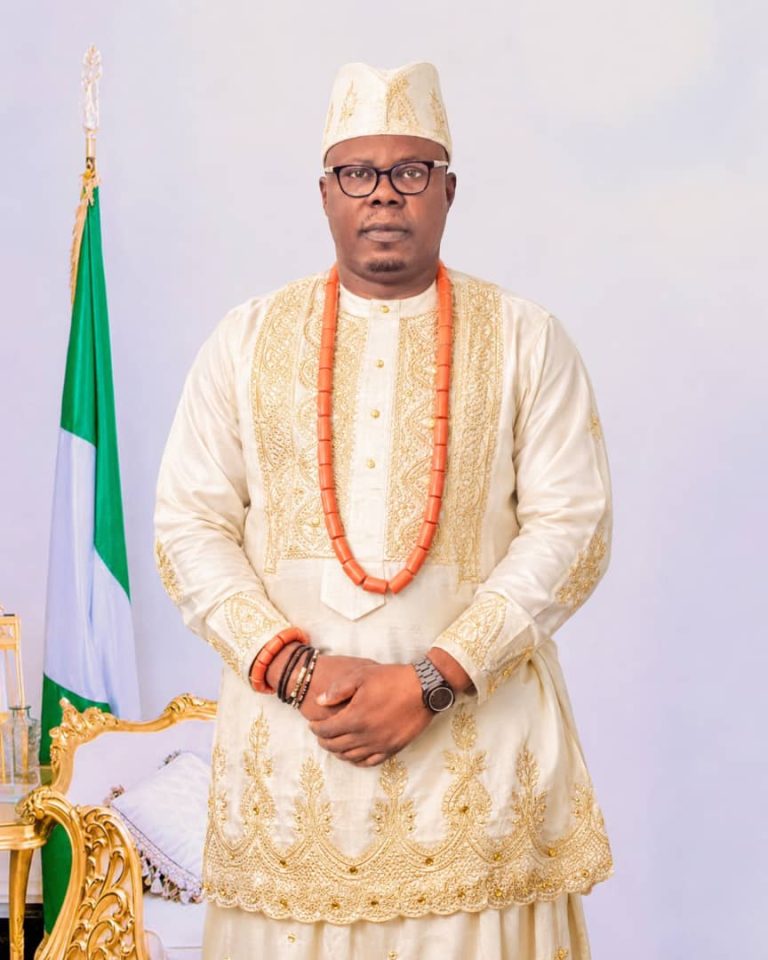
Speaking during the visit, the traditional ruler of Ebu,HRH Onu Paul Opili Odilile expressed appreciation to the state government for ongoing efforts on the palace road but stressed that the reconstruction of the Ebu–Ukala–Ezi Road remains the community’s highest priority.

According to the monarch, while the award of palace road project is commendable, the rehabilitation of the state road is vital to the economic growth, accessibility and overall well-being of the people.

We appreciate the attention being given to our palace road, but the reconstruction of the Ebu–Ukala–Ezi Road is of utmost importance to our people. It is the main access route to our community and its condition continues to affect our daily lives, the monarch said.

Residents say the deplorable state of the road has, for decades, hindered commercial activities, increased transportation costs and made access to healthcare, education and other essential services difficult.

Community leaders noted that farmers and traders are among the worst affected, as transporting agricultural produce to markets has become increasingly challenging due to the poor condition of the road.

Many residents believe that reconstructing the Ebu- Ukala – Ezi road would not only improve transportation and economic activities but also stimulate development, attract investment and enhance the quality of life for the people of Ebu and surrounding communities.

The community therefore urged Governor Oborevwori to give urgent attention to the project, describing it as a long-overdue intervention that would demonstrate the government’s commitment to equitable and inclusive development across Delta State.

As calls for action continue to grow, the people of Ebu remain hopeful that their persistent advocacy will yield positive results and that the reconstruction of the Ebu–Ukala–Ezi Road will soon become a reality.

For the residents, the road is more than just a transportation route—it is a lifeline whose rehabilitation could unlock new opportunities and usher in a new era of growth and development for the community.

Umueze Community 2026 Ulo Festival Turn Carnival in Igbuzo

By : Ike Philip Abiagom- Newsbreeze

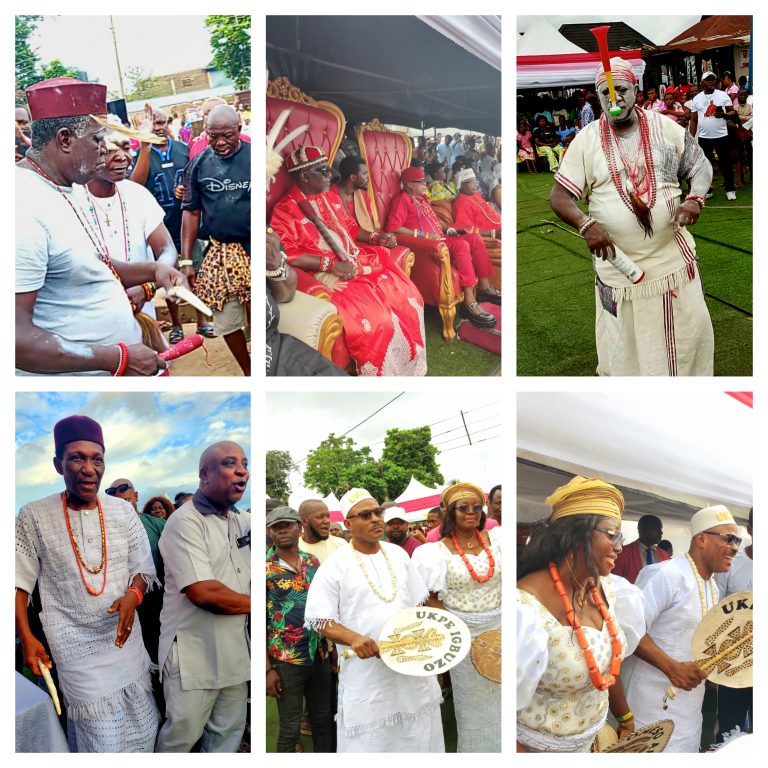
Igbuzo -The vibrant town of Igbuzo, nestled in the Oshimili North Local Government Area, was alive with rhythm and festivity as it hosted the 2026 Ulo Festival, a magnificent celebration of culture and heritage that brought together families, friends, and visitors from far and wide. Known for its rich traditions, Igbuzo—founded by Umuejei Nwaeze Isu—showcases a unique blend of historical significance and community spirit, embodying peace and unity.

As the largest quarter in Ibusa, Umueze celebrated the 2026 Ulo Festival this August with heartfelt passion. The air rang with the beat of drums, the sharp clang of ogene gongs, and the laughter of a community coming together at Ashia nta, where the statue of Nne-Eze stands as a reminder of the monarchical heritage of Umueze, the custodians of the community’s kingship.

This annual festival lights up Igbuzo, where painted warriors reenact ancient battles, dancers sway in colorful costumes, and families unite. It serves as a joyful tribute to Igbuzo’s past—a mix of peace and the unbreakable spirit of its people.

Under the watchful gaze of the Odogwu—currently High Chief Charles Okonkwo—the Ulo Festival has become a yearly highlight, drawing locals, diaspora members, and curious visitors to the heart of the city. It’s a moment when Igbuzo proudly declares, “This is who we are.”

Preparations begin weeks in advance, with families sweeping their homes and stocking up on food and drinks for the festivities. Young men craft costumes inspired by traditional warriors and spirits, while women don their finest attire, ready to sing and dance.

More than just revelry, the Umueze Ulo Festival represents the heartbeat of Igbuzo culture. It’s a time for forgiveness, reflection on the sacrifices of past warriors, and healing old wounds, such as those left by the Civil War. The festival is open to everyone, fostering a sense of community that embraces all ages.

This year’s event attracted many from the diaspora, who returned from cities like Lagos, London, and the United States, bringing with them love for their homeland. Tourists flooded in, snapping photos and tasting the spicy flavors of Delta. The festival also aligns with the broader Anioma Cultural Festival, showcasing Delta’s Igbo pride on a grander stage.

A key highlight of the 2026 Ulo Festival was the artistic contributions made by a newly formed cultural committee, dedicated to enhancing the festival’s experience with creative displays that captivated art lovers and participants alike.

The festival welcomed illustrious sons and daughters of Igbuzo, including Pastor Idowu Okeze and his lovely wife , Chief Anthony Uwajeh, the Odua of Ibusa, High Chief Celestine Okafor,Ikwele Igbuzo , Chief Daddy Okeleke- Mgboko Igbuzo, Chief Ifeanyi Onwordi,Ogbu Nedu Eze Udo Igbuzo,Eze Inotu Henry Nnamdi, Chief Zikky Nwabuwa, Hon. Onyeisi Okeze, Austin Ndinwa ( Okemili) among other dignitaries.

Pastor Okeze took the opportunity to express gratitude to the Umueze Quarters and the Odogwu of Igbuzo for their leadership.

“Odogwu of Igbuzo, High Chief Charles Okonkwo, is a traditionalist with a difference. His arrival has fostered growth and development, bringing peace, unity, and love to our community,” he stated.

Pastor Okeze emphasized the need for government support in promoting Igbuzo’s rich traditions and culture, which he believes can lead to a sustainable tourism industry. He remarked, “The Ulo Festival is a unique celebration of joy, forgiveness, and communal harmony, showcasing our vibrant culture for generations to come.”

The Ulo Festival is not just an event; it’s woven into the fabric of Igbuzo identity. It lasts for several days and includes festive celebrations involving adults and youth alike.

According to Diopka Onowu Charles Ndinwa .who confided to Newsbreeze that the festival’s origins was traced back to Umueze-Ibusa warriors who returned from Oko with the concept, deeply influenced by mythology and historical narratives.

As participants moved from house to house celebrating and congratulating each other, the festival’s unique songs and dance steps filled the air. Major musical instruments, including the “Agogo” (small gong) and local musical drums, ensured that the spirit of traditional music resonated throughout the celebrations.

In summary, the Ulo Festival reflects the rich cultural heritage of the Igbuzo people, offering a vibrant atmosphere of unity, tradition, and joyous remembrance, ensuring that the community’s stories and beliefs continue to thrive in the hearts of all who attend. The Ulo carnival was anchored by Comrade Vincent Ollimah and few others.

Tinubu’s Reforms Have Empowered Local Governments, Says Oshimili North Chairman Esewezie

By: Ike Philip Abiagom 

Olorogun Innocent Esewezie, Executive Chairman of Oshimili North Local Government Area, with publishers during an interview in which he spoke on President Bola Ahmed Tinubu’s reforms, local government autonomy, ongoing projects and development initiatives in Oshimili North, among other issues.Olorogun Innocent Esewezie, Executive Chairman of Oshimili North Local Government Area of Delta State, has said the reforms of President Bola Ahmed Tinubu have given local governments greater financial room to operate and deliver development at the grassroots.

Esewezie made the assertion during an interview with a team Association Community Newspaper Publishers of Nigeria ( ACNPN), where he spoke extensively on his administration’s achievements, healthcare, security, roads, markets, workers’ welfare, local government autonomy, the administration of Governor Sheriff Oborevwori, the 2027 elections and his ambition to represent Oshimili North at the state level.

The chairman also defended his support for President Tinubu and Governor Oborevwori, arguing that government policies should be assessed based on their impact on citizens rather than solely through political affiliations. Excerpts:

In our last publication, you described the President Bola Ahmed Tinubu administration as a change-maker and spoke about the pace of development under Governor Sheriff Oborevwori. Some readers subsequently asked why we did not adequately document many of your achievements, particularly your efforts in mobilising resources for the local government. Could you tell us what your administration has achieved and how these developments are affecting your communities?

Thank you very much for the question. Let me begin by welcoming you to the Oshimili North Local Government Liaison Office, which also serves as an annex office of the council.

On August 20, we are expected to commission the cottage hospital in Okpanam. We will also flag off a free medical programme, including various forms of surgery, such as fibroid surgery.

In addition, we plan to distribute about 2,000 medicated glasses to members of the community. Overall, we expect about 3,500 people to benefit from the free healthcare programme.

This is not the first time we have undertaken such an initiative. We did it last year, and we are doing it again this year because healthcare remains one of our priorities.

The programme will cost millions of naira, but the most important consideration is the impact it will have on the people. More than 3,000 people are expected to benefit.

Empowerment takes different forms, and healthcare is one of them.

We are also planning a major youth empowerment programme within the next two to three months. We intend to train young people in various vocational skills and provide them with starter packs and stipends to enable them to establish businesses.

What about security?

Security has received significant attention under our administration. We established the Oshimili North Security Watch, engaging about 150 people and providing them with the necessary equipment and security gadgets.

We have also installed surveillance cameras, with the control room located at the Ibusa Police Station. You can visit the station after this interview to see the facility.

For the past seven or eight months, the local government has enjoyed relative peace. According to the reports available to me, the surveillance system has helped us monitor activities across the area and respond more effectively to security concerns.

We have also constructed several kilometres of roads, with drainage on both sides. These are some of the projects we have implemented within the period under review.

Another important achievement is our commitment to workers and pensioners. We have no outstanding pensioners in the local government, and we pay salaries as and when due. We have also invested substantially in market infrastructure.

Some of the markets we have constructed include the Igbuzor Trans-National Modern Market, Ultra-Modern Market, Ugbolu Ultra-Modern Market, Illah Modern Market and Ebu Modern Market.

We have also approved another commercial market in Akwukwu-Igbo, while many of these projects are already about 90 per cent complete.

We have completed the Senator Peter Nwaoboshi Legislative Complex at Akwukwu-Igbo and awarded contracts for other projects, including the foundation of another complex.

There are many other projects we have undertaken. Our belief is that when a government is working, the results should be visible in the lives of the people.

The confidence we have comes from the support and commendation we receive from our people.

You have attributed some of these achievements to the reforms of President Tinubu. How exactly have his reforms affected local governments?

We have been able to achieve these things because, in my view, President Bola Ahmed Tinubu has created an environment in which local governments can access what is constitutionally due to them.

Before his administration, some states were still operating caretaker committees, with governors appointing local government chairmen without elections.

President Tinubu took a firm position that states should conduct elections into local government councils and that allocations should not be released to states that failed to do so.

Today, local government councils across the country have elected chairmen. I consider that a major development for grassroots democracy.

For decades, successive administrations have talked about the need for local governments to operate freely without undue interference from state governments.

President Tinubu has taken concrete steps towards achieving that objective.

The Supreme Court has also delivered a judgment on local government autonomy, and there is now a framework for implementing greater autonomy.

As we speak, the funds due to our local government are reaching us. We sit with other local government chairmen and determine how best to utilise the resources available to us.

The funds we receive, in my assessment, are sufficient to meet our obligations, including salaries and other council responsibilities.

We also have reserves, and those reserves enable us to execute many of the projects I have mentioned.

When I served as chairman previously, the situation was different.

Today, we have a President who is saying that local governments should be allowed to breathe, function and deliver for their people.

I believe that autonomy is helping local governments, strengthening grassroots development and improving the lives of our people.

You have expressed strong support for President Tinubu and Delta State Governor Sheriff Oborevwori. Why?

My support is not based on selfish interests.I am passionate about their leadership because I believe in what their policies can mean for my children, my family and our people.

When choosing a leader, we should look at capacity, track record, courage and decisiveness.

President Bola Ahmed Tinubu has demonstrated these qualities through several difficult decisions.

One of the clearest examples is the removal of the fuel subsidy. Before the 2023 election, virtually every major political party acknowledged that the subsidy regime was unsustainable. Previous administrations also recognised the problem, but removing the subsidy was politically difficult because of the consequences.

President Tinubu came into office and took the decision. The immediate consequences were difficult. Food and transportation costs increased, and Nigerians felt the impact.

But the important question, in my view, is whether the reforms will produce long-term benefits. I believe the reforms are already yielding results. The economy is growing, while infrastructure development is taking place across various sectors.

His administration has also prioritised the regular payment of salaries and implemented policies aimed at strengthening key institutions.

The reform of the electricity sector is also significant. The administration has opened the sector to greater participation by states and local governments, allowing subnational governments to develop electricity solutions within the framework of the law.

Security is another area.

President Tinubu inherited serious security challenges, including terrorism, kidnapping and other forms of insecurity. His administration has responded by restructuring and strengthening the security architecture, including improving the welfare of military personnel.

There has also been movement towards the establishment of state police. The proposal has gone through the National Assembly, and Nigerians are waiting for the next stage of the legislative process.

Within the period of his administration so far, the President has taken several bold decisions which, in my opinion, previous administrations struggled to implement.

Some people argue that political competition and the 2027 elections should determine whether the current administration continues. What is your position?

Politics is healthy. Competition for political power is part of democracy, and elections are necessary.

However, the desire for political power should not become an excuse to undermine a government that is working.

The fact that elections are held every four years does not mean that every policy or reform should be judged solely through the lens of politics.

We should assess performance objectively. In my view, President Bola Ahmed Tinubu should be allowed to complete his two-term tenure. Nigerians can then properly assess the total impact of his administration on the country.

Governor Chukwuma Soludo of Anambra State is a good example. He is a respected financial expert and former Governor of the Central Bank of Nigeria. He has, on different occasions, acknowledged the impact of some of the Federal Government’s economic policies, even though he does not belong to the same political party as the President.

You can also look at Abia State foe example, Governor Alex Otti is not an APC governor, yet he has publicly acknowledged the Federal Government’s role in creating an enabling environment for his administration to deliver projects.

This is important.

We often praise governors for their achievements at the state level, and rightly so. But we should also recognise the federal policies that create the fiscal and economic environment in which those achievements become possible.

In Delta State, Governor Sheriff Oborevwori has repeatedly acknowledged the importance of the resources and fiscal environment created by the Federal Government.

He has made it clear that, in his view, increased resources available to the state have enabled his administration to execute projects and deliver on its MORE agenda.

For us at the local government level, what matters is that these policies translate into tangible improvements in the lives of ordinary people.

Ultimately, governance should be measured by what people can see, feel and benefit from, not merely by political statements.

That is why we remain focused on delivering projects, strengthening healthcare and security, supporting our workers and pensioners, and improving infrastructure across Oshimili North.

You have also spoken about the relationship between Federal Government policies and development at the state and local government levels. What is your position?

The President has, in my view, been able to block many of the leakages in the economy, including the subsidy regime.

The important thing is that these resources are not being kept for selfish purposes. They are being channelled back to the subnational governments—states and local governments.

As a local government chairman, I can testify that the resources now available to us have made it possible for us to perform.

So, if you appreciate what we are doing at the local level, it is also important to recognise the Federal Government that has created the fiscal environment that makes these achievements possible.

That is why, when we campaign for President Tinubu, we are not doing so simply because we belong to the APC or because of personal relationships.

We are supporting him because we have seen his capacity, foresight, track record, courage and decisiveness.

His record in Lagos speaks for itself.

Since he left office, the state has maintained what I consider a stable and progressive development trajectory. Businesses are thriving, infrastructure has improved, and the foundation for many of the state’s present achievements was laid during his tenure.

That is the kind of leadership record we should examine when assessing a political leader.

You mentioned Anambra State and the business environment there. Why is that relevant to your argument?

Anambra State has tremendous potential, with commercial centres such as Nnewi and Ochanja Market.

However, for years, many people from Anambra have preferred to live, invest or conduct business in places such as Asaba and Warri because they consider the environment more conducive.

Asaba has become attractive because of its relative peace, business-friendly environment and infrastructure.

Governor Chukwuma Soludo is trying to reverse that trend by improving the business environment in Anambra.

Through the support and fiscal environment created by the President’s policies, his administration is also developing projects such as the new Ochanja Market.

The President’s philosophy, as I understand it, is that the Federal Government should not continue to control everything.

He has been devolving responsibilities and opportunities to subnational governments so that states and local governments can develop according to their specific needs.

What do you consider the biggest challenge still confronting Nigerians?

Security remains a major concern. Nigerians have experienced banditry, kidnapping and other forms of insecurity.

However, I believe the situation has improved in many areas.

In Oshimili North, for example, I receive daily situation reports from the Divisional Police Officers across the local government.

Based on the reports available to me, I can say that we have not recorded kidnapping incidents across the divisions recently.

We will continue to support the security policies of the state government and President Bola Ahmed Tinubu.

Let’s talk about boundary delineation between Asaba in Oshimili South and Okpanam in Oshimili North. It has been a subject of controversy over the years. What is the situation now?

Boundary demarcation is not the responsibility of a local government chairman. It is strictly within the preview of the appropriate state authorities, particularly the office of the Deputy Governor.

What we can do at the local government level is provide information, cooperate with the relevant authorities and ensure that the interests of our people are properly represented.

Asaba is the state capital, and communities within the capital territory have historically faced situations where their land and identity become absorbed into the wider development of the capital.

For example, when Obi Cubana sought to develop part of the Okpanam area for real estate, there was an issue involving Okpanam and Issele-Asagba.

I intervened because the matter affected the local government and the interests of the communities involved.

Based on the evidence available at the time, the land was eventually recognised as belonging to Okpanam.

However, once development took place, many businesses and property owners naturally preferred to associate their investments with the name Asaba because it is the state capital.

So, regarding the boundary issue, no local government has the authority to determine or alter state boundaries. That responsibility rests with the appropriate state authorities.

Therefore, I cannot accept the claim that I have abandoned something that is not within my statutory powers to determine.

The Asaba Specialist Hospital was established and named by the state government.

This illustrates the broader point that developments within the state capital territory often have implications beyond individual communities.

That is why boundary and territorial matters require coordination with the state government rather than being treated as a purely local government responsibility.

You are the Delta State Co-ordinator of the City Boys Movement. What is the group’s role in the current political dispensation, particularly within the APC?

The City Boys Movement is a pressure group within the APC established by young Nigerians to support President Bola Ahmed Tinubu. It operates across the federation.

Our primary responsibility is to reach out to young people and counter misinformation and what we consider negative propaganda about the President and his policies.

We recognise that three years is not enough to implement every aspect of the President’s programme.

Therefore, our responsibility is to explain his policies to Nigerians and communicate the progress we believe is being made.

Our target is not limited to APC members or politically active young people.

We also reach out to people outside the political sphere, including women and young people in rural and urban communities.

Our message is straightforward: Nigerians should assess the President based on his policies, achievements and capacity to deliver.

We have also set a target of mobilising 2.7 million votes for President Tinubu in Delta State. This is not merely a political slogan. We have structures in place at the local government, senatorial, federal constituency, state, ward and polling-unit levels.

At the ward level, we have coordinators, while at the polling-unit level, we have male and female coordinators working to engage voters. We want people to understand that development is a collective process.

When a governor performs well, people naturally credit the governor. When things go wrong, however, many people immediately blame the Federal Government.

We are trying to help people understand the relationship between federal policies and what happens at the state and local government levels.

The reforms of President Tinubu have, in our view, created an environment in which governors, local government chairmen, senators and members of the House of Representatives can perform.

If a federal legislator attracts constituency projects, for example, the funding environment created by the Federal Government is part of what makes those projects possible.

So, the progress we are seeing should be understood as a collective effort, with the President driving the process.

You and other political leaders recently visited Ebu Community and made commitments at the palace of the traditional ruler. What steps are you taking to ensure that the community’s concerns, particularly the deplorable road, are addressed?

Let me first say that the visit to Ebu was not a political scam as stated by some opposition parties. It was a genuine response to the condition of the community.

Ebu is part of Oshimili North, and we have a responsibility to the people there. During our visit, we saw the deplorable condition of the roads and understood the difficulties it was causing residents, businesses and transporters.

The visit was also a decision reached by the APC leadership. We felt it was important to go directly to the community, listen to the people and assure them that they had not been forgotten.

We pledged to use every means available to us to ensure that something was done about the road urgently.

I am pleased to inform you that our working  Governor has also directed the Ministry of Works to inspect the road.

Officials have visited the area and carried out the necessary assessment. I want to assure the people of Ebu that, based on the information available to us, work is expected to commence on the road soon.

We have also continued to engage the relevant ministry, and they have assured us that action will be taken.

Our visit was therefore not merely symbolic. We have followed it up with engagement with the authorities responsible for the project.

The people elected us, and it is our duty to respond whenever their communities face serious challenges.

What legacy do you want to leave behind when you eventually leave office?

I want to be remembered as a local government chairman who came at a critical time and distinguished himself through development.

For me, the first responsibility of government is security.

Our people must be alive and safe before they can participate meaningfully in economic and political activities.

We are therefore doing everything possible to ensure that people can conduct their businesses freely, return home safely and sleep peacefully.

This is not limited to Ibusa or Okpanam. Our goal is to make every part of Oshimili North peaceful and secure.

We are supporting the security policies of the state government and ensuring that our local security structures remain effective.

The second area I want to be remembered for is healthcare.

I want people to be able to say that during my tenure, someone who needed medical attention could go to the cottage hospital and receive proper treatment.

That is one of the reasons we are investing in the cottage hospital.

Primary healthcare is extremely important to our people.

We did not want to build a facility simply for the sake of having a hospital. We wanted to provide a standard facility that even public officials could confidently use.

After the commissioning, if my son or daughter requires medical attention, I want to be able to say, “Go to the cottage hospital and get treated.”

We will continue to improve the facility by purchasing and stocking the necessary equipment.

By the time we leave office next year, I want the hospital to have reached a standard where the essential services and equipment are available.

I want to be remembered as a chairman who served his people so well that they decided to entrust him with greater responsibility.

Oshimili North has invested a lot in me, and I believe the time has come for me to give even more in return by becoming their voice at the state level.

If elected to represent the people of this local government, I will speak for them, defend their interests and ensure that Oshimili North receives greater attention in the state budget.

One of my objectives is to ensure that the local government is properly connected to the state’s development and budgeting process.

I believe that having someone who understands the system and has experience in local government administration can help attract more opportunities and resources to the area.

My promise is simple: I will be the voice of Oshimili North, defend the interests of our people and work to ensure that this local government benefits from opportunities that it may not have enjoyed sufficiently in the past.

I also appreciate the state government for the support and development it has brought to Oshimili North.

Dr. Dan Awana Attains New Height in Ministry, Ordained Assistant Pastor at RCCG Convention

By: Ike Philip Abiagom

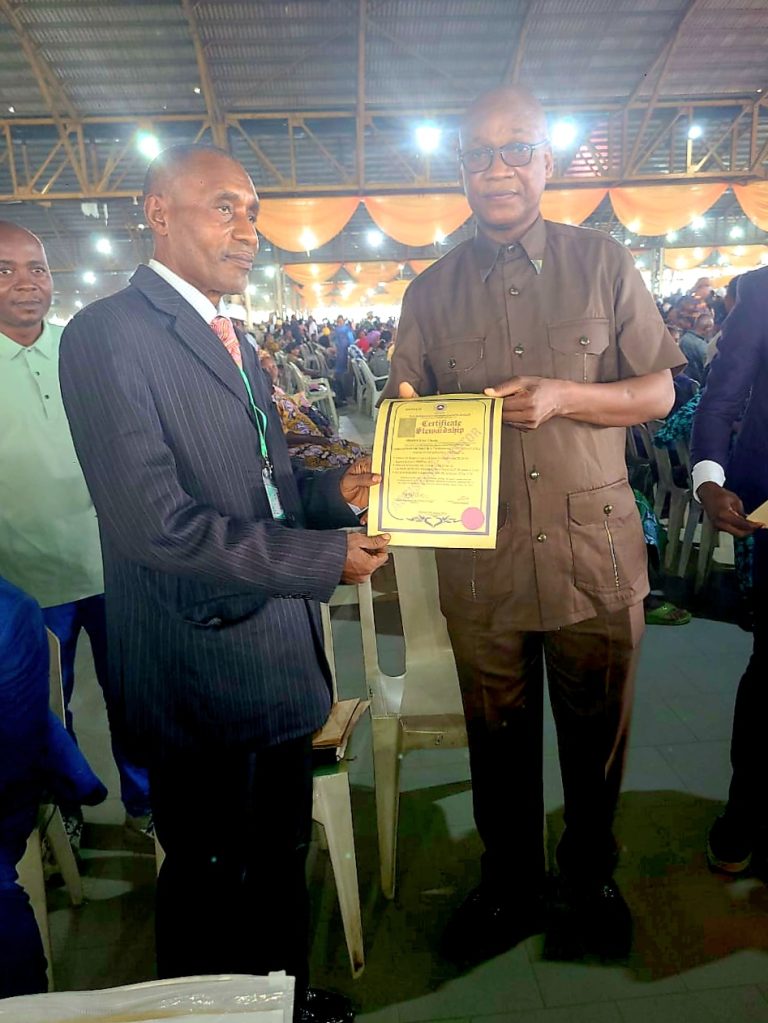
A prominent media practitioner and community leader in Delta State, Dr. Dan Awana, has been ordained as an Assistant Pastor in the Redeemed Christian Church of God (RCCG), marking a significant milestone in his spiritual journey and years of dedicated service to God and humanity.

The ordination took place during the 74th Annual Convention of the RCCG held at the Redemption City of God along the Lagos-Ibadan Expressway, Ogun State. The week-long convention, themed “Mountain Movers,” drew thousands of worshippers, ministers, and church leaders from different parts of the world.

Dr. Awana, the Pastor of Horn of Salvation Parish, Isieke High Street, Ibusa, Delta State, was among the 5,977 ministers elevated to the rank of Assistant Pastor during the convention. The ordination was conducted under the leadership of the General Overseer of RCCG, Pastor Enoch Adejare Adeboye, with the National Overseer, Pastor Sunday Akande, playing a key role in the ceremony.
The elevation has been widely celebrated by members of the media community, church faithful, associates, and admirers who view it as a well-deserved recognition of his commitment to Christian service, leadership, and community development.

Apart from his pastoral assignment, Dr. Awana has built a distinguished reputation in the media industry. He currently serves as the National President of the Federated Union of Community Newspaper Publishers of Nigeria (FUCNPN) and is the publisher of The Frontline News, a platform through which he has consistently promoted grassroots journalism and community-driven advocacy.

His influence also extends to security and community relations. As Publicity Secretary of the Police Community Relations Committee (PCRC), Delta State Command, he has played an active role in fostering cooperation between the police and the public, while championing peace, dialogue, and social harmony.

In the wake of his ordination, tributes and goodwill messages have continued to pour in from journalists, religious leaders, community stakeholders, and members of the security community.
Many described him as a humble and visionary leader whose life exemplifies service, integrity, and dedication to the advancement of society.

Community Newspaper Publishers noted that Dr. Awana’s latest elevation is not only a recognition of his spiritual commitment but also a testament to his enduring contributions to journalism, community service, and nation-building.
They expressed optimism that his new responsibilities within the RCCG would further strengthen his impact on the lives of people, both within the church and the wider society.

As the celebrations continue, friends, colleagues, and associates have wished him a fruitful ministry, praying that God grants him greater wisdom, strength, and grace in his expanded role in the vineyard of the Lord.

Delta Government Delegation’s Visit to Ebu Another Political Scam, Deception — AAC Governorship Candidate Eshor

The governorship candidate of the African Action Congress (AAC) in Delta State, Engr. Isaac Eshor, has condemned the recent visit of a Delta State Government delegation to Ebu Community in Oshimili North Local Government Area, describing it as a political gimmick designed to create false hope among residents rather than provide lasting solutions to the community’s infrastructural challenges.

Reacting to the delegation’s inspection of deteriorating roads in the agrarian community, Eshor alleged that the visit was a calculated attempt to pacify the people of Ebu ahead of the 2027 governorship election rather than a genuine commitment to addressing decades of neglect.

According to him, successive administrations in Delta State have abandoned Ebu and many other rural communities, leaving residents to contend with dilapidated roads, inadequate social amenities, poor healthcare services, and worsening economic hardship.

The government’s visit to Ebu was nothing more than political window dressing. Once again, the people have been given assurances that their roads will soon be fixed, but the question remains: why are these promises coming only after years of neglect?” Eshor queried.

He argued that the deplorable condition of roads in Ebu reflects the broader reality facing many rural communities across Delta State, despite the state’s vast financial resources and status as one of Nigeria’s highest revenue-generating states.

Eshor also questioned the management of public funds, calling on the administration of Governor Sheriff Oborevwori to provide a transparent account of how state revenues have been utilized over the past three years.

Delta State has received ₦4.119 trillion from federal allocations, excluding internally generated revenue. Deltans deserve to know how these resources have been spent and what direct impact they have had on the lives of ordinary citizens,” he stated.

The AAC governorship candidate maintained that poor road infrastructure continues to hinder agricultural production, restrict movement, and slow economic growth in communities that depend largely on farming and small-scale businesses.

He urged residents of Ebu not to be swayed by official visits and political assurances, insisting that government performance should be judged by completed projects and measurable improvements in the lives of the people.

What the people are witnessing is another round of political deception. Ebu deserves action, not endless inspections and assurances. Development must be visible, practical and impactful, he said.

Eshor stressed that rural residents across Delta State require functional roads, quality healthcare facilities, potable water, improved educational infrastructure and economic opportunities capable of transforming their standard of living.

Reaffirming his vision for Delta State, he pledged that an AAC-led administration would prioritize rural development, transparency, accountability and the equitable distribution of infrastructure across all communities in the state.

The government delegation’s visit to Ebu followed growing complaints by residents over the deteriorating condition of the Ebu–Ezi–Ukala Road, a major route linking the community to neighbouring towns and commercial centres.

Eshor also expressed concern over the condition of the Ogbolu–Illah–Ebu Road, a federal road serving the area. He noted that the continued deterioration of both federal and state roads in Ebu Community has adversely affected transportation, commerce and agricultural activities.

According to the AAC governorship hopeful, Delta State’s challenge is not a lack of resources but the failure of successive administrations to convert available revenues into visible development capable of improving the lives of ordinary citizens.

He described the condition of roads serving Ebu and surrounding communities as unacceptable and called on the relevant authorities to move beyond inspections and political engagements by commencing immediate rehabilitation and reconstruction works.

The people have waited long enough. What they need now is action, not another cycle of political promises. Government must demonstrate its commitment through tangible projects that will improve the welfare of the people and stimulate economic growth, Eshor added.

Umueze Igbuzo Set to Celebrate Ulo Festival with Grandeur and Cultural Pride

By: Ike Philip Abiagom

The people of Umueze Quarters in Igbuzo Kingdom, Oshimili North Local Government Area of Delta State, are set to once again showcase their rich cultural heritage as they present the much-anticipated Ulo-Umueze, Ishi-Egwu Ulo Festival on August 13, 2026.
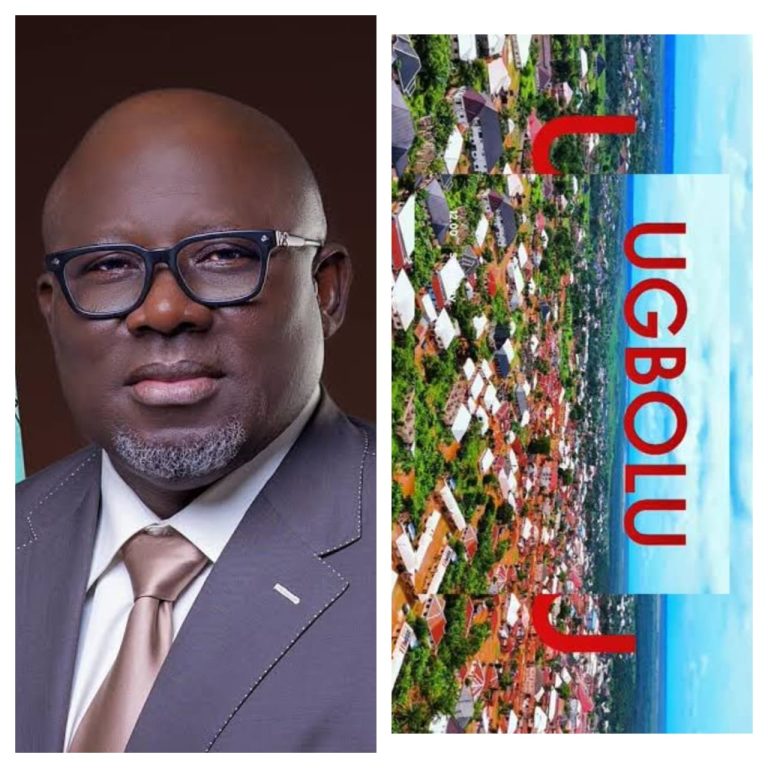
The annual festival, one of the most celebrated cultural events in Igbuzo, is expected to attract sons and daughters of Umueze from across Nigeria and the diaspora, as well as traditional rulers, community leaders, cultural enthusiasts, and visitors from neighboring communities.

As preparations reach their peak, excitement has already enveloped the ancient community. The sound of traditional drums, the rhythmic echoes of the ogene gong, and the vibrant display of cultural regalia are expected to transform Umueze into a colorful arena of celebration, unity, and cultural expression.

The Ulo Festival remains a cherished tradition among the people of Umueze, serving not only as a cultural event but also as a platform for strengthening communal bonds, preserving ancestral values, and promoting peace and development within the community.

Community leaders describe the festival as a symbol of identity and pride for the Umueze people. According to them, the event provides an opportunity for the younger generation to learn about the customs, history, and traditions handed down by their forefathers while fostering a sense of belonging among indigenes at home and abroad.

This year’s celebration is expected to feature traditional dances, cultural processions, music performances, and other indigenous activities that reflect the unique heritage of Igbuzo Kingdom.

Guests will also be treated to the warmth and hospitality for which the people of Umueze are widely known.

Speaking ahead of the event, High Chief Charles Ositadinma Okonkwo,  Odogwu of Igbuzo expressed optimism that the 2026 edition would be one of the most memorable in recent years, emphasizing that the festival remains a vital tool for cultural preservation and community development.

As the countdown to August 13 begins, anticipation continues to build across Igbuzo and beyond, with many looking forward to a spectacular celebration that will once again highlight the enduring cultural richness of Umueze Quarters and the pride of the Igbuzo people.

For the people of Umueze, the Ulo Festival is more than a celebration—it is a reaffirmation of their heritage, unity, and commitment to preserving the traditions that have defined their community for generations.

Ugbolu Community Renews Call for Autonomous Status, Seeks Swift Government Approval

By: Ike Philip Abiagom

Residents and stakeholders of Ugbolu Community in Oshimili North Local Government Area of Delta State have renewed their appeal to the Delta State Government to grant the community its long-awaited autonomous status, describing the request as both justified and overdue.
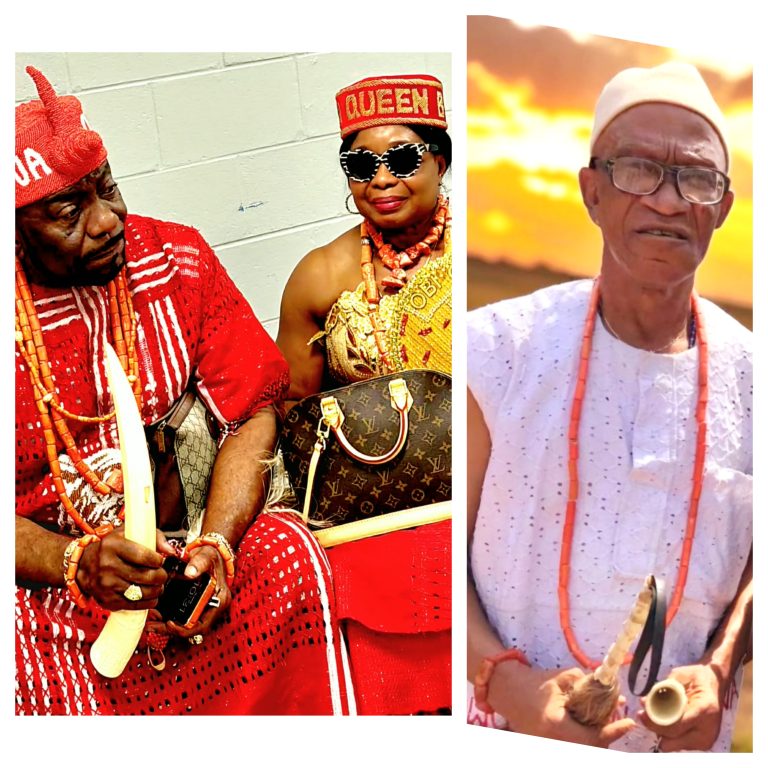
The call comes amid growing demands for greater grassroots development, effective local governance, and the preservation of the community’s rich cultural heritage.
Ugbolu, regarded as the third largest community in Oshimili North Local Government Area, occupies a strategic position within the Asaba capital territory. Over the years, the community has witnessed significant population growth and urban expansion, attracting a large number of non-indigenes who now reside and conduct business within its boundaries.

Despite its increasing economic, social, and demographic importance, residents note that Ugbolu has yet to receive autonomous recognition, unlike several smaller communities that already enjoy such status. Community leaders and stakeholders argue that autonomy would provide a more effective framework for self-governance, strengthen local decision-making processes, and enhance collaboration with government agencies on developmental projects.

According to them, autonomous status would also create greater opportunities for infrastructural development, improve service delivery, and ensure that the community’s unique cultural identity is preserved for future generations.
In a major step towards realizing this aspiration, the Executive Chairman of Oshimili North Local Government Area, Olorogun Innocent Ifeanyi Esewezie last year constituted a committee to examine the community’s request in line with existing legal provisions.

The committee has since concluded its assignment and submitted its report to the Office of the Deputy Governor of Delta State for final consideration and approval.
Residents describe the submission of the report as a significant milestone in the autonomy process but insist that the final approval by the state government remains crucial to achieving the community’s long-standing dream.

A prominent stakeholder in the community expressed optimism that the government would act favourably on the recommendation.
We believe autonomy will open the door to greater development, strengthen our traditional institutions, preserve our culture and customs, and promote unity among our people. Ugbolu has grown tremendously over the years and deserves recognition that reflects its size, contributions, and strategic importance,” the stakeholder said.

Observers have also noted that granting autonomous status to Ugbolu would further empower traditional leadership structures, improve community administration, and contribute to peace, stability, and sustainable development within the kingdom.

As anticipation grows among residents, community leaders are appealing to the state government to grant approval that would officially usher Ugbolu into a new chapter of self-determination and community-driven development.

For many residents, the quest for autonomy is not merely about recognition but about creating a stronger foundation for progress, cultural preservation, and inclusive governance in one of Oshimili North’s most prominent communities.

Onowu Onianwa Hails Obi Henry Ajudua, Wife for Promoting Igbuzo Culture at Global Festival

By: Ike Philip Abiagom 

Onowu Augustine Onianwa, has congratulated  Obi (Dr.) Henry Chukwuma Ajudua, (Obi-Eze Udo), and his wife, Obi Okpoho Dr. Vivian Onyebuchi Henry-Ajudua, for their outstanding representation of Igbuzo and the Anioma Nation at the 2026 CISA Annual Igbo Worldwide Festival of Arts and Culture held in the United States.


Onowu Onianwa described the couple’s participation in the prestigious international cultural gathering as a remarkable achievement that has brought honour, recognition, and pride to Igbuzo Kingdom and the entire Anioma region of Delta State.

The couple attended the festival as Special Guests of Honour where he showcased the rich Cultural the heritage, traditions, and values of the historic Igbuzo Kingdom before a global audience of Igbo sons and daughters as well as international guests.

Speaking on their participation, Onianwa commended Obi (Dr.) Ajudua and his wife for projecting the image of Igbuzo positively on the world stage and for showcasing the cultural identity of the kingdom with dignity and distinction.

According to him, the people of Igbuzo deeply appreciate the efforts of Obi (Dr.) Henry Ajudua in promoting the kingdom’s rich cultural heritage and in highlighting the esteemed position of His Royal Majesty, Obi (Prof.) Louis Chelunor Nwoboshi, the Obuzor of Igbuzo, before the international community.

He noted that the  couple’s presence at the global festival demonstrated patriotism, loyalty, and unwavering respect for the Igbuzo Kingdom, adding that their actions have further elevated the status of the community among Igbo communities worldwide.

Onowu Onianwa stated that he was not surprised by the recognition accorded to Obi (Dr.) Ajudua at the festival, describing him as a proud son of Igbuzo whose commitment to the growth and development of the kingdom has remained consistent over the years.

“I am not surprised by this achievement because Obi (Dr.) Henry Ajudua is a true son of Igbuzo who is always willing to make sacrifices for the progress and greatness of our kingdom. He has consistently demonstrated his love for our people and culture and has become one of the finest ambassadors of Igbuzo on the global stage,” he said.

Onianwa further praised Dr. Vivian Onyebuchi Henry-Ajudua for standing firmly beside her husband in promoting the values and traditions of the kingdom, noting that their collective efforts have strengthened the visibility of Anioma culture internationally.

He expressed confidence that the couple’s participation at the CISA Festival would further deepen cultural awareness, foster unity among Igbuzo indigenes in the diaspora, and inspire younger generations to preserve and promote their cultural heritage.

Onowu Onianwa concluded by urging sons and daughters of Igbuzo across the world to emulate the exemplary leadership, patriotism, and cultural advocacy demonstrated by Obi (Dr.) Henry Ajudua and his wife in advancing the image of the kingdom globally.

Ebu Bleeding from Decades of Neglect as Government Delegation Inspects Collapsed Roads

By : Ike Philip Abiagom

Ebu, a predominantly agrarian community in Oshimili North Local Government Area of Delta State, has for decades endured what residents describe as abandonment by successive governments, leaving the town struggling with poor infrastructure, limited access to essential services, and worsening economic hardship.
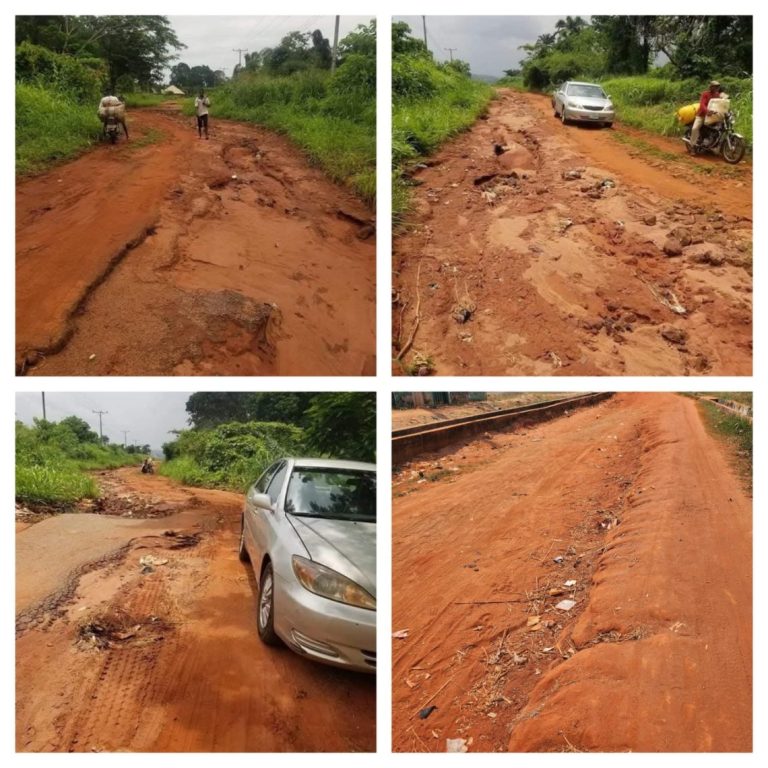
Across the community, the signs of neglect are evident. Public schools are characterized by dilapidated structures, healthcare facilities remain poorly equipped, and roads have deteriorated to alarming levels. The onset of the rainy season has further compounded the plight of residents as flooded and damaged roads continue to hinder transportation, economic activities, and access to neighboring communities.

However, after years of persistent appeals and complaints from residents, there appears to be renewed hope following the visit of a high-powered government delegation led by political leaders from Oshimili North Local Government Area.

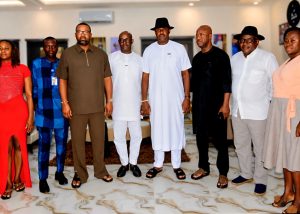
The delegation, which visited the Ebu–Illah–Ugbolu Road on Thursday, was led by the Executive Chairman of Oshimili North Local Government Area, Olorogun Innocent Esewezie. Other members included the Chairman of the All Progressives Congress (APC) in Oshimili North, Hon. Austin Nnabuife; Hon. Barr. Princess Pat Ajudua; Chief Patrick Ukah; Chief Olisa Ifeajika; and other prominent stakeholders.

The purpose of the visit was to conduct an on-the-spot assessment of the deteriorating road network and reassure residents of government’s commitment to addressing their concerns.

The inspection team encountered firsthand the severity of the situation. The delegation reportedly could not continue its journey through the federal Ogbolu–Illah–Ebu Road because sections of the route had become virtually impassable.

Consequently, they were forced to take the alternative Ezi-Ukala–Ebu Road, a state road constructed more than three decades ago during the administration of former Governor James Ibori but which has since fallen into serious disrepair.

Upon arrival in Ebu, members of the delegation witnessed what residents have long described as the community’s isolation from the rest of the state. Several trailers and heavy-duty trucks were seen stranded along the road, unable to move forward or backward due to the deplorable condition of the route.

The delegation was received by the traditional ruler of Ebu, the Onu of Ebu, alongside community leaders and residents, who expressed deep concern over the worsening condition of the roads and their impact on transportation, commerce, agriculture, and daily life.

Speaking during the visit, Olorogun Esewezie said the government delegation came to identify with the people of Ebu and neighboring communities while obtaining firsthand information on the extent of the challenges confronting them.
He assured residents that Governor Sheriff Oborevwori’s administration is aware of the situation and remains committed to finding a lasting solution.

According to him, the state government is deeply concerned about the deteriorating condition of the roads and will activate the necessary processes to address the challenges and restore ease of movement for residents and motorists.

Responding, the Onu of Ebu commended the delegation for the visit, describing it as a demonstration of responsive and compassionate leadership. He appealed to the Delta State Government to prioritize the reconstruction of the Ebu – Ukala – Ezi Road, which he described as the community’s major gateway to the outside world.
The monarch lamented that the poor state of the road has effectively cut off Ebu from neighboring communities, making movement difficult for residents and negatively affecting economic activities.

Residents who spoke with Newsbreeze expressed mixed feelings about the visit.
Mr. Ide Idabor said Ebu people have suffered years of neglect and remain skeptical despite the latest government intervention.
“Ebu has suffered for decades. This is not the first time government officials have come to inspect these roads. Many people have already lost hope because previous visits did not translate into action,” he said.

Another resident, Kema Ogbolu, lamented what he described as the community’s exclusion from the state’s development agenda.

For years, we have cried out for help. Nothing has been done. Ebu is bleeding because critical infrastructure has been neglected for too long. We hope this visit will finally bring meaningful action, he stated.
Despite the frustrations expressed by residents, the visit has rekindled hopes that government may finally address the long-standing infrastructural challenges facing the community.

For many residents, the inspection represents more than a routine government exercise; it is seen as a crucial test of whether years of promises will eventually give way to concrete action.

As Ebu continues to grapple with isolation, poor roads, and inadequate public infrastructure, residents say what they need most is not another assessment, but swift intervention that will reconnect the community to the rest of Delta State and restore confidence in government’s commitment to inclusive development.

Pastor Idowu Okeze Brings Honour to Igbuzo with International Procurement Awards

By : Ike Philip Abiagom

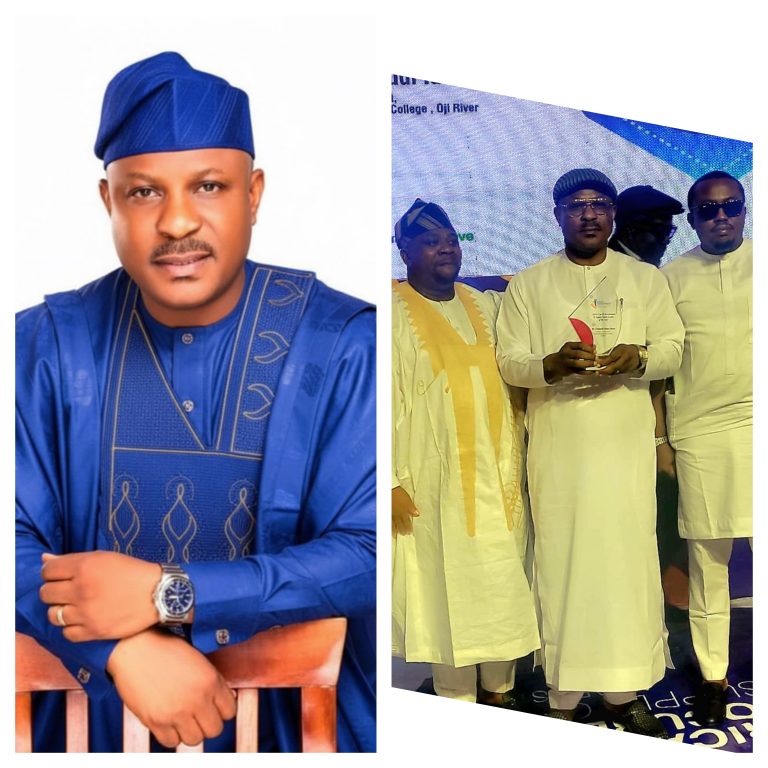
Pastor Idowu Daniel Okeze has continued to make Igbuzo proud with his remarkable achievements in the procurement profession, earning national recognition as one of Nigeria’s leading procurement experts.


In the last few months, Pastor Okeze has received two prestigious awards, further affirming his status as a distinguished professional and an outstanding ambassador of Igbuzo Kingdom.

Most recently, he was named among the Top 50 Procurement and Supply Chain Leaders of the Year, a recognition that highlights his exceptional contributions to the procurement profession, ethical leadership, transparency, and excellence in public service.

Pastor Okeze currently serves as Director of Procurement , Through dedication, professionalism, and commitment to best practices, he has distinguished himself as one of the most respected procurement officers in the country. His professional oversight covers both the South-East and South-South geopolitical zones, spanning eleven states of the federation.

The latest honour has further strengthened his reputation as one of Africa’s leading procurement professionals and has placed Igbuzo on the national and continental map of excellence.

Beyond his professional accomplishments, Pastor Okeze is widely known for his philanthropic activities and unwavering commitment to community development. Many residents describe him as a blessing to Igbuzo, citing his numerous contributions toward the welfare and empowerment of the people.

His achievements continue to inspire young people across Anioma Nation and beyond, demonstrating that hard work, integrity, competence, and dedication can open doors to national and international recognition.

Community leaders and stakeholders have congratulated Pastor Okeze on his recent awards, describing him as a worthy ambassador of Igbuzo whose success reflects the values of excellence, service, and leadership.

As his profile continues to rise, many believe that Pastor Idowu Daniel Okeze remains one of the finest sons of Igbuzo and a shining example of what determination and commitment to excellence can achieve.