By: Newsbreeze
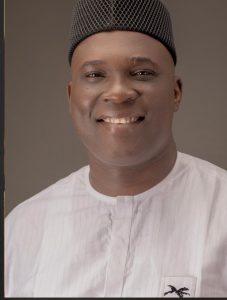
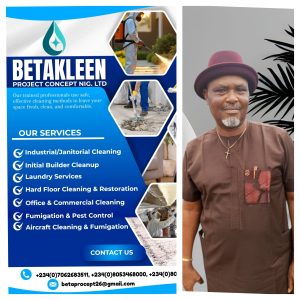 The Chairman/Managing Director of Betakleen Project Concepts NigeriaLtd, Hon Henry Mordi aka Ojokojo, speaks on the company’s official commencement of operations, its range of professional cleaning services, job creation, environmental hygiene and plans to serve industries, airports, businesses and households across Delta State. In this interview with Newsbreeze crew, he explains the company’s mission, standards and commitment to delivering quality cleaning services.
Newsbreeze : Your company has recently commenced operations. Can you introduce the company to the public?
Betakleen : Thank you for the opportunity to speak to the public about our company. Betakleen Projects Consults Nig Ltd, a professional cleaning and environmental hygiene company established to provide reliable, efficient and high-quality cleaning services to individuals, corporate organisations, industries, government establishments and private businesses.
We recently commenced operations with a clear vision of becoming a trusted name in the cleaning industry in Delta State and beyond. Our objective is to provide professional cleaning solutions that meet the needs of our clients while promoting cleanliness, safety, healthy environments and improved standards of hygiene.
Newsbreeze : What inspired you to establish a cleaning company?
Betakleen: The decision was inspired by the growing need for professional cleaning services in homes, offices, industries and public facilities. Cleanliness is essential to good health, productivity and the general well-being of society.
We also recognised that many organisations require specialised cleaning services that go beyond ordinary sweeping and washing. Industrial facilities, aircraft, airports and large commercial buildings need trained personnel, appropriate equipment and effective cleaning methods.
We established this company to bridge that gap by providing dependable services and creating employment opportunities for qualified and trainable Nigerians.
NEWSBREEZE: What specific services does your company offer?
Betakleen: We offer a wide range of cleaning and environmental hygiene services. These include industrial cleaning, residential and domestic cleaning, office cleaning, commercial building cleaning, fumigation and pest control, post-construction cleaning, deep cleaning and specialised facility cleaning.
We are also positioning the company to undertake airport cleaning and aircraft cleaning contracts, subject to the required approvals, safety procedures and operational arrangements.
Our goal is to provide comprehensive cleaning solutions so that clients can depend on one professional service provider for their various cleaning needs.
Newsbreeze: Industrial cleaning is a specialised field. What does your company bring to this sector?
Betalkeen: Industrial cleaning requires proper planning, trained personnel, appropriate equipment and strict adherence to safety standards. It is different from routine household cleaning because industrial facilities may contain machinery, production areas, oil residues, grease, dust and other materials that require specialised handling.
Our approach is to assess each facility, identify its cleaning requirements, develop an appropriate work plan and deploy suitable personnel and equipment.
We intend to serve factories, warehouses, workshops, production facilities and other industrial establishments across Delta State. Our priority is to deliver quality work while respecting the safety requirements of each client’s operation.
NEWSBREEZE: Your company also offers fumigation. How do you intend to ensure safety during such operations?
Betalkeen: Safety is very important in fumigation and pest-control operations. We intend to carry out these services through properly trained personnel using approved products and methods appropriate to each situation.
Before any fumigation exercise, the affected premises will be assessed to determine the nature of the pest problem and the appropriate treatment. We will also provide clients with the necessary safety instructions, including precautions concerning occupants, children, pets, food items and re-entry into treated areas.
We understand that fumigation must be handled responsibly. Our commitment is to protect people, property and the environment while helping clients maintain hygienic and pest-free premises.
NEWSBREEZE: House cleaning may appear simple, but many households require professional assistance. What do you offer in this area?
Betakleen: We offer domestic cleaning services tailored to the needs of individual households, landlords, tenants and property managers.
Our services can include routine house cleaning, deep cleaning, kitchen and bathroom sanitation, window cleaning, floor care, move-in and move-out cleaning, and cleaning after renovation or construction.
We understand that people have busy schedules and may not always have the time or equipment required to maintain their homes to the desired standard. Our company is ready to provide reliable services that allow clients to enjoy cleaner, more comfortable living spaces.
Newsbreeze: Airport and aircraft cleaning are among the services you have identified. How prepared is your company for such assignments?
Betakleen : Airport and aircraft cleaning require specialised training, strict operational discipline and compliance with aviation safety and security requirements.
For airport cleaning, the work may involve terminals, offices, waiting areas, washrooms and other designated facilities.
Aircraft cleaning may involve cabin cleaning, seat and tray-table sanitation, lavatory cleaning and other approved cleaning tasks, depending on the contract.
We recognise that airport and aircraft operations are highly sensitive. Therefore, we will work in accordance with the applicable aviation regulations, facility procedures and access requirements, and undertake assignments only when the necessary authorisations, training and arrangements are in place.
We are ready to engage airport authorities, airlines, aviation service providers and other relevant organisations to explore opportunities in this sector.
NEWSBREEZE : Is your company prepared to take up cleaning contracts anywhere in Delta State?
Betakleen : Yes. Our ambition is to serve clients throughout Delta State, including Asaba, Warri, Effurun, Ughelli, Sapele, Agbor, Oleh and other communities.
We welcome enquiries from government agencies, private companies, industrial operators, estate managers, hotels, schools, hospitals, offices, property developers and individual homeowners.
We are also interested in long-term cleaning contracts, one-off assignments, facility maintenance arrangements and specialised industrial cleaning projects. We encourage prospective clients to contact us so that we can assess their needs and provide appropriate service proposals.
Newsbreeze : What makes your company different from other cleaning service providers?
Betakleen : Our focus is on professionalism, reliability, accountability and customer satisfaction.
We want every client to receive the service agreed upon, within the stipulated time and according to the required standard.
We intend to invest in staff training, appropriate cleaning equipment, quality-control procedures and effective communication with clients. We also understand the importance of punctuality, confidentiality and respect for clients’ property.
We are a new company, but we believe that our reputation will be built through the quality of our work, our conduct and the trust we earn from customers.
Newsbreeze : How will the company contribute to employment and economic development in Delta State?
Betakleen : The cleaning industry has the potential to create employment for young people and other job seekers. As our operations expand, we hope to recruit and train workers in domestic cleaning, industrial cleaning, pest control, supervision, equipment handling and other relevant areas.
We also hope to engage local suppliers and service providers where appropriate. Our long-term ambition is to build a sustainable business that contributes to the state’s economy while promoting professional standards in the environmental hygiene sector.
However, recruitment will depend on available contracts, operational needs and our capacity to provide the necessary training and supervision.
Newsbreeze : What challenges do you anticipate as a newly established company?
Betakleen : Like every new business, we anticipate challenges involving market awareness, access to specialised equipment, competition and the need to build confidence among prospective clients.
Specialised cleaning sectors also require continuous investment in training, safety systems and operational capacity. We are prepared to address these challenges through strategic planning, partnerships, responsible financial management and a commitment to delivering value.
We believe that if we remain consistent and professional, clients will recognise the quality of our services and give us opportunities to demonstrate our capabilities.
Newsbreeze : What is your message to government agencies, industries and private organisations that may require your services?
Betakleen : My message is that we are open for business and ready to engage with organisations that require professional cleaning and environmental hygiene services.
We invite government agencies, industrial establishments, airport authorities, airlines, hotels, commercial centres, property developers and other businesses to consider our company when seeking cleaning service providers.
We are willing to discuss their requirements, conduct site assessments where necessary and develop service proposals suited to their operational needs and budgets.
We also encourage organisations to recognise cleaning as an important investment in health, safety, productivity and the preservation of facilities.
Newsbreeze : Finally, what is your vision for the future of the company?
Betakleen : Our vision is to grow into a recognised and trusted cleaning services provider in Delta State and eventually expand our operations to other parts of Nigeria.
We want to be known for quality service, professional conduct, safe working practices and dependable customer relations.
We also want to build a company that creates employment, supports local economic development and contributes to cleaner homes, safer workplaces and healthier communities.
We invite the public to partner with us as we begin this journey. We are committed to earning the confidence of our clients through hard work, integrity and the quality of the services we provide.
Newsbreeze : How can interested clients contact your company?
Betakleen : Interested individuals, businesses and organisations can contact us through our official telephone number, office address, email and social media platforms.
We welcome enquiries, requests for quotations, site inspections and discussions concerning cleaning contracts anywhere in Delta State.
Our contact details are as follows:
Company name: Betakleen Project Concepts Nigeria Ltd
Telephone: 07062683511, 0805346800
Email: betaprocept26@ gmail.com
We look forward to serving our clients and building lasting business relationships based on trust, professionalism and quality service.


 Delta Abure-Led Labour Party Reaffirms Alliance With AAC Ahead of 2027 Elections
 The Association of Community Newspaper Publishers of Nigeria (ACNPN), Delta State Council, has congratulated the Governor of Delta State, Rt. Hon. Sheriff Oborevwori, on his recognition by the Christian Association of Nigeria (CAN) with an award for Christian leadership.
 The Christian Association of Nigeria (CAN) has honoured Delta State Governor, Rt. Hon. Sheriff Oborevwori, with its prestigious Christian Icon Award in recognition of his commitment to public service, integrity, ethical leadership and Christian values.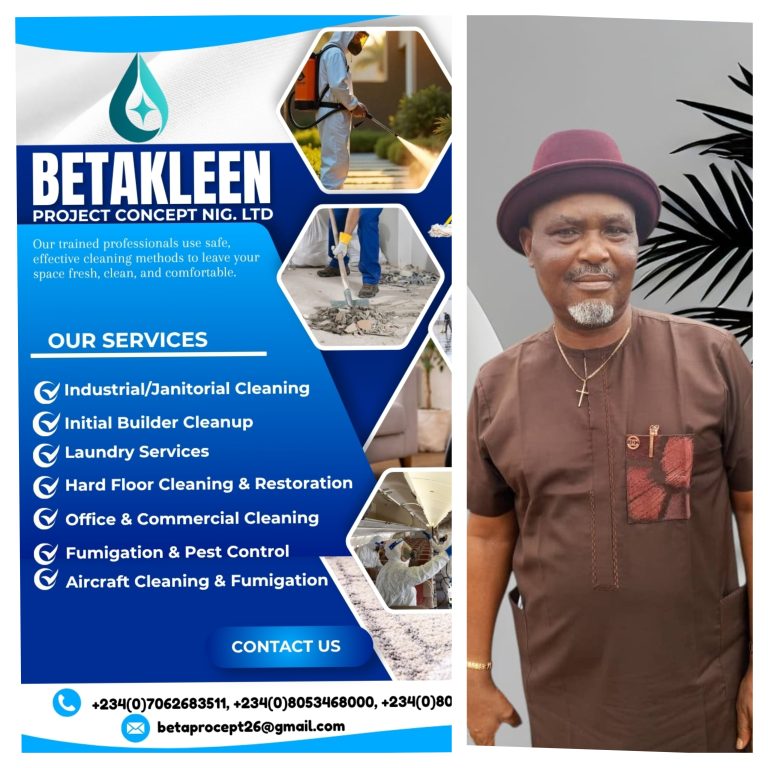
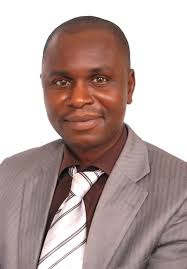
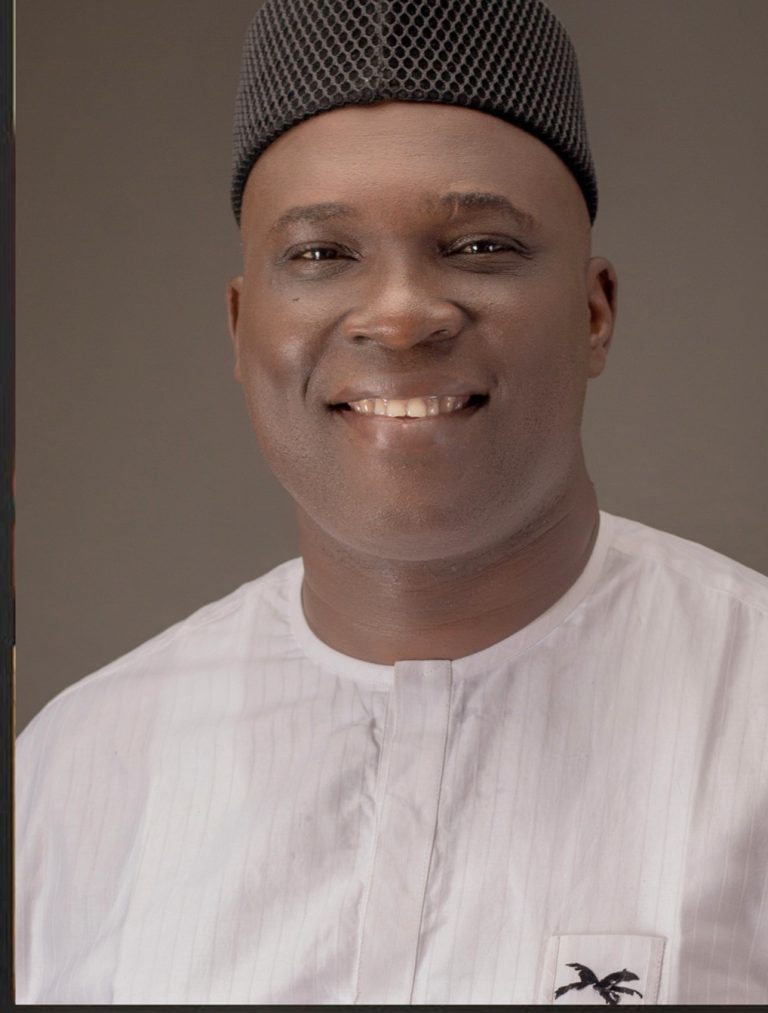
 — Since assuming office in 2024, Dr Jude Ejikeme Obidiegwu, Provost and Chief Executive Officer of the Federal Cooperative College, Oji River, has pursued an agenda aimed at expanding academic opportunities, strengthening agricultural education, building strategic partnerships and equipping students with practical skills for economic advancement.
 The Federal Government has reopened the First Niger Bridge linking Asaba, in Delta State, and Onitsha, in Anambra State, following completion of extensive rehabilitation works aimed at improving structural safety, strengthening security and restoring seamless vehicular movement between the South-South and South-East geopolitical zones.
 By: Newsbreeze
 ASABA — The African Action Congress (AAC) governorship candidate, Engr. Isaac Eshor, has unveiled key components of his proposed development manifesto, outlining plans for open-door governance, infrastructure development, inclusive representation, security and economic empowerment across Delta State.
 Olorogun Chief Innocent Ifeanyi Esewezie, popularly known as “Zezebility,” has begun a new chapter in his political career following his emergence as the All Progressives Congress (APC) candidate for Oshimili North Constituency in the 2027 Delta State House of Assembly election.