By Ike Philip Abiagom
 When Dr. Jude Ejikeme Obidiegwu took over leadership of the institution as Provost and Chief Executive Officer of the Federal Cooperative College, Oji River, in September/November 2024, succeeding the outgoing provost, Dr. Owan Tonica. he inherited an institution with enormous potential and a strategic mandate to contribute meaningfully to Nigeria’s human-capital development.
Today, his tenure is increasingly associated with a renewed vision, stronger partnerships, academic expansion, agricultural innovation and a deliberate effort to reposition the college as a modern centre for cooperative education, entrepreneurship and skills development.
For Dr. Obidiegwu, leadership of the college is not simply about administering an academic institution. It is about building an institution capable of responding to the economic realities facing young Nigerians and contributing to the Federal Government’s drive for food security, job creation and sustainable economic development.
A New Vision for the College
At the heart of the Obidiegwu administration is the determination to transform the Federal Cooperative College, Oji River, into a world-class learning and agricultural innovation centre.
The Provost has consistently advocated a model of education that combines academic knowledge with practical skills, entrepreneurship and industry-relevant training.
Under his leadership, the college has increasingly opened its doors to strategic partnerships involving government institutions, international organisations, universities, cooperative stakeholders and development-oriented individuals.
The objective is clear: to produce graduates who can create opportunities for themselves and others rather than depend solely on conventional white-collar employment.
Presidential Recognition
One of the most significant moments in the transformation journey was the recognition of the college’s progress at the presidential level.
President Bola Ahmed Tinubu, during an engagement involving the institution, commended the transformation taking place at the Federal Cooperative College, Oji River.
The recognition was significant because it provided external validation of the efforts of the management to improve the institution’s infrastructure, learning environment, human resources and overall institutional outlook.
For an institution with a mandate that cuts across cooperative development, agriculture and entrepreneurship, such recognition further strengthened the confidence of stakeholders in the direction of the college.
Expansion of Academic Programmes
Another important aspect of Dr. Obidiegwu’s administration is the drive to expand the academic profile of the institution.
The college has moved towards introducing additional programmes designed to respond to emerging economic opportunities and the changing demands of the labour market.
Among the programmes proposed are Mass Communication, Agricultural Technology, Home and Resource Economics, Hospitality and Tourism Management, and Science Laboratory Technology.
The expansion is expected to broaden educational opportunities for young Nigerians while creating a stronger multidisciplinary foundation for the college.
Agriculture at the Centre of Development
Dr. Obidiegwu has placed agriculture and aquaculture prominently on the institution’s development agenda.
This is particularly significant at a time when Nigeria is seeking innovative ways to improve food production, reduce dependence on food imports and create sustainable employment for young people.
The college has consequently strengthened its engagement in fish farming, agricultural technology and practical skills acquisition.
Through workshops, training programmes and technical collaborations, students and participants are being exposed to modern approaches to aquaculture and agricultural production.
The philosophy is that education should not end in the classroom. It should translate into productive enterprise.
Historic Partnership with Thailand
Perhaps one of the most promising developments under the current administration is the college’s growing international partnership with Thailand.
The collaboration involving the Thailand International Cooperation Agency (TICA), Kasetsart University and the Federal Cooperative College, Oji River, has opened a new chapter in international cooperation.
The partnership focuses on agricultural education, aquaculture, technology transfer, youth development, entrepreneurship and practical skills acquisition.
The planned development of a standard fish farm and agricultural learning facilities through the partnership is expected to give students practical exposure to modern agricultural production systems.
It is a development that could potentially position Oji River as an important destination for agricultural learning and innovation.
From Cooperative Education to Enterprise Development
Dr. Obidiegwu’s leadership philosophy appears to recognise that cooperative education cannot remain isolated from the broader Nigerian economy.
Consequently, his administration has sought to strengthen the relationship between cooperative education, agriculture, entrepreneurship and enterprise development.
The objective is to equip graduates with the knowledge and practical capacity required to form viable cooperatives, establish businesses, manage enterprises and participate effectively in Nigeria’s evolving economy.
This approach also aligns with the broader national conversation on youth empowerment and economic inclusion.
Investment in Human Capital
Institutional transformation, however, cannot be sustained without competent and motivated personnel.
Dr. Obidiegwu has therefore placed emphasis on staff development, reorientation and capacity building.
Through staff engagements and professional development initiatives, the administration has sought to build a workforce capable of operating within a modern and increasingly competitive educational environment.
The message from the management has been that institutional excellence requires teamwork, discipline, professionalism, accountability and commitment to service.
Putting Students at the Centre
Another defining feature of the Obidiegwu administration is its emphasis on students.
The Provost has repeatedly stressed the importance of creating a conducive environment where students can learn, develop practical skills and pursue their educational ambitions without unnecessary obstacles.
His administration has also welcomed initiatives by stakeholders seeking to provide scholarships and educational support to students of the institution.
Such interventions are particularly important for young people from economically disadvantaged backgrounds who might otherwise struggle to access quality education.
Building Strategic Partnerships
The transformation of the college has also been driven by an increasingly partnership-oriented approach.
Rather than operating as an isolated institution, the college under Dr. Obidiegwu has engaged government agencies, legislators, universities, international development partners, cooperative organisations and other stakeholders.
These partnerships have created opportunities for training, scholarships, agricultural development, technical cooperation and institutional growth.
The emerging picture is that of a college becoming more connected to the wider national and international development ecosystem.
A College with a Bigger Future
For many observers, the significance of Dr. Obidiegwu’s tenure lies not merely in individual projects but in the direction of the institution.
His administration is seeking to redefine what a Federal Cooperative College can become in contemporary Nigeria: a place where cooperative education meets agriculture; where agriculture meets technology; where technology meets entrepreneurship; and where education ultimately translates into economic empowerment.
The transformation is still a work in progress, but the trajectory is increasingly visible.
From academic expansion and international cooperation to agricultural innovation, staff development and student empowerment, the Federal Cooperative College, Oji River, is steadily building a stronger institutional identity.
The Obidiegwu Legacy
Leadership is ultimately measured by the institutions leaders leave behind.For Dr. Jude Ejikeme Obidiegwu, the emerging legacy is one of transformation, innovation and renewed ambition.
His administration has demonstrated that a cooperative college can play a much broader role in national development by combining education with practical enterprise, agriculture, technology and human-capital development.
As Nigeria searches for sustainable solutions to unemployment, food insecurity and youth restiveness, institutions such as the Federal Cooperative College, Oji River, have a critical role to play.
And under Dr. Obidiegwu’s leadership, the college appears determined to rise to that challenge.
The story of Federal Cooperative College, Oji River, is therefore no longer simply about an institution teaching cooperative principles. It is increasingly a story about transformation, opportunity and a new generation being prepared to create value in Nigeria’s economy.
Dr. Jude Obidiegwu may have inherited the responsibility of leading the college, but his ambition appears to be much bigger: to leave behind an institution that is stronger, more relevant, more innovative and better prepared for the future.


 By Our Political Correspondent_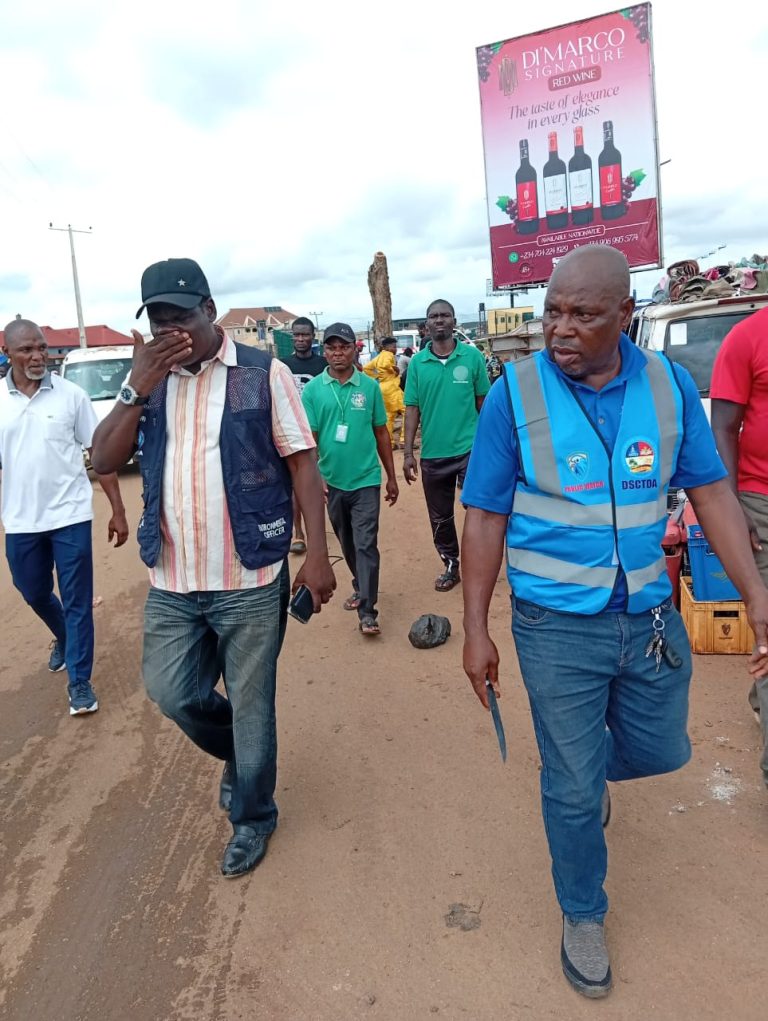
 Speaking on the operation, the Director-General of DSCTDA, Mr. Patrick Ukah, said the exercise was designed to ensure the proper use of public infrastructure and maintain environmental standards in one of the busiest gateways into Asaba.



 THE River Niger Bridge or Onitsha Bridge will be closed to traffic as from Monday 7th of September to enable emergency repairs.


 Chief Lucky Blessing Odiakachukwu Abuah, popularly known as “Bullet,” is a distinguished businessman, renowned real estate investor, and philanthropist. As Chairman and Chief Executive Officer of Hen-Ric Empire Garden Ltd, he has carved a niche for himself as one of Delta State’s leading indigenous real estate developers, earning respect for his entrepreneurial excellence and commitment to community development.
 No fewer than 100 cooperators from Igbuzo and neighbouring communities are set to benefit from a Federal Government-backed empowerment programme facilitated by renowned philanthropist and community leader, Pastor Idowu Okeze,(Ukpe Igbuzo) in collaboration with the Federal Cooperative College, Oji River.
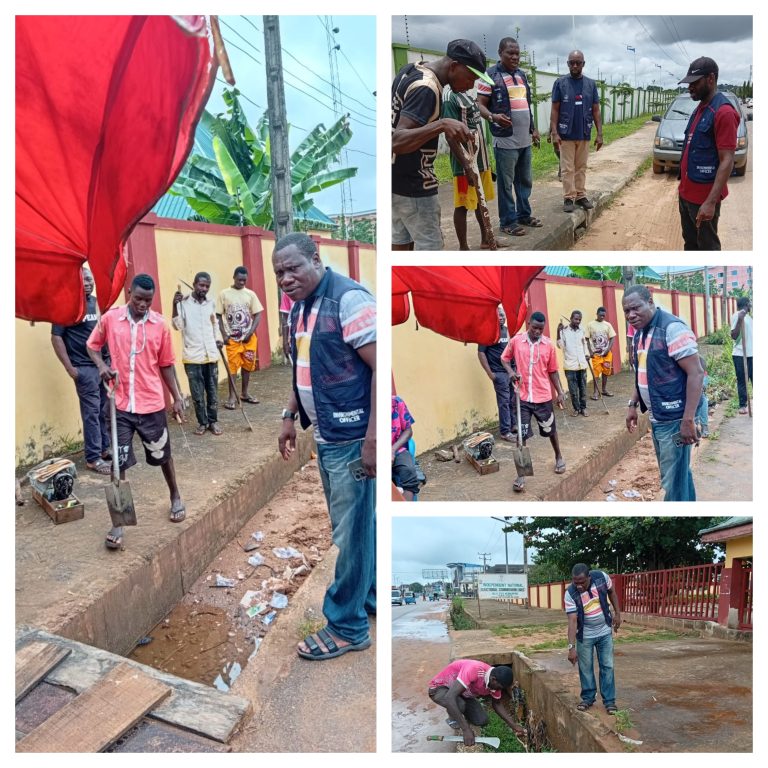
 The Delta State Capital Territory Development Agency (DSCTDA) has stepped up its environmental sanitation campaign across Asaba, embarking on an extensive cleaning exercise aimed at improving cleanliness, preventing flooding and enhancing the beauty of the Delta State capital.
 A new era of agricultural cooperation between Federal Cooperative College, Oji River- Nigeria and Thailand has begun following the signing of a Record of Discussions involving the Thailand International Cooperation Agency (TICA), Kasetsart University (KU), Thailand, and the Federal Cooperative College, Oji River (FCCO), aimed at strengthening agricultural education, aquaculture development, youth empowerment, and enterprise creation.