Home Blog Page 2

2027: Grassroots Support Grows for Engr. Isaac Eshor in Delta

By : Chris Mobuogwu

DELTA – As political activities gradually gather momentum ahead of the 2027 governorship election in Delta State, one name that is increasingly attracting attention across political and community circles is that of Engr. Isaac O. Eshor, a renowned maritime engineer, entrepreneur, philanthropist, and grassroots development advocate.
A proud son of Ebu Kingdom in Oshimili North Local Government Area, Engr. Eshor has built a reputation over the years as a visionary leader whose commitment to community service, youth empowerment, and humanitarian interventions has earned him admiration across Delta State and beyond.

With an impressive career spanning engineering, business development, and social impact initiatives, Eshor is widely regarded as a man whose leadership philosophy is rooted in practical solutions and people-centered development. His contributions to economic growth, job creation, and community advancement have positioned him as one of the emerging political figures to watch as the race toward 2027 begins to take shape.

As a seasoned maritime engineer and entrepreneur, Eshor has distinguished himself in both the private and public sectors through innovation, excellence, and a commitment to creating opportunities for others. His role as an employer of labour and International Ambassador to Intercap Nigeria has enabled him to contribute meaningfully to economic development while mentoring and supporting young professionals seeking career growth.

Political observers and stakeholders have increasingly pointed to his track record of service as a major factor behind growing calls for him to contest the governorship election under the platform of the African Action Congress (AAC).

Supporters argue that his extensive experience in engineering, business management, and grassroots engagement equips him with the capacity to provide effective leadership and drive sustainable development across Delta State.

At the center of Eshor’s humanitarian efforts is the Focus Foundation, a non-governmental organization established to support vulnerable groups and promote community development. Through the foundation, he has spearheaded numerous initiatives that have positively impacted thousands of lives across different communities.
One of the foundation’s most celebrated interventions is its sponsorship of free fibroid surgeries for women who could not afford the medical procedures. The initiative has provided relief, restored hope, and improved the quality of life for many women and their families.

The foundation has also invested significantly in youth development through free skills acquisition and empowerment programmes designed to equip young people with practical vocational and entrepreneurial skills. Beneficiaries have received training in various trades and business ventures, empowering them toward self-reliance and economic independence.

In the education sector, the foundation has supported children from underprivileged backgrounds through the distribution of school bags, learning materials, and other educational resources aimed at encouraging school attendance and improving learning outcomes. The initiative has received commendation from parents, teachers, and community leaders alike.

Senior citizens have not been left out of the foundation’s outreach programmes. Through periodic welfare interventions, relief materials, and support packages, the organization has provided assistance to elderly residents facing economic hardship, helping to improve their wellbeing and quality of life.

Speaking on his vision for leadership, Engr. Eshor maintains that governance must be focused on improving the welfare of the people and creating opportunities for all segments of society.
According to him, leadership can only be meaningful when it translates into measurable improvements in the lives of ordinary citizens. He believes that every community deserves access to quality infrastructure, affordable healthcare, quality education, economic opportunities, and effective representation.

As conversations around the 2027 governorship election continue to intensify, Engr. Isaac O. Eshor’s name is increasingly being mentioned among individuals considered capable of providing purposeful leadership and driving a new era of growth, inclusion, and development in Delta State.

For many of his supporters, his accomplishments in engineering, entrepreneurship, philanthropy, and community service provide a solid foundation upon which a broader vision for a prosperous and people-oriented Delta State can be built.

“Eshor Is Sure for Deltans” has since emerged as a popular slogan among his supporters, reflecting growing confidence in his capacity to offer a fresh perspective on governance and development in the state.

Olejeme Igbo Women Grassroots Forum Targets 2.5 Million Votes for Tinubu, Oborevwori

By: Ike Philip Abiagom

ASABA – The National Coordinator of the Tinubu Torch Bearers (TTB), Dr. Ngozi Olejeme, has intensified efforts to strengthen the grassroots structure of the All Progressives Congress (APC), unveiling an ambitious plan to mobilize over 2.5 million Igbo women across the South-East and South-South regions in support of President Bola Ahmed Tinubu, Delta State Governor Sheriff Oborevwori, and other APC candidates.

Dr. Olejeme made the declaration on Saturday in Asaba during a major women’s political summit that attracted thousands of participants from across the South-East and South-South geopolitical zones.
The gathering, which brought together women from diverse communities and political backgrounds, focused on voter mobilization, political participation, and strategies for strengthening support for the APC ahead of future elections.

Addressing the enthusiastic crowd, Dr. Olejeme commended Nigeria’s First Lady, Senator Oluremi Tinubu, APC National Women Leader, Dr. Mary Alile-Idele, and Delta State First Lady, Deaconess Tobore Oborevwori, for their commitment to advancing women’s participation in governance and national development.

She urged women across Delta State and beyond to rally behind President Tinubu and Governor Oborevwori, stressing that continuity in leadership would help consolidate ongoing reforms and accelerate development.

Today, Igbo women are standing up for Tinubu. We are standing up for Oborevwori, Olejeme declared.
She said the Tinubu Torch Bearers had brought a message of hope and inclusion from the nation’s First Lady and other APC leaders, emphasizing the critical role women would play in shaping the country’s political future.

Announcing the movement’s next phase, Olejeme revealed plans to deploy one million trained women mobilizers across the 95 local government areas in the South-East and South-South regions.

Our mission is to take this message to markets, churches, campuses and communities. Our message is simple: Tinubu represents positive reforms, while Oborevwori represents meaningful development, she said.
According to her, sustained support for the APC would translate into improved infrastructure, economic growth, expanded opportunities for women and youths, and greater dividends of democracy.

A major highlight of the summit was the endorsement of President Tinubu, Governor Oborevwori, former Delta State Governor and senatorial hopeful, Dr. Ifeanyi Okowa, former Minority Leader of the House of Representatives, Hon. Ndudi Elumelu, and Barrister Bridget Anyafulu for elective positions in the 2027 general elections.
Speaking at the event, the South-South Coordinator of the Tinubu Torch Bearers, Dr. Genevieve Mordi, said the organization was entering a more structured phase of grassroots mobilization.

Women constitute the largest voting bloc. When organized, they can determine the outcome of elections, she said.
Mordi disclosed that the group would embark on extensive ward-to-ward, market-to-market, campus-to-campus and community-based mobilization campaigns across Delta State and beyond.

We are not here merely to hold meetings. We are organizing ward by ward, market by market, campus by campus and polling unit by polling unit. More than two million women will speak with one voice in support of Tinubu and Oborevwori, she stated.

The Delta State Coordinator of the Tinubu Torch Bearers, Dame Princess Minnie Igbrude, Ph.D., called on participants to remain united and committed to ensuring electoral success for APC candidates.

Other speakers, including the Vice Chairman of Oshimili South Local Government Area, Hon. Nkechi Amaregbu, and Mrs. Chinwe Okolo, wife of the APC State Chairman, encouraged women to take advantage of the ongoing voter registration exercise and obtain their Permanent Voter Cards (PVCs).

Former PDP State Women Leader, Hon. Kawulia Omoko, Duchess Nerissa Olisa-Ifeajika, Mrs. Ifeoma Onuorah, and Mrs. Edith Umeh also stressed the importance of active voter participation. They expressed appreciation to Nigeria’s First Lady, Senator Oluremi Tinubu, APC National Women Leader, Dr. Mary Alile-Idele, and Delta State First Lady, Deaconess Tobore Oborevwori, for championing initiatives aimed at improving the welfare and empowerment of women.

The APC State Treasurer, Ogbueshi Ayaka Oniawa, urged women to remain steadfast in their support for the ruling party, expressing confidence that the administration’s policies and programmes would continue to yield positive outcomes.
In her closing remarks, Dr. Olejeme called for unity and unwavering commitment among members of the movement.

Let no one divide us and let no one use us. APC is the party that works. When Delta works, Igbo businesses prosper. When Nigeria works, our children succeed. Igbo women are awake, organized and ready, she declared.

Political observers described the gathering as a significant boost to Dr. Olejeme’s grassroots mobilization drive among Igbo women and women across Nigeria.
A former Chairman of the Nigeria Social Insurance Trust Fund (NSITF) and former Board Chairman of Trustfund Pensions Plc, Dr. Olejeme is widely recognized for her contributions to public service, women’s empowerment, and grassroots political mobilization.
She also expressed appreciation to Nigeria’s First Lady, Senator Oluremi Tinubu, APC National Women Leader, Dr. Mary Alile-Idele, and Delta State First Lady, Deaconess Tobore Oborevwori, for their continued support and commitment to empowering women at the grassroots.

The summit ended with renewed calls for unity, voter education, increased political participation, and sustained engagement in the democratic process as preparations for future elections gather momentum across the region.

Ebu Community Hails Oborevwori Over Approval of Ilo–Ebu Grammar School Road Construction

By : Ike Philip Abiagom

EBU, DELTA STATE – The people of Ebu Community in Oshimili North Local Government Area of Delta State have expressed profound appreciation to the Governor of Delta State, , and members of the State Executive Council for the recent approval of the construction of the Ilo–Ebu Grammar School Road.
The road project, which links the Royal Palace to Ebu Grammar School, has been described by residents as a significant milestone and a clear indication that the governor has responded to the community’s longstanding appeals for critical infrastructure development.

Community leaders noted that Ebu has suffered decades of neglect in road infrastructure, a situation they said has limited access to neighbouring communities and hindered economic and social activities.
According to them, the approval of the Ilo–Ebu Grammar School Road has rekindled hope among residents and demonstrated the Oborevwori administration’s commitment to extending development to grassroots communities across the state.

Speaking with Newsbreeze, a community resident, Mrs. Mary Odile, commended Governor Oborevwori’s development-driven agenda, stating that the project would improve mobility within the community and facilitate easier access between key institutions and landmarks.
She described the approval as a welcome development and a sign that the state government has not forgotten the people of Ebu.

While expressing gratitude for the project, the community appealed to the governor to also consider the reconstruction of the Ebu–Ezi-Ukwu Road, which they described as their most pressing infrastructural challenge.
Residents explained that the road serves as a vital gateway connecting Ebu to neighbouring communities but has remained in a deplorable condition for many years, effectively isolating the community and limiting economic opportunities.

The approval of the Ilo–Ebu Grammar School Road is a welcome development and a clear sign that Governor Oborevwori has remembered Ebu. However, our greatest desire remains the reconstruction of the Ebu–Ezi-Ukwu Road, which is crucial to reconnecting our community with neighbouring towns and opening up the area for greater development, a community representative said.

The people expressed confidence that the latest approval signals the beginning of greater government attention to their remaining infrastructural needs.
On behalf of the traditional ruler, palace chiefs, elders, youths, and Ebu sons and daughters at home and in the diaspora, the community extended heartfelt appreciation to Governor Oborevwori for what they described as a historic intervention after years of neglect.

The community also commended the governor’s MORE Agenda and grassroots-focused development policies, describing him as a leader committed to ensuring that no community is left behind in Delta State’s development efforts.
As work is expected to commence on the approved road project, residents expressed optimism that the development would mark the beginning of a new era for Ebu Community and further strengthen its connection to the wider Oshimili North area.

The people concluded by praying for God’s continued guidance, wisdom, and protection for Governor Oborevwori and members of his administration as they continue to deliver development projects across Delta State.

The Bloodline of Service: How the Obi Henry-Ajudua Family Continues to Transform Lives in Igbuzo

By : Ike Philip Abiagom

For many years, Obi (Dr.) Henry Chukwuma Ajudua has remained a shining example of philanthropy, community development, and cultural pride in Igbuzo Kingdom. As President of Vebron Carre Conglomerates and founder of the Vebron Carre Foundation, his commitment to improving lives has earned him admiration both at home and abroad.

Widely regarded as one of the leading faces of the Eze title institution in Igbuzo, Obi Ajudua has consistently used his influence and resources to promote community development, youth empowerment, education, healthcare, and humanitarian causes. Through numerous interventions, he has touched the lives of widows, students, youths, and vulnerable members of society, earning a reputation as a compassionate leader who never forgets his roots.

During the COVID-19 pandemic, he was among the first prominent sons of Igbuzo to provide relief materials and palliatives to residents affected by the economic hardship that accompanied the global health crisis. Over the years, his foundation has continued to sponsor educational programmes, medical outreaches, and empowerment initiatives aimed at improving the welfare of the people.

Many residents describe Obi Ajudua as a man whose passion for the progress of Igbuzo is evident in both his words and actions. His contributions have not only elevated the status of the Eze title institution but have also projected the rich cultural heritage of Igbuzo beyond Nigeria’s shores.

Today, the values of service, excellence, and compassion that have defined Obi Ajudua’s life appear to be finding expression in the achievements of his children.

In what has been described as a historic milestone for Igbuzo Kingdom, Dr. Emmanuel Ogomegbunem Henry-Ajudua has emerged as the first indigene of Igbuzo to successfully complete a Foot and Ankle Surgical Residency programme in the United States.

Born into the respected Henry-Ajudua family, Dr. Emmanuel recently completed an advanced residency in Podiatric Medicine and Surgery, with an additional credential in Reconstructive Rearfoot and Ankle Surgery at the renowned Carilion Clinic in Roanoke, Virginia, United States.

The achievement has been celebrated by family members, friends, medical professionals, and members of the Igbuzo community as a landmark accomplishment that reflects years of hard work, discipline, perseverance, and dedication to excellence.

According to family sources, the feat represents a significant milestone in Dr. Emmanuel’s medical career and further reinforces the Henry-Ajudua family’s longstanding commitment to academic excellence, professional development, and service to humanity.

Speaking during a Zoom interview monitored by Newsbreeze, Dr. Emmanuel disclosed that he intends to continue the humanitarian legacy established by his parents through the Vebron Carre Foundation.

He revealed plans to return home and empower 300 Igbuzo youths through various programmes aimed at creating opportunities and improving livelihoods.

According to him, giving back to society remains a core value that has been instilled in him from childhood.

Our parents taught us that success is not complete until it impacts the lives of others. I look forward to returning home to contribute my quota to the development of Igbuzo and empower our young people, he said.

Community leaders have described Dr. Emmanuel’s accomplishment and his commitment to youth empowerment as further evidence that the spirit of service runs deep within the Henry-Ajudua family.

For many residents, the story of Obi Henry Ajudua and his son, Dr. Emmanuel, is more than a tale of personal achievement. It is a story of a family committed to excellence, community service, and the belief that true success is measured not only by professional accomplishments but also by the positive impact made on society.

As Dr. Emmanuel prepares to follow in the footsteps of his parents through humanitarian service and youth empowerment, many believe that the legacy of giving, compassion, and community development associated with the Henry-Ajudua family will continue to inspire future generations of Igbuzo sons and daughters.

ASABA : Ezenei Residents Lament Prolonged Blackout, Demand Urgent Action from BEDC

By: Ike Philip Abiagom – Newsbreeze

ASABA – Residents of the COBO-1 Transformer area in Ezenei, Asaba, have raised concerns over the continued power outage in their community, calling on the Benin Electricity Distribution Company (BEDC) and the Delta State Government to urgently restore electricity supply to the area.

The residents alleged that they have been without electricity for nearly two months following the collapse of power infrastructure caused by a recent rainstorm accompanied by strong winds that damaged several electricity poles within the community.

According to community members, the damaged poles were promptly reported to the BEDC office in Ezenei with the expectation of a swift response. However, they expressed disappointment that despite repeated complaints and follow-up visits, electricity has yet to be restored.

Residents further disclosed that although replacement poles have since been erected, BEDC officials are yet to reconnect the transmission wires needed to restore power to homes and businesses served by the COBO-1 Transformer.

They questioned the delay, asking how much longer it would take the electricity distribution company to complete the reconnection process and return the community to the national grid.

Some residents also alleged that officials of the company had advised the community to purchase replacement electric poles to facilitate repairs, a request they rejected on the grounds that maintaining and replacing damaged infrastructure falls within the responsibilities of the distribution company.

The community recalled a similar experience about two years ago when the transformer developed a major fault, leaving residents in darkness for almost a year. According to them, the prolonged outage was eventually resolved only after residents contributed funds to repair the transformer themselves following what they described as delays in intervention by the electricity provider.
They further alleged that after the repairs were completed, certain unauthorized demands were made before reconnection could be carried out, a situation they said was eventually addressed through the intervention of a BEDC Regional Manager.

Expressing frustration over what they described as a recurring pattern of neglect, residents said the current blackout has severely affected businesses, households, and economic activities within the area.

We have endured months of hardship due to the lack of electricity. Small businesses are suffering, families are struggling, and daily life has become increasingly difficult. We appeal to BEDC and the Delta State Government to intervene and ensure that power is restored without further delay, a resident said.
The affected residents have therefore appealed to the management of BEDC, particularly the Regional Manager, as well as the Delta State Government, to investigate the circumstances surrounding the delay and ensure the immediate restoration of electricity to the COBO-1 Transformer area.

They stressed that reliable electricity remains critical to economic development, security, and the overall well-being of residents, urging authorities to treat the matter as a priority.

Esewezie Launches Awareness Campaign, Reassures Ibusa Community on Security

By: Ike Philip Abiagom

The Executive Chairman of Oshimili North Local Government Area, Olorogun Hon. Innocent Esewezie, has reassured residents of Ibusa that reports alleging the invasion of schools by bandits in the community are entirely false and should be disregarded.

Hon. Esewezie gave the assurance during a public sensitization campaign carried out across strategic locations in Ibusa through Ibusa FM, following the circulation of rumours that created anxiety among parents and guardians, leading many to withdraw their children from school.
Hon. Esewezie described the reports as misleading and capable of causing unnecessary panic, stressing that security agencies had investigated the claims and found no evidence to support them.

According to him, the security situation in Ibusa remains stable, while the existing security framework in Oshimili North Local Government continues to function effectively in safeguarding lives and property.

“We have engaged with the relevant security agencies, and there is no evidence of any bandit invasion of schools in Ibusa. I urge our people to remain calm, go about their legitimate businesses, and allow our children to return to their classrooms. We must all cultivate the habit of verifying information before sharing it,” he stated.

The council boss urged parents and guardians to send their children back to school without delay, emphasizing that education should not suffer because of unverified information circulated through social media and informal channels.

He also appealed to residents to exercise caution in sharing information, noting that fake news has the potential to disrupt academic activities, create fear among citizens, and negatively affect social and economic life within the community.

Hon. Esewezie reaffirmed his administration’s commitment to maintaining peace and security across Oshimili North, adding that the local government would continue to collaborate with security agencies, community vigilante groups, traditional institutions, and other stakeholders to ensure the safety and well-being of residents.

The chairman assured the people that his administration remains vigilant and proactive in addressing security concerns while encouraging citizens to rely only on verified information from credible sources.

Forgotten for Decades: Ebu Community Laments Neglect, Appeals for Urgent Intervention on Ebu–Ezi-Ukala Road

By: Ike Philip Abiagom- Newsbreeze

Residents of Ebu Community in Oshimili North Local Government Area of Delta State have raised fresh concerns over what they describe as decades of government neglect, calling for urgent intervention to address the worsening state of infrastructure, particularly the strategic Ebu–Ezi-Ukala Road.

For many years, the people of Ebu have remained loyal participants in the democratic process, supporting successive governments and exercising their civic responsibilities with the hope that development would eventually reach their community.
However, many residents say those expectations have largely remained unfulfilled.

Across the community, the signs of neglect are visible. Public schools are plagued by dilapidated buildings, roads have deteriorated beyond recognition, healthcare facilities remain poorly equipped, and growing security concerns continue to trouble residents. With the arrival of the rainy season, the situation has become even more difficult as flooded and damaged roads hinder movement, economic activities, and access to essential services.

Community leaders, elders, youths, and concerned indigenes have expressed deep frustration over what they describe as years of broken promises and unfulfilled commitments by successive administrations. According to them, repeated appeals and requests for intervention have yielded little or no tangible results.

Speaking on behalf of concerned residents, several Ebu sons and daughters described the condition of public infrastructure in the community as heartbreaking, noting that many families and businesses have suffered due to the poor state of the roads and public amenities.

Particular attention has been drawn to the Ebu–Ezi-Ukala Road, which residents described as the economic lifeline of the area. They noted that the road serves as a major link between communities and facilitates the movement of agricultural produce, goods, and services.
However, years of neglect have left the road in a deplorable condition, especially during the rainy season when large portions become almost impassable.

According to community stakeholders, the poor condition of the road has negatively affected commerce, increased transportation costs, discouraged investment, and subjected residents to unnecessary hardship.

The people of Ebu are therefore making a passionate appeal to Governor Rt. Hon. Sheriff Oborevwori to remember the community and include the rehabilitation of the Ebu–Ezi-Ukala Road among priority development projects. They expressed confidence in the governor’s commitment to infrastructure development and urged him to extend the dividends of democracy to the area.

We are not asking for luxury, a community elder stated. “We are only asking for basic infrastructure that will improve the lives of our people and connect us properly to other communities. The Ebu–Ezi-Ukala Road is critical to our economic survival.

Residents insist that addressing the road project, rehabilitating public schools, upgrading healthcare facilities, and strengthening security infrastructure would significantly improve living conditions and restore public confidence in government.

As the cries for intervention grow louder, the people of Ebu hope that their concerns will finally receive the attention they deserve. For a community that has waited patiently for decades, many believe the time has come for action rather than promises, and for development to reach a people who have long felt forgotten.

Women Can Lead, Build Careers and Raise Families Successfully — Dr. Mary Alile Idele

By: Ike Philip Abiagom 

In Nigeria’s dynamic political landscape, where grassroots mobilization, women’s inclusion, and effective leadership remain critical to democratic growth, Dr. Mary Alile Idele has emerged as one of the most influential female political figures in the country. As the National Women Leader of the All Progressives Congress (APC) and Convener of the Tinubu Torch Bearers (TTB), she has distinguished herself through her unwavering commitment to women’s empowerment, grassroots engagement, and the advancement of the Renewed Hope Agenda of President Bola Ahmed Tinubu.

Widely regarded as a visionary leader and strategic mobilizer, Dr. Alile has championed initiatives aimed at strengthening women’s participation in politics, expanding opportunities for youths, and ensuring that the benefits of governance reach ordinary Nigerians at the grassroots. Through the Tinubu Torch Bearers, a movement she conceived and nurtured, thousands of women, youths, and vulnerable persons across the country have been mobilized and empowered in support of national development and inclusive governance.

Under her leadership, the APC Women’s Wing has witnessed renewed vigor, while TTB has grown into a formidable grassroots platform with structures spanning the 36 states and the Federal Capital Territory. Her dedication to service, compassion for the less privileged, and commitment to party unity have earned her admiration across political and social divides.

In this exclusive interview with the Grassroots Newspaper Publishers Network (GNPN) following the commissioning of the Tinubu Torch Bearers National Secretariat in Abuja, Dr. Mary Alile Idele speaks on the vision behind TTB, the achievements of President Tinubu’s administration, women’s role in nation-building, grassroots empowerment, and the future of the Renewed Hope Agenda. She also shares her thoughts on party cohesion, leadership, and the collective responsibility of Nigerians in building a stronger and more prosperous nation.

Excerpts:

Q: Can you introduce yourself and your leadership role within the APC?

Dr. Idele: My name is Mrs. Mary Alile Idele, Ph.D ,the APC National Women Leader and Convener of the Tinubu Torch Bearers (TTB).

Q: As the Convener of the Tinubu Torch Bearers (TTB), what inspired you to establish this grassroots movement?

Dr. Idele: Tinubu Torch Bearers was born out of a desire to take the Renewed Hope Agenda directly to the grassroots and ensure that ordinary Nigerians, especially women, youths, and vulnerable groups, are not left behind. We realized that for government policies and programmes to have meaningful impact, people at the grassroots must not only be aware of them but must also feel included in the process.

The inspiration came from the need to create a platform that would bridge the gap between leadership and the people. We wanted a movement that would mobilize, educate, empower, and encourage active participation in governance while promoting the vision of President Bola Ahmed Tinubu across the country.

TTB is more than a political support group; it is a vehicle for empowerment, inclusion, and nation-building. Our goal is to ensure that the message of Renewed Hope reaches every ward, every local government, and every community in Nigeria while also providing opportunities for women and youths to contribute meaningfully to national development.

Q: What is your vision for Nigerian women?

Dr. Idele: It is important for every woman, from the grassroots to the national level, to feel included in this movement. We already have our National Coordinator, Dr. Ngozi Olejeme, and other coordinators at various levels, including unit coordinators, and we want them all to feel part of the Renewed Hope Agenda.

We want them to feel connected to what is happening in Abuja, not just watch us on television or see us moving around. They need to understand how these developments impact their lives.
As our First Lady handed over the torch to me, I will in turn hand it over to the National Convener and the 36 state coordinators, who will pass it on to local government coordinators and subsequently to coordinators at the grassroots level. It is a movement that has already begun.

From this national secretariat, commissioned today by the First Lady, Senator Oluremi Tinubu, CON, which serves as our hub, we intend to establish an APC Women’s Situation Room. It has never been done before, but we will make it happen.
Through this platform, we will monitor activities across the country and ensure that women remain actively involved.

Q: What is your advice to Nigerian women?

Dr. Idele: My advice to Nigerian women is simple: keep pushing and keep moving. A Nigerian woman is strong. She is a woman of faith, a woman who believes, and a woman who knows that anything is possible.
If there is a goal you want to achieve, write it down, look at it every day, and believe in yourself. Gone are the days when people said women were not good enough or strong enough. Today, women are breaking barriers and achieving remarkable success.
Find role models. Look at women who started with very little but went on to accomplish great things. Learn from them and draw inspiration from their journeys. If they succeeded, then you can succeed too.
I grew up listening to Jimmy Cliff’s song, You Can Get It If You Really Want. One line that always stayed with me says: “You can get it if you really want, but you must try, try and try again.” That message inspired me whenever I faced challenges. If you keep trying, one day you will succeed.

Q: What is the importance of positive influence?

Dr. Idele: The people around us play a significant role in shaping our mindset and success. I do not want women to ever feel they are not enough or that they cannot achieve their dreams. If I can do it, anyone can do it. The key is to find your strength and surround yourself with people who think positively.

If you show me a glass half-filled with water, I will tell you it is half full, not half empty. That is because I focus on possibilities rather than limitations. Women must learn to believe in themselves and surround themselves with people who believe in their vision.
Stay away from people who constantly tell you that you are not good enough or that your dreams are impossible. Instead, stay close to those who encourage and uplift you.

Q: How are we breaking the myths about women in leadership?

Dr. Idele: Many misconceptions have been created about women in politics and leadership positions.
For years, there has been a myth that women in politics cannot maintain successful homes or marriages. That is simply not true. You can be married, raise your children, build a successful career, and still contribute meaningfully to public service.
I am married, I have children, and I also have a Ph.D. Women can successfully balance family life, career growth, and leadership responsibilities.

Q: How important is family support to a woman’s success?

Dr. Idele: Family support makes a lot of difference. Earning my Ph.D was not easy. One day, I simply decided that I wanted to pursue it because it had always been one of my passions. When I discussed it with my husband, he encouraged me and supported my decision.

The sacrifices made by my family, my husband, and my children made it possible for me to achieve that goal. Without their support, it would have been much more difficult.

There were days when I came home exhausted after studying for long hours. My husband would simply say, “Let’s order pizza tonight.” It may sound like a small gesture, but that is what support looks like. It means people around you understand your journey and are willing to help you succeed.

Q: What is your message to the next generation of women?

Dr. Idele: I want Nigerian women, especially younger women, not to allow cultural stereotypes or gender biases to limit their ambitions.

We must pay attention to the people around us. Do not allow anyone to tell you that you are not enough, that you cannot do it, or that your gender should limit your aspirations.
Those days are gone. You can be anything you want to be. You can achieve anything you set your mind to. Believe in yourself, surround yourself with people who share your vision and support your dreams, and keep pushing forward.
That is my message to Nigerian women.

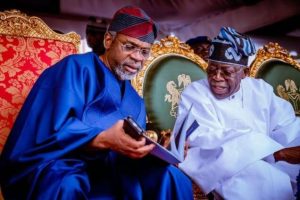
Femi Gbajabiamila: The Silent Engine of Presidential Governance

By : Ike Philip Abiagom

In every generation, a few public servants distinguish themselves not merely by the positions they hold, but by the discipline, preparation, and vision that enable them to shoulder greater responsibilities when history calls. Among such figures in contemporary Nigeria stands , a statesman whose journey to the centre of national leadership has been defined by years of dedication to law, democratic governance, and public service.

Today, as Chief of Staff to President , Gbajabiamila occupies one of the most strategic offices in the country. Although the position largely operates behind the scenes, its influence on governance is immense. The Chief of Staff serves as the bridge between presidential vision and administrative execution, coordinating government activities, facilitating policy implementation, and ensuring that the machinery of government runs effectively.

Yet, the story of Gbajabiamila’s rise cannot be fully understood by examining only his current role. Rather, it is a story of steady preparation, professional excellence, and a commitment to public service that spans decades.

Before politics, Gbajabiamila built a solid foundation in the legal profession. His years of legal practice exposed him to the rigours of advocacy, negotiation, strategic thinking, and the meticulous interpretation of the law. These experiences sharpened his analytical abilities and cultivated the discipline that would later become hallmarks of his political career.

Law, after all, is not merely about statutes and courtroom arguments; it is about understanding people, resolving conflicts, and building consensus. These skills would later prove invaluable in the legislative arena, where persuasion, diplomacy, and constitutional fidelity remain essential tools of effective leadership.

Upon returning to Nigeria after acquiring international legal experience, Gbajabiamila arrived at a critical period in the nation’s democratic evolution. The restoration of civilian rule in 1999 opened a new chapter in Nigeria’s history and created opportunities for a new generation of leaders determined to strengthen democratic institutions and deepen representative governance.

Like many professionals of his generation, he could have remained comfortably within private practice.
Instead, he chose public service, convinced that national development required the active participation of capable individuals willing to contribute to the democratic process.
For him, the legislature represented a powerful institution through which meaningful change could be pursued.

That decision would alter the course of his life and eventually shape his place in Nigeria’s political history.

In 2003, Gbajabiamila was elected to represent Surulere I Federal Constituency of Lagos State in the House of Representatives. His election came at a crucial time when the National Assembly was still consolidating its role within Nigeria’s young democratic order.

The legislature was emerging from decades of military rule and was gradually asserting its constitutional responsibilities. Lawmakers were tasked with strengthening oversight functions, improving legislative processes, and defining a productive relationship between the executive and legislative branches of government. For young parliamentarians entering the House, the challenge was immense.

Gbajabiamila quickly distinguished himself as one of the Assembly’s most diligent and intellectually engaging members. His mastery of legislative procedure, attention to detail, and commitment to parliamentary excellence earned him respect among colleagues. Whether participating in committee assignments or contributing to debates on the floor of the House, he developed a reputation as a thoughtful legislator driven by substance rather than spectacle.

His legal training provided a strong foundation for legislative work, enabling him to engage constructively with proposed laws and national policy issues. More importantly, his measured approach to politics helped him cultivate relationships across party lines, a quality that would later become central to his leadership style.

Beyond Abuja, he remained deeply connected to the people who entrusted him with representation. In Surulere, his responsibilities extended beyond lawmaking. Constituency engagement, educational support programmes, youth empowerment initiatives, and advocacy for community development became important aspects of his service.

This ability to balance national legislative duties with grassroots engagement distinguished him from many of his contemporaries and reinforced his reputation as a representative who understood both policy and people.

As Nigeria’s democracy matured, so too did Gbajabiamila’s influence within the House of Representatives. His capacity to analyse complex policy issues, negotiate competing interests, and build consensus increasingly positioned him for higher responsibilities.

Observers began to see in him not merely a constituency representative, but a parliamentarian committed to strengthening the institutional integrity of the National Assembly itself. His contributions reflected a broader vision of democratic governance rooted in accountability, cooperation, and effective leadership.

Those who worked closely with him frequently cited his calm disposition, disciplined work ethic, and preference for consultation over confrontation. In an environment often characterised by competing interests and political tensions, these qualities enabled him to navigate challenges with patience and pragmatism.

His rise through the ranks of the House was therefore no accident. It was the product of years of preparation, consistency, and a willingness to embrace the demanding responsibilities that effective legislative leadership requires.

As his influence continued to grow, Gbajabiamila would eventually assume more prominent leadership roles, helping to shape parliamentary debates, legislative priorities, and national policy discussions. Those experiences would ultimately propel him to the pinnacle of legislative leadership as Speaker of the House of Representatives, preparing him for even greater responsibilities in service to the nation.

Senator Remi Tinubu’s Record Speaks Louder Than the Akara Controversy

By : Ike Philip Abiagom

In recent days, public discourse has been dominated by reactions to First Lady Senator Oluremi Tinubu’s remarks encouraging women to embrace small-scale entrepreneurial ventures such as frying akara, roasting corn, and selling roasted plantain.
What was intended as a message of economic empowerment quickly became the subject of criticism, political attacks, and social media ridicule.

Yet, amid the noise surrounding the so-called “Akara Controversy,” an important question remains: Does one statement outweigh decades of public service and a proven record of empowering Nigerians?
For Senator Oluremi Tinubu, the answer lies in her track record.

Long before becoming Nigeria’s First Lady, she established herself as one of the country’s most accomplished female politicians, serving three consecutive terms in the Senate and championing legislation and programmes that positively impacted women, youths, and vulnerable citizens.
Throughout her years in public service, Senator Tinubu has consistently advocated for education, healthcare, women’s empowerment, and poverty reduction.
Her commitment to these causes did not begin with her current role as First Lady; it has been the defining feature of her public life.

Under the Renewed Hope Initiative, she has expanded opportunities for thousands of Nigerians through targeted intervention programmes. Women traders have received grants to strengthen their businesses.

Students have benefited from scholarships and educational support. Vulnerable groups, including persons living with disabilities and the elderly, have received assistance aimed at improving their quality of life.

Her initiatives have also extended into healthcare, where support has been provided for campaigns against tuberculosis, breast cancer, malnutrition, and other public health challenges. Through partnerships and advocacy programmes, she has continued to draw attention to issues affecting the nation’s most vulnerable populations.

In the area of digital inclusion, programmes designed to equip women and young people with technological skills have opened doors to opportunities in the modern economy.

These efforts reflect a broader vision of empowerment that goes beyond temporary assistance and seeks to create sustainable pathways to economic independence.

Unfortunately, in Nigeria’s highly polarized political environment, achievements are sometimes overlooked while isolated comments become magnified. Political opponents and critics often focus on a single phrase without considering the context or the larger body of work behind it.

The First Lady’s remarks about small businesses should be viewed within the broader philosophy of entrepreneurship and self-reliance that has empowered millions across the world. Many successful businesses started as modest ventures before growing into major enterprises.
There is dignity in honest labour, regardless of how humble the beginning may be.

Constructive criticism is a healthy part of democracy, but fairness demands that public figures be judged not only by individual statements but also by their contributions and accomplishments.

As Nigerians continue to debate the issue, it is worth remembering that Senator Oluremi Tinubu’s public service record spans decades of advocacy, empowerment, and humanitarian interventions. Those achievements have touched lives in communities across the country and continue to make a difference.

The “Akara Controversy” may dominate headlines today, but headlines fade. Impact endures.

In the final analysis, Senator Oluremi Tinubu’s record of service, empowerment, and commitment to national development speaks far louder than any controversy.