

By: Ike Philip Abiagom
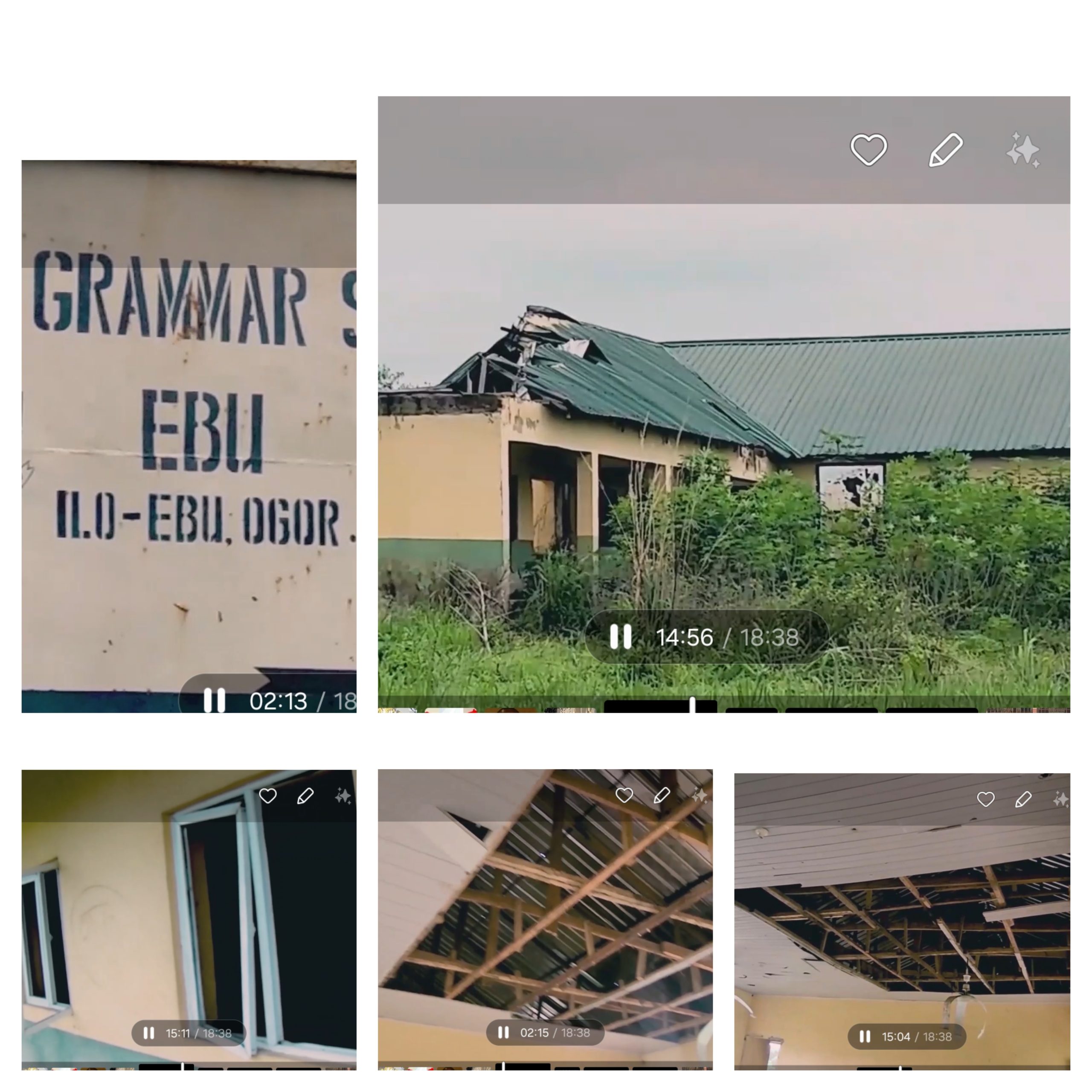
 In Ebu, a once-thriving community in Oshimili North Local Government Area of Delta State, the sound of school bells has grown faint, replaced by the silence of abandonment and neglect. What should be a place of learning and hope has deteriorated into a symbol of systemic failure, leaving the future of an entire generation hanging in the balance.
At the heart of this crisis lies the only primary and secondary schools serving the community—now shadows of what they once were. Crumbling walls, leaking roofs, and empty classrooms define the present reality. Desks and chairs are virtually nonexistent, forcing the few students who still attempt to attend classes to sit on bare floors or stand through lessons. In many cases, there are no lessons at all.
More troubling is the acute shortage of teachers. The schools are grossly understaffed, with some subjects left completely untaught for months. But residents say the blame does not lie with the teachers.
No one wants to come here,” a community leader lamented. There is no road, no electricity, no water. Life in Ebu is extremely difficult. Even those posted here look for ways to leave.
Indeed, access to the schools is itself a daily struggle. The only road leading to Ebu Grammar School becomes impassable during the rainy season, cutting off both students and teachers. On such days, education simply comes to a halt. For many children, prolonged absence from school has become the norm rather than the exception.
The implications are dire. With education widely regarded as the bedrock of any meaningful development, Ebu’s children are being denied the basic foundation needed to compete in an increasingly complex world. Parents who can afford it send their children to neighboring towns, while those who cannot are left with few options.
Community members say Ebu has long suffered from neglect in critical infrastructure, but insist that education should not be added to the list of deprivations.
Idabor Tony said that the continued collapse of the school system could deepen poverty, fuel youth restiveness, and widen inequality.
In a passionate appeal, the people of Ebu have called on Capacity Delta State Governor, Sheriff Oborevwori, to urgently intervene and rescue the community from what they describe as a “total breakdown” of its education system.
We have been patient for too long, another resident Odiri James said. “If other infrastructure has eluded us, at least give our children the opportunity to learn.
Education is their only hope. The community is begging for immediate rehabilitation of school buildings, provision of basic learning materials, recruitment and deployment of qualified teachers, and urgent repair of the access road to the schools.
As the government continues to emphasize educational reform across the state, the situation in Ebu stands as a stark reminder that policy promises must translate into real change at the grassroots.
For the children of Ebu, time is running out. Without swift intervention, a generation risks being left behind—trapped not by a lack of ambition, but by the absence of opportunity.