

By: Ike Philip Abiagom
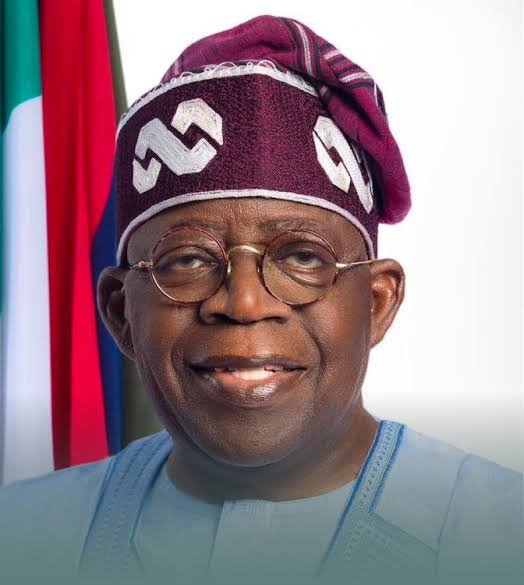
 President Bola Ahmed Tinubu’s administration has quickly become one of the most defining and debated periods in Nigeria’s Fourth Republic, marked by bold economic reforms, expansive infrastructure projects, and a governance style rooted in structural change rather than continuity.
Since assuming office on May 29, 2023, Tinubu has anchored his leadership on the “Renewed Hope Agenda,” a policy framework aimed at repositioning the nation’s economy through subsidy removal, tax reforms, foreign investment attraction, and institutional restructuring. While supporters view the approach as a long-overdue correction of fiscal imbalances, critics argue that the policies have imposed significant hardship on Nigerians already grappling with rising living costs.
A major turning point in the administration came on inauguration day with the announcement of the removal of fuel subsidy—an action previous governments had avoided due to its political sensitivity. The decision effectively ended a costly system that drained public finances for decades, freeing up resources for development. However, it also triggered immediate increases in fuel prices, transportation costs, and inflation, intensifying economic pressure on households.
Alongside subsidy removal, the administration introduced foreign exchange reforms to unify multiple exchange rates and boost investor confidence. While these measures signaled a shift toward market-driven policies, they also contributed to currency volatility and short-term economic uncertainty.
Infrastructure development has emerged as a central pillar of Tinubu’s agenda. Among the flagship projects is the proposed Lagos-Calabar Coastal Highway, a massive 700-kilometre corridor designed to connect key coastal states, enhance trade, and promote tourism. The federal government has also pursued additional highway projects, including a proposed Sokoto-Badagry route, underscoring its commitment to transport-led economic growth.
In Lagos, widely regarded as Tinubu’s political base, the administration has continued to reinforce ongoing development projects. Notably, the commissioning of the Opebi–Mende–Maryland-Ojota Link Bridge has improved connectivity across major commercial hubs, easing traffic congestion and boosting urban mobility. The project reflects a broader governance model that emphasizes continuity and long-term planning.
Beyond physical infrastructure, the administration has invested in institutional modernization. Projects such as the Lagos Geographic Information System (LAGIS) facility and the Bola Ahmed Tinubu Administrative Complex highlight efforts to strengthen land administration, improve data management, and enhance public sector efficiency.
On the economic front, Tinubu’s government has intensified efforts to boost revenue generation through tax reforms and reduced dependence on oil earnings. The administration has also supported initiatives aimed at strengthening domestic refining capacity, including backing for large-scale industrial investments like the Dangote Refinery.
Despite these efforts, challenges remain significant. Rising inflation, food insecurity, and concerns over debt financing for major infrastructure projects continue to generate public debate. Environmental and social concerns have also been raised, particularly regarding large-scale developments such as the coastal highway.
Politically, Tinubu’s governance style reflects his legacy in Lagos, where he built a reputation for strong revenue systems and urban development. This model now appears to be shaping federal policy, with an emphasis on infrastructure, taxation, and centralized planning.
On the international stage, the President has maintained an active role, particularly within ECOWAS, positioning Nigeria as a key player in regional stability. However, domestic economic performance remains the primary benchmark for assessing his administration.
As Nigeria moves further into this reform-driven era, the long-term success of Tinubu’s policies will depend on their ability to translate into tangible improvements in the lives of citizens. Whether his administration will be remembered as a turning point in national development or a period of difficult transition remains a question that only time can answer.