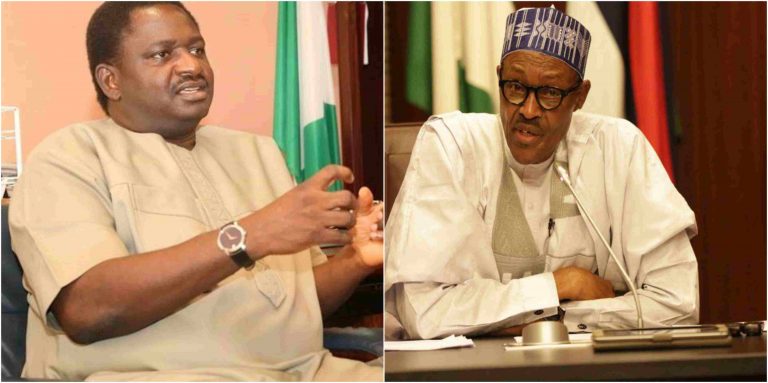
[dropcap] S[/dropcap]pecial Adviser to the President on Media and Publicity,Mr Femi Adesina, says President Muhammadu Buhari will complete ongoing legacy projects in the South-East before the end of 2023.
Adesina gave the assurance when he received the Editorial management of Orient Daily Newspaper, led by veteran journalist and Editor-in-Chief, Stanley Egbochuku, at the State House, Abuja, on Thursday.
The presidential spokesman said several ongoing federal projects in the five south-eastern states of Abia, Anambra, Ebonyi, Enugu and Imo were at different stages of completion.
He recounted that in 2018, the Minister of Information and Culture, Lai Mohammed had listed 69 ongoing projects in the region, mainly roads and bridges, funded from budgetary allocations, the Sukuk Bond and the Presidential Infrastructure Development Fund.
‘‘Last December, I had reason to travel to Onitsha, Anambra State and onboard the flight to Asaba, I remember the Obi of Onitsha, Igwe Nnaemeka Alfred Achebe, asking me to ‘thank the President profusely for us on the second Niger Bridge.’
‘‘The good thing is that the project will be completed by February 2022, as promised by the contractor handling it,’’ he said.
Adesina welcomed the initiative by the media group to partner with his office to uphold professionalism in the media industry.
In his remarks, Egbochuku, a former Vice President of African Capital Alliance, who worked variously with Daily Times of Nigeria Plc, Concord Press Nigeria Limited, Business Day Media Limited, said:
‘‘Journalism is a profession that must be respected and we believe that the President’s media handlers (Femi Adesina and Garba Shehu) have done so much to promote this.
‘‘You have not disappointed us in the media industry and must be assured of our strong support.”
The Orient Daily Editor-in-Chief and Chief Operating Officer told the president’s spokesmen that the Awka-based publication recently received an approval for a facility, which would boost its operations and circulation across the country.
According to him, the media organisation with the slogan, ‘‘Setting the Bound Free,’’ wants to be a legacy media house, adding; ‘‘if we work with you we know we will get the needed support.’’
Egbochuku, a close associate of the late Chief MKO Abiola, thanked Buhari for conferring the highest national honour of Grand Commander of the Federal Republic (GCFR) on the acclaimed winner of June 12, 1993, presidential election.
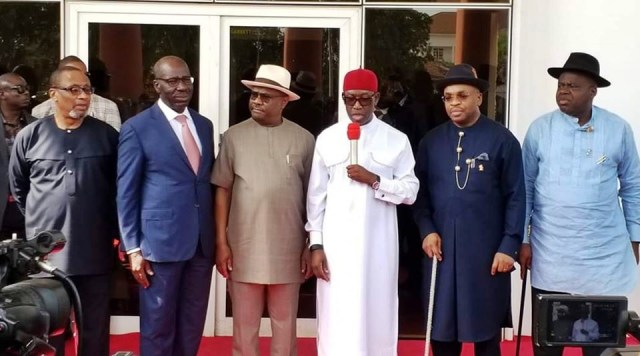
Chairman South South Governors Forum and Governor of Delta State Senator Dr Ifeanyi Okowa (3rd right), Governor Nyesom Wike of Rivers (3rd left), Governor Emmanuel Udom of Akwa Ibom (2nd right), Governor Douye Diri of Bayelsa (right), Godwin Obaseki of Edo (2nd left) and Deputy Governor of Cross River Prof Ivara Esu (left) during the meeting of the South South Governors Forum meeting at Government House Asaba on Thursday, March 5, 2020
This was part of decisions reached at the South South governors Forum meeting held at Government House Asaba on Thursday, March 5, 2020.
Briefing the press after the meeting, the Chairman South South Governors Forum and Governor of Delta State Senator Ifeanyi Okowa said the issue of security and development was dear to the governors hence the need to come out with a formidable regional security outfit to guarantee peaceful coexistence.
He said Bayelsa, Rivers, Akwa Ibom, Cross River, Edo and Delta (BRACED Commission) would work out modalities on the operations of the proposed regional security.
Governor Okowa said the forum has resolved that all Commissioners of Health from States in the region will meet immediately to work out modalities on how to curtail the laser fever epidemic and the dreaded Corona virus disease that is currently posing global health challenge.
He said there was no known case of corona virus in South South region but there was need to take proactive measures.
The forum according to the chairman also called on President Muhammadu Buhari to constitute the governing board of the Niger Delta Development Commission NDDC to enable it perform its constitutional mandate effectively.
He said the forum resolved that the thirteen percent derivation must be taken out of the fund from oil proceed before the rest of the money is shared by Federal Accounts Allocation Committee, FAAC.
The forum resolved to provide logistics to revive the BRACED Commission because of its input in regional economic growth and collective development of the region.
The meeting had in attendance five Governors including that of Rivers, Edo, Akwa Ibom, Bayelsa and Delta while the governor of Cross Rivers was absent but represented by his deputy.
[dropcap]T[/dropcap]he House of Representatives on Wednesday, 4th March, passed to second reading a bill seeking for the establishment of a Federal University of Technology in Asaba, Delta State.
The Bill sponsored by the Minority Leader of the House, Hon. Ndudi Elumelu, is to provide quality technical education amongst others, for teeming youths of the region and Nigeria in general.
The bill is titled, ” A bill for an Act to Provide for Establishment of Federal University of Technology, Asaba, Delta State for the Promotion and Development of Technical Education in Nigeria and to make Comprehensive Provisions for its Due Management and Administration; and for Other Related Matters”.
Hon. Ndudi Elumelu moved for the second reading of the Bill and was seconded by Hon. Kingsley Chinda at the plenary presided over by the Speaker, Rt. Hon. Femi Gbajabiamila.
Leading the debate Hon. Elumelu stated that the Bill, which composes of 29 clauses and divided into five (6) parts seeks to establish the Federal University of Technology Asaba, Delta State, which will be charged with the responsibility to implement training for the development of technologist in the country, measure, evaluate students and make comprehensive provisions for its management and administration amongst others.
According to him, the desire for the university is to provide more opportunities and create a level playing field for all Nigerians seeking to gain technical education in the region which is not only the bedrock of development but also in line with the recommendations of the United Nations Educational Scientific and cultural organization (UNESCO), which says that a minimum of 26 percent of a country’s annual budget and 6 percent of the Gross Domestic Product (GDP) should be invested in funding education.
In giving justification for the establishment of the University, Hon. Elumelu who represents Aniocha/Oshimili Federal Constituency of Delta State in the House of Representatives, said that “Asaba in Delta state is one of the few state capitals without a federal university despite its advancement, population and strategic location” adding that the need to address the technologically disadvantaged situation in the area has also necessitated the desire to propose the institution.
Elumelu, who described the bill as a straight forward legislation, urged members to support the establishment of the institution in Asaba, as the site of the College of Education (Technical) being proposed for its location already “has facilities that can meet the standard of a University, hence the need for the upgrade”.
He listed the facilities to include, School of Vocational Studies, Standard and Well Equipped Functional Library, Administrative blocks, Staff quarters, Lecture Theatres, Shuttle buses, Multipurpose hall, Health centre, Technical works building and Playing grounds amongst others and appealled for overwhelming support from members to vote the bill for second reading.
Members unanimously voted in favour of the Bill which was passed for second reading and subsequently referred to the House Committee on Tertiary Education for further legislative action.
[dropcap]R[/dropcap]ecently, more Nigerians have joined in the call for the actual defeat of the BokoHaram insurgents, arrest and prosecution of bandits and kidnappers and the return of enduring peace and security in the country. They also believe that this can only be achieved if there is a total restructuring of the country’s security architecture.
DESPITE the assurances from the military and the officials of government that Boko Haram insurgents have been decimated and that the perpetrators of various heinous crimes, including banditry, kidnapping and that the perpetrators would be arrested and punished, the daily reports of the activities of the insurgents and the bandits have proved otherwise and this development is responsible to the recent protests and demands for changes to be effected in the security architecture of the country.
Catholic bishops protestCatholic bishops protest
The latest protect on Sunday, March 1, 2020, was by the Catholic Bishops of Nigeria, which led thousands of their followers and other Christians to march through some streets of Abuja to protest against the worsening insecurity in the country.
The protesters, who wore black attires, denounced the barbaric killings of Christians by the Boko Haram insurgents and the incessant cases of kidnapping for ransom in the country.
Speaking after the protest, the President of the Catholic Bishops Conference of Nigeria (CBCN)), Most Rev. Augustine Akubeze, said: “We embarked on a peaceful protest on behalf of over 50 million Catholics and over 100 million Christians in Nigeria. We are protesting against the brutal killings of innocent Nigerians by Boko Haram and terrorist herdsmen, who are invading people’s farmlands forcefully. We are gathered here to register our protest against the kidnappings for ransoms in every part of Nigeria.
“We are gathered to mourn the women, babies, children and men who have been killed by the terrorists. We are gathered to let the Federal Government of Nigeria know that we are tired of hearing from them that Boko Haram has been technically defeated even when they still attack with impunity. Even local and international security experts have concluded that the terrorists use weapons that are very sophisticated. Our protest is part of our religious obligations to speak prophetically against whatever is against God’s commandment.”
According to him, the silence of President Muhammadu Buhari on “the worsening insecurity problem in the country is sowing and breeding a seed of mistrust, and the longer it stays, the more you lose those who could have given you the benefit of the doubt”.
“As things stand now, it appears only a few Nigerians can defend you with reasons, only a few Nigerians can argue that your silence is not an endorsement of the barbaric actions of the terrorists and criminals,” he said.
The bishop urged Buhari to listen to the “cries of Nigerians, and also listen to the National Assembly, which has unanimously called on you to change the security chiefs and take more proactive actions to prevent terrorist attacks in the country, especially in the North East.”
He advised Buhari to seek foreign help over the raging attacks on Nigerians as well as reassure the citizens that there was no agenda to Islamise them by not “giving an undue advantage to a section or religion and its adherents bearing in mind that Nigeria is a secular state”.
The Catholic Bishops Conference and the Christians are not alone in this agitation as the main opposition Peoples Democratic Party, PDP, had earlier staged some protests and asked Buhari to resign for “failing to secure the nation’ and putting her democracy under threat”.
Uche Secondus
The PDP’s national chairman, Uche Secondus, who led the party members during their protests at the embassies of the United Kingdom and the United States in Abuja, said that there was an urgent need to seek international intervention to help improve security and the Nigerian judicial system.
He explained that the party was in full support of its Senate minority leader, Senator Eyinnaya Abaribe, who asked President Buhari to resign his office for “failing to solve the security challenges in the country”, years after Nigerians voted the APC.
The PDP Chairman said “Mr President has lost control of security” and that Nigeria was “in danger and we are in trouble”.
“Today we back our minority leader asking that Mr President should resign because he has lost control,” Secondus told journalists recently in Abuja.
Speaking in the same vein, the Northern Elders Forum, NEF, had in February accused President Buhari’s administration of failing to secure the citizens from the incessant attacks by bandits and other terrorist groups.
Professor Ango Abdullahi
The NEF Convener, Professor Ango Abdullahi, lamented that poverty, particularly in the north, and massive social security have worsened under this administration.
“With this type of mindset, it is difficult to see how President Buhari can accept the challenge to radically improve his handling of our security situation.
“Nonetheless, we believe that Nigerians must continue to raise our voices and organise through all legitimate means to demand that the administration addresses major failings in his perception of our situation and his response to our demands for our rights to security,” he told journalists after the group’s meeting in Zaria.
In addition, some Nigerians have also called for major restructuring of the security architecture of the country and the removal of the Service Chiefs. They also called for coordination between the various
arms of the military in their battle against insurgency as well as the deployment of new formations to take over from the current formation fighting the insurgents in the Northeast.
But in their usual defence of government’s position on any issue, the Special Adviser to President on media and publicity, Femi Adesina, described the statements by the Northern Elders Forum as comments from a quasi-organization that boasts of no credible membership, and its leader is akin to a general without troops.
Adesina said in a recent statement that “hearing that title, northern elders forum, you would think the body was a conglomeration of true elders. But the truth is that NEF is just Ango Abdullahi, and Ango Abdullahi is NEF.
Femi Adesina
He noted that before the 2019 presidential election, the ‘one-man army’ called NEF had shown its antipathy against President Muhammadu Buhari, and its preference for another candidate, yet they all got beaten.
According to Adesina, the Northern Elders Forum is merely waving a flag that is at half-mast and that President Buhari steadily and steadfastly focuses on the task of retooling Nigeria.
In his own defence, Adesina’s colleague, Garba Shehu said that President Buhari was the best man to destroy the Boko Haram insurgents in the northeast and bring an end to their carnage in Nigeria.
“President Buhari is going to finish off these terrorists. He alone can do it,” Shehu assured in a statement he issued earlier in January.
Reacting to the call by Senator Enyinnaya Abaribe asking President Buhari to resign for ‘failing to secure the nation’, Shehu said that “if a leader like President Buhari needs to resign, there are millions of other Nigerians who need to resign, including the lawmaker”.
He accused Abaribe of unlocking the door to enable the escape of traitorous and treasonable suspects.
Shehu further claimed that Abaribe’s party ‘raped’ the nation and left it collapsing in 2015, adding that President Buhari has been fixing things up since he came into office.
He noted that the President is working hard to keep Nigeria and Nigerians out of the harm terrorists have unleashed in the entire Sahel and Sub-Saharan Africa and assured that the reign of terror will soon come to an end with the support of Nigerians and her foreign friends.
Speaking on the issue of insecurity, with particular reference to the role of Boko Haram and the Islamic State in West Africa (ISWAP), the Minister of Information and Culture, Lai Mohammed, called for support for the gallant men and women, “who are making all the necessary sacrifices to keep us safe”.
Lai Mohammed
The minister told journalists in Abuja at a news conference late in February that Boko Haram and the ISWAP “have recently changed their strategy, in the wake of their ceaseless pounding by the military”. At its peak, Boko Haram, in particular, was a fighting force, conquering and keeping territory, installing and deposing Emirs and also collecting taxes. It had the capability to take the battle to many states, mostly in the north, as well as the Federal Capital Territory, where it bombed the police headquarters, the UN Complex, shopping complex and motor parks.
According to the minister, soon after assuming office on May 29, 2015, Buhari directed the Command and Control centre to relocate from Abuja to Maiduguri and rallied the support of our neighours as well as the international community. This yielded immediate results as Boko Haram was not only decimated, but all the territory under its control was recovered. The insurgents also lost the capability to carry out the kind of spectacular attacks they were used to, and then resorted to attacking soft targets, including churches and mosques as well as schools.
“But in the wake of a renewed onslaught by our tireless military against Boko Haram and their ISWAP allies in recent times, the insurgents have apparently changed their strategy: They have started targeting Christians and Christian villages for a specific reason, which is to trigger a religious war and throw the nation into chaos. Apparently, they have realized how emotive and divisive religion can be, when exploited by unscrupulous persons,” he said.
The minister also said that the renewed vigour by the military in the war against the insurgents was paying off handsomely, especially, the killing of top ISWAP leaders at two separate meeting venues at Marte Local Government in Borno State a few days ago
As laudable as some of these military successes may appear to be, Nigerians are consistent in their demands for the actual defeat of the insurgents, release of the Nigerians in their captivity, including the schoolgirls and the restoration of enduring peace and security in the country.
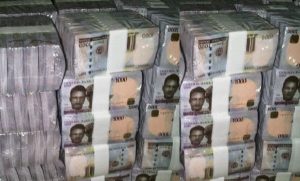
[dropcap]T[/dropcap]he World Health Organisation (WHO) has advised people to use contact-less technology instead of cash as banknotes may be spreading coronavirus.
The infectious COVID-19 could be carried on the surface of banknotes for several days, the WHO warned on Monday night.
To stop the spread of the disease, people should use contactless payments where possible and wash their hands after handling cash, a WHO spokesman said.
The Bank of England also recognised that banknotes “can carry bacteria or viruses” and encouraged frequent hand washing.
Last month banks in China and Korea began disinfecting and isolating used banknotes as part of efforts to stem the spread of the deadly virus.
Ultraviolet light or high temperature is being used to disinfect and sterilise banknotes, before the cash is sealed and stored for up to 14 days before being recirculated, China’s central bank said at a press conference.
[dropcap]N[/dropcap]ot many people knew about Louis Odumegwu Ojukwu, but a greater number of people knew his son, Late Chief Emeka Odumegwu Ojukwu .
Sir Louis odumegwu ojukwu , the first-ever recorded Nigerian Billionaire. He was considered the wealthiest person in Nigeria and Africa as at that time. His Net-Worth calculated to be Over 4 billion dollars as of 1950s.
He was also either chairman or on the board of directors of some of Nigeria’s most profitable companies such as Shell Oil Nigeria Limited, Guinness Nig. Ltd, Nigerian National Shipping Lines, Nigerian Cement Factory, Nigerian Coal Corporation, Costain West Africa Ltd, John Holt, Nigerian Marketing Board amongst others
He started his professional career at the agricultural department before leaving to join John Holt as a Tyre sales clerk before diversifying into the textile and transport sector exhibiting the entrepreneurial spirit of the South East.
He was also reportedly the first Nigerian Billionaire man to own a Mercedes Benz in all of Nigeria then. Starting as a low-level employee to a billionaire shows that hard work, focus and determination pay off. It was also reported that his Rolls Royce was used to carry the queen of England on her first visit to Nigeria, he was the only African man that own a limousine.
The record of his Net-Worth at a time was not able to be calculated, because he was into real estate and owns up to 70% of landed properties in Lagos.
[dropcap]A[/dropcap] Federal Capital Territory High Court, Abuja has suspended Adams Oshiomhole as the National Chairman of the All Progressives Congress, APC.
Justice Danladi Senchi ordered the suspension on Tuesday.
Mr Senchi said Mr Oshiomhole should remain suspended pending the determination of the susstantive suit seeking his perpetual removal as chairman of the party.
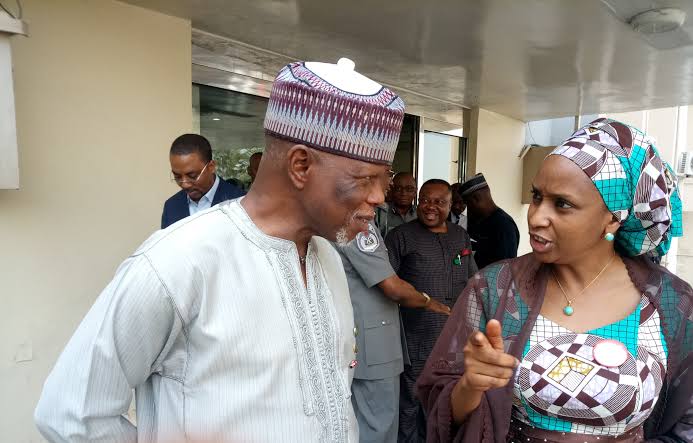
[dropcap]T[/dropcap]he Managing Director of Nigerian Ports Authority (NPA) Hadiza Bala Usman has knocked the lopsided operations of the Nigeria Customs Service at the seaports as the major cause of gridlock along the port access roads in Apapa.
Hadiza has however charged the Customs high command to automate its clearance processes to reduce human contacts and to also streamline activities of its various units including the Federal Operations Unit (FOU) Zone A’ and the Customs Strike Force.
The NPA boss stated this last week at a Stakeholders Consultation on Ease of Shipping and Clearing of Charitable Items, an event organised by the Deputy Senate President, Ovie Omo-Agege in collaboration with Nigerian Shippers Council.
Represented by the Lagos Ports Manager, Mrs Bola Olotu, the NPA boss condemned the multiple checkpoints mounted by Customs officers in form of units along the port corridor, she said that goods that have been dully cleared from the port are being subjected to scrutiny outside the port, thereby causing traffic gridlock.
She called on the Customs service to make good its campaign of sanctioning corrupt officers who sometimes cleared some of the questionable cargoes, she called for appropriate sanctions.
According to her, often time when a container is found wanting, Customs is always quick to arrest the clearing agents and importers without exposing the officers that appended his or her signature on the documents, releasing the cargo
Hadiza said “We kept wondering, every time we talk of none compliance, everything is always blamed on the clearing agents and the importer, but what we are asking is that, somebody signed these import documents at the port, a customs official endorsed the documents to have been in order and the goods exited the port”
“But as soon as the cargo is out of the port, there is another unit stopping people, checking the same documents and compounding the traffic situation, when this happens, the truckers are not willing to proceed in their journey, you would see them parking along the common user areas of port access road”
“Often times, when you ask them to please move, if it is an night, they wold tell you that they are prone to attacks or they would tell you they are trying to clear themselves with the next customs unit which is still ahead”
“The Customs service actually gave us explanation why they had to do that, according to them, the FOU is actually to ensure that everything is in order, they also have the strike force team”
“We now asked a question, can’t they start looking at harmonising some of these units, if there is automation, all units of the Customs would get to know what is being cleared out of the port and who signed the documents out” she said
She NPA boss appealed for the procurement of scanning machines to ease cargo examination at the Nigerian ports, even as she lamented that Nigeria cannot continue to carry out one hundred examination of consignment at the port.
“We need scanners at our ports, it would reduce some of the challenges, if we have scanners, we wouldn’t have to conduct much physical examinations and exposing Customs officers to having interface direct with those importing cargoes” she said
[dropcap]T[/dropcap]he Police Command in Edo said on Wednesday said that it has arrested a police inspector, who allegedly shot a civilian, Richard Odia to death in Benin in February.
This Police Public Relations Officer (PPRO) in the state, DSP Chidi Nwabuzor, made the disclosure in a statement in Benin.
Nwabuzor said the state Commissioner of Police, Lawan Jimeta, had directed an immediate orderly room trial of the inspector.
He explained that the police inspector was serving in Delta Command where he was attached to the Department of Operations and was on special duty to 301 Construction Company, Asaba.
The command’s spokesman said the policeman was on escort duty from Asaba to Benin when he shot and killed the deceased.
He also said that the incident happened on Feb. 11 at about 7.00 p.m.
According to Nwabuzor, the police personnel, shot and seriously wounded the deceased with an AK-47 rifle at a road construction site at Asagba boundary on Benin-Auchi expressway, after a misunderstanding.
“The deceased was immediately rushed to the University of Benin Teaching Hospital (UBTH), where he unfortunately died on Feb. 12.
“The Commissioner of Police, Lawan Jimeta, hereby condoles with the family and friends of late Richard Odia on his untimely death and assures them that justice will prevail in this case.
“He has also appealed to them to remain calm and law-abiding as the command under his leadership, holds high premium on human lives.
“He has however, invited any one who witnessed the incident to come and give evidence during the trial because without witnesses, the aim of conducting the orderly room trial will be defeated,” he stated
[dropcap]D[/dropcap]elta State Governor, Sen. (Dr) Ifeanyi Okowa on Monday commended the Nigeria army for their cooperation with other security agencies in tackling security challenges in the state.
The Governor stated this in Asaba during the official inauguration of the Headquarters 63 Brigade, Nigeria Army.
63 Brigade Nigeria Army HQs Complex in Asaba, Delta State
He commended the Nigerian Army engineering corps for their efforts at transforming the Brigade Headquarters.
He also urged the army and other security agencies to intensify efforts in resolving frequent dispute between farmers and herders across the state.
“I must truly thank the Chief of Army Staff for bringing this Brigade to Delta. We used to be supervised by the Brigade in Benin and we were excited when we heard of the approval for a Brigade in Asaba.
“I thank God for the provision of funds for the realisation this Brigade and I thank you for the support because the operationalisaion of this Brigade will help us to achieve greater peace in Delta.
“We have a had a very warm relationship with your officers here and that of the 6 Division.
“As a state we take security matters very seriously even as we meet twice a month.
“Your officers have cooperated with other sister security agencies and that has helped us in achieving the peace we enjoy in the state.
“Delta is peaceful today, though we have had few incidences that makes us sad but with all hands on deck we will surmount all the security challenges.
“We will continue to support the army and other security agencies in the state as much as our finances can carry.
“We still have security challenges such as farmers-herders clashes and kidnapping which obviously was going down but we still have a lot of work to do even though we are already working hard and we do hope that the cooperation we have in the past will continue,” he added
Chief of Army Staff, Lt Gen. Tukur Buratai said the establishment of the 63 Brigade Nigeria Army is not a coincidence but well thought out in view of the strategic role of the state in the economy ot the country.
He said he was glad to have personally come for the inauguration of the headquarters which was provided by the Delta State Government.
“Let me express my profound appreciation to the Governor of Delta, Senator Dr Ifeanyi Okowa for the donation of this headquarters.
“The establishment of this headquarters is the first critical step in the full operationalisaion of the Brigade.
“I am aware of the critical support of the government and people of Delta to the success of this Brigade and such support had engendered good civil-military relations in the state.
“Your donation and funding of this headquarters has shown that there is good understanding of the role of security to the development of any state,” he said
He commended the state government for the provision of vehicles to the Brigade assuring that the army will continue to reciprocate the kind gestures of the state government by ensuring adequate security of the state.
General Officer Commanding, 6 Division Nigeria Army, Maj. Gen. Felix Abugo thanked Governor Okowa for the support to the Brigade and the Division.
Highlight of the ceremony was the presentation of Certificate of Occupancy of the Brigade Headquarters Complex to the Chief of Army Staff and a guided tour of the complex.
We wish to inform the general public to beware of impostors who use the name of grassroots Newspaper Publishers Network to solicit for interviews, adverts or award presentation to always confirm the authenticity of such transaction through the following numbers:
09029375906 | 08149835420
As this body will not be held LIABLE for any unauthorized transaction with anyone. BE WARNED!



 [dropcap]R[/dropcap]ecently, more Nigerians have joined in the call for the actual defeat of the Boko Haram insurgents, arrest and prosecution of bandits and kidnappers and the return of enduring peace and security in the country. They also believe that this can only be achieved if there is a total restructuring of the country’s security architecture.


 [dropcap]T[/dropcap]he World Health Organisation (WHO) has advised people to use contact-less technology instead of cash as banknotes may be spreading coronavirus.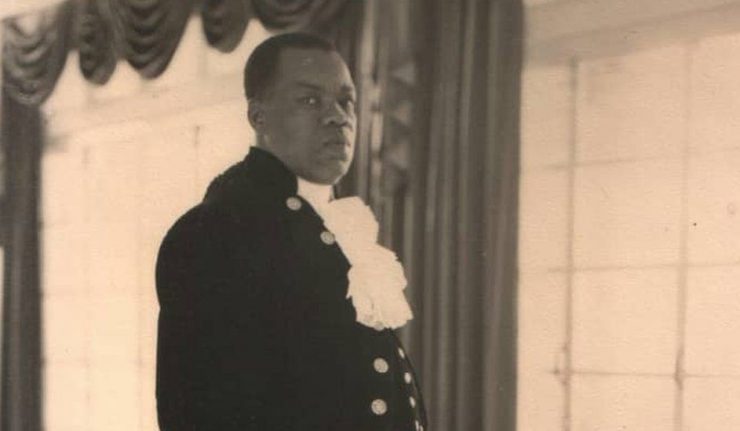
 [dropcap]N[/dropcap]ot many people knew about Louis Odumegwu Ojukwu, but a greater number of people knew his son, Late Chief Emeka Odumegwu Ojukwu .

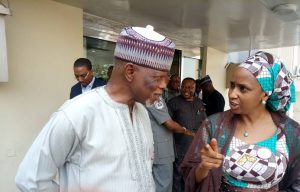 [dropcap]T[/dropcap]he Managing Director of Nigerian Ports Authority (NPA) Hadiza Bala Usman has knocked the lopsided operations of the Nigeria Customs Service at the seaports as the major cause of gridlock along the port access roads in Apapa.
 [dropcap]T[/dropcap]he Police Command in Edo said on Wednesday said that it has arrested a police inspector, who allegedly shot a civilian, Richard Odia to death in Benin in February.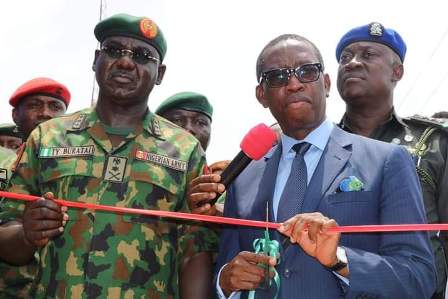
 [dropcap]D[/dropcap]elta State Governor, Sen. (Dr) Ifeanyi Okowa on Monday commended the Nigeria army for their cooperation with other security agencies in tackling security challenges in the state.