Friday, May 1, 2026
Home Blog Page 12

Delta Police Record Major Breakthroughs in Anti-Kidnapping, Anti-Cult Operations

By : Ike Philip Abiagom

The Delta State Police Command has recorded significant operational successes in its sustained fight against kidnapping, armed robbery and cult-related crimes across the state, with the arrest of 10 suspects and the recovery of arms, ammunition, a luxury vehicle and other incriminating items.
In a press release issued on Thursday, the Command said operatives of the Special Anti-Kidnapping and Cybercrime Squad (SAKCCS), acting on credible intelligence, arrested a suspected kidnapping and armed robbery syndicate during a coordinated operation carried out in the early hours of January 20, 2026.
According to the Police, the intelligence-driven operation followed reports of kidnapping and armed robbery incidents in Obinoba, Obiaruku, Abraka, Ororokpe and adjoining communities. The operatives reportedly trailed a suspect to a notorious criminal hideout along the Jedo/Ugboton–Warri axis.

Upon storming the location, two principal suspects identified as Oke Jerry Ekokodjie and one Ibori (surname unknown), alongside three other members of the gang, were arrested. Other members of the syndicate, however, escaped through nearby creeks and waterways.
A search of the hideout led to the recovery of one locally fabricated Beretta-style pistol with three rounds of 9mm live ammunition, a black Mercedes-Benz GLK vehicle, a battle axe, illicit substances in commercial quantity and a Point-of-Sale (POS) machine.

The suspects have been taken into custody and are undergoing further investigation, while efforts are ongoing to track down and arrest the fleeing members of the gang.

In a related development, operatives from the Obiaruku Division, in the early hours of January 22, 2026, raided a suspected cultists’ hideout at Amai Community in Ndokwa East Local Government Area.
During the operation, five suspects were arrested. They were identified as Frank Etiyemonu (36), Chinedu Emeka (25), Festus Nwadiche (26), Azuju Onowu (29) and Ozor Blessing (29).
Items recovered from the hideout include one locally made pistol, two battle axes, quantities of Indian hemp and other suspected hard drugs, as well as additional dangerous weapons.

The Commissioner of Police, Delta State Command, CP Aina Adesola, commended the operatives for their professionalism and effective deployment of actionable intelligence. He reaffirmed the Command’s commitment to ridding the state of criminal elements through sustained, proactive and intelligence-led policing.
CP Adesola also urged residents to remain vigilant and continue to support the Police with timely and credible information, assuring the public of strict confidentiality.
The release was signed by the Police Public Relations Officer, SP Bright Edafe.

Delta Police Record Major Breakthroughs, Recover 11 Firearms,

By: Ike Philip Abiagom
The Delta State Police Command has recorded significant operational successes in its sustained fight against crime, including the recovery of 11 firearms, assorted ammunition, and the arrest of several suspects linked to murder, cultism, armed robbery and drug trafficking across the state.

The Commissioner of Police disclosed this while briefing journalists on recent achievements of the Command, noting that intensified intelligence-led operations, raids on criminal hideouts and collaboration with local vigilante groups have continued to yield positive results.
According to him, Area Commanders, Divisional Police Officers and Tactical Commanders were earlier directed to sustain aggressive raids of criminal black spots, while officers were also reminded to remain professional, civil and courteous in their dealings with the public.

He warned that while the Command has zero tolerance for criminality, any officer found wanting would be decisively dealt with.

One of the major breakthroughs occurred on January 17, 2026, at Ughelli, when operatives of the CP Special Assignment Team (CP-SAT), acting on credible intelligence, stormed a bush where suspected cultists were gathered. The suspects reportedly engaged the police in a gun duel before fleeing with gunshot injuries. One suspect, who sustained serious injuries, was arrested and rushed to hospital, where he later died. A Beretta pistol and four rounds of live ammunition were recovered. Efforts to apprehend other fleeing suspects are ongoing.In another operation on January 11, 2026, CP-SAT operatives, in collaboration with community vigilantes, foiled a planned kidnap at an uncompleted building along Upper Agbarho, Ughelli North Local Government Area. Six suspected kidnappers reportedly opened fire on the operatives but were overpowered and fled, abandoning their weapons. Recovered exhibits included an FNC rifle with one round of live ammunition and a pump-action gun loaded with 32 cartridges.

On January 10, 2026, operatives of Ekpan Division arrested a suspected cultist and armed robber, identified as Gift Ojulowo, 30, during a confidence-building patrol at Hausa Market, Ubeji. A locally fabricated gun and two live cartridges were recovered from him. The suspect later confessed to being a member of the Aye Confraternity.
Raiders Unit Records Multiple Arrests
On January 19, 2026, operatives of the Raiders Unit arrested two suspected armed robbers at Isheagu and recovered a double-barrelled gun and six rounds of live cartridges. The same unit also arrested a suspected drug peddler, Joy Ezeni, 45, at Ogwashi-Uku, with 100 wraps of weed suspected to be “Loud.”
Earlier, on January 8, 2026, the Raiders Unit arrested one Obi Onuigbi Ndubuoso, 43, and recovered 36 bottles of nitrous oxide, popularly known as “laughing gas,” suspected to be illicit substances.

The Command also confirmed the arrest of a murder suspect in Ogwashi-Uku following the stabbing to death of a 20-year-old man at Poly Road near Adaigbo Filling Station.

Preliminary investigations revealed that the deceased was allegedly stabbed by his younger brother, Aliyu Haman, also 20, after taking substances suspected to be illicit drugs. The suspect has been arrested, and the weapon used was recovered.

From January 8, 2026, to date, the Command recorded the recovery of 11 firearms and about 80 rounds of ammunition and cartridges. Arrests made include 11 murder suspects, 13 suspected cultists and one rape or defilement suspect, while one stolen vehicle was also recovered.

The Commissioner of Police expressed concern over the rising cases of murder and drug abuse among youths, describing the Ogwashi-Uku incident as avoidable. He vowed that the Command would intensify raids across the 25 local government areas of the state to dismantle drug cartels and curb the sale and abuse of illicit substances.

He assured residents of the Command’s commitment to safeguarding lives and property, while appreciating the Delta State Government for its continuous support. He also called on members of the public to cooperate with security agencies in the fight against crime and criminality across the state.

Oshimili in Political Limbo After Nwaoboshi’s Death

By: Ike Philip Abiagom

The passing of Distinguished Senator Peter Nwaoboshi has created a profound leadership gap in Oshimili North and Oshimili South, leaving both local government areas politically exposed and increasingly vulnerable.

Once anchored by a strong and assertive political presence, the zone now appears uncertain of direction and weakened in influence.

Senator Nwaoboshi was more than an elected official; he was a fearless advocate who stood firmly against political intimidation and external pressure. With his death, Oshimili lost a rallying point and a voice that commanded respect beyond its borders. In the absence of such leadership, political actors from other zones are gradually positioning themselves to dictate outcomes and impose candidates, often without regard for the will of the people.

What has emerged in the vacuum is a troubling political culture marked by compromise and convenience. Instead of principled leadership, Oshimili politics is increasingly driven by transactional interests, where loyalty is negotiable and silence can be purchased. The collective political consciousness of the area appears diminished, replaced by short-term calculations and personal gain.

Historically, from 1999 to 2023, the Aniocha axis dominated representation in the House of Representatives.

Oshimili’s brief breakthrough in 2023—largely propelled by the momentum of the Obidient movement—was a significant milestone. While expectations from that representation may not have been fully met, it would be misleading to suggest that Oshimili lacks capable individuals with the competence and experience to represent the constituency effectively.

The more disturbing development is the reluctance of political stakeholders within Oshimili to assert their rightful place. Since the Senator’s passing, voices that should defend equity and zoning have grown faint, especially when faced with financial inducements. In this atmosphere, long-term political interests are being sacrificed for immediate rewards.

Across communities such as Asaba,Ibusa, Akwukwu-Igbo, Okpanam, Oko, Ebu, Illah, Ukala and Ugbolu there is no shortage of population or potential. What is scarce, however, is courageous leadership—men and women willing to rise above personal benefit and defend the political integrity and future of Oshimili.

Even more concerning is the growing involvement of Oshimili youths in campaigns aimed at restoring Aniocha’s dominance in the House of Representatives. Many of these youths, neglected and disillusioned by their own leaders, have become tools in political strategies that do not ultimately serve their interests.

With Senator Nwaoboshi no longer on the scene, a critical question remains unanswered: who will step forward to firmly and confidently insist that Oshimili still deserves its turn at the national table? Who will challenge entrenched interests and speak boldly in defence of fairness and political balance?

This is a defining and difficult moment for Oshimili politics. One cannot help but wonder how different the current situation might be if the political iroko had not fallen.

FG Deploys CNG Buses to Delta NURTW to Reduce Transport Fares

By : Ike Philip Abiagom

Efforts to reduce the rising cost of transportation in Delta State received a boost on Tuesday as the Federal Government handed over Compressed Natural Gas (CNG)-powered buses to the Delta State Council of the National Union of Road Transport Workers (NURTW).

The presentation of the buses, which took place in Asaba, is part of the Federal Government’s alternative energy transport initiative designed to cushion the effects of fuel subsidy removal and ease the financial pressure on commuters. The programme is being implemented under the administration of President Bola Ahmed Tinubu.

It was learnt that five CNG-powered buses were allocated to Delta State through the Nigeria Labour Congress (NLC) as part of a nationwide distribution to states of the federation and the Federal Capital Territory.
Speaking at the handover ceremony, the Secretary-General of the Delta State NURTW, Comrade Chukwuemeka Okolo, disclosed that the buses would be evenly deployed across the state’s three senatorial districts to ensure widespread impact.

Okolo explained that the buses are dual-fuel vehicles, capable of running on both CNG and Premium Motor Spirit (PMS), noting that the use of CNG—being significantly cheaper than petrol—would drastically cut operating costs and translate to reduced transport fares for commuters.
“This initiative is a direct response to the hardship experienced after fuel subsidy removal. Once these buses are fully deployed, commuters will feel the relief through lower transport costs,” he said.
He praised President Tinubu for introducing what he described as a practical and sustainable solution to the country’s transportation challenges, while calling on Deltans to support the ongoing economic reforms of the Federal Government.

Also speaking, the Chairman of the Delta State NURTW Caretaker Committee, Comrade Patrick Okpandu, who received the buses on behalf of the union, expressed gratitude to President Tinubu and the leadership of the Nigeria Labour Congress for facilitating the intervention.
Okpandu assured that the buses would be used strictly for public transportation, stressing that the union would not allow any form of diversion for private or non-approved purposes.
“These buses are meant for the people, and we are committed to ensuring they are properly deployed to reduce transportation challenges and ease the burden on commuters across Delta State,” he stated.
Other union leaders present at the event, including Comrade Dennis Araro, a member of the national trustees, alongside Comrades Orji Ossai, Igbine Odomero, Ovo Abeke, and Peter Ojevwue, commended the Federal Government for the initiative. They also applauded the recognition of the current NURTW leadership in Delta State as the legitimate body.

The leaders expressed optimism that Delta State would receive additional CNG buses in subsequent phases of the programme.
The CNG bus initiative forms part of the Federal Government’s broader strategy to promote cleaner, cheaper, and sustainable energy solutions in the transport sector, reduce dependence on petrol, and provide long-term relief for commuters across the country.

Igbuzo Cracks Down on Abuse of Prestigious Red Cap, Diokpa Imposes Total Ban

  • By: Ike Philip Abiagom

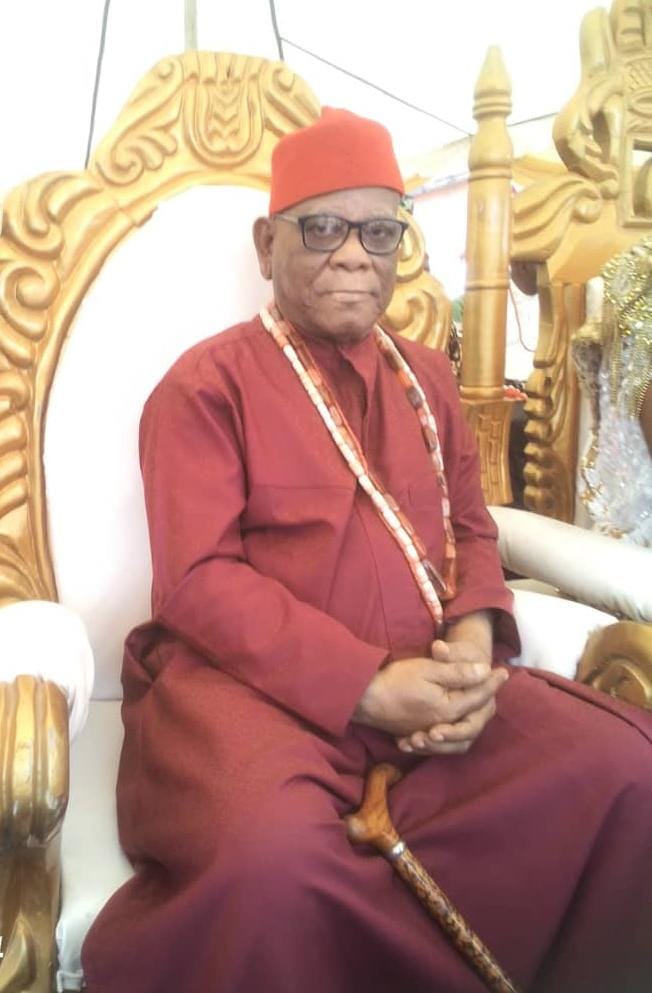
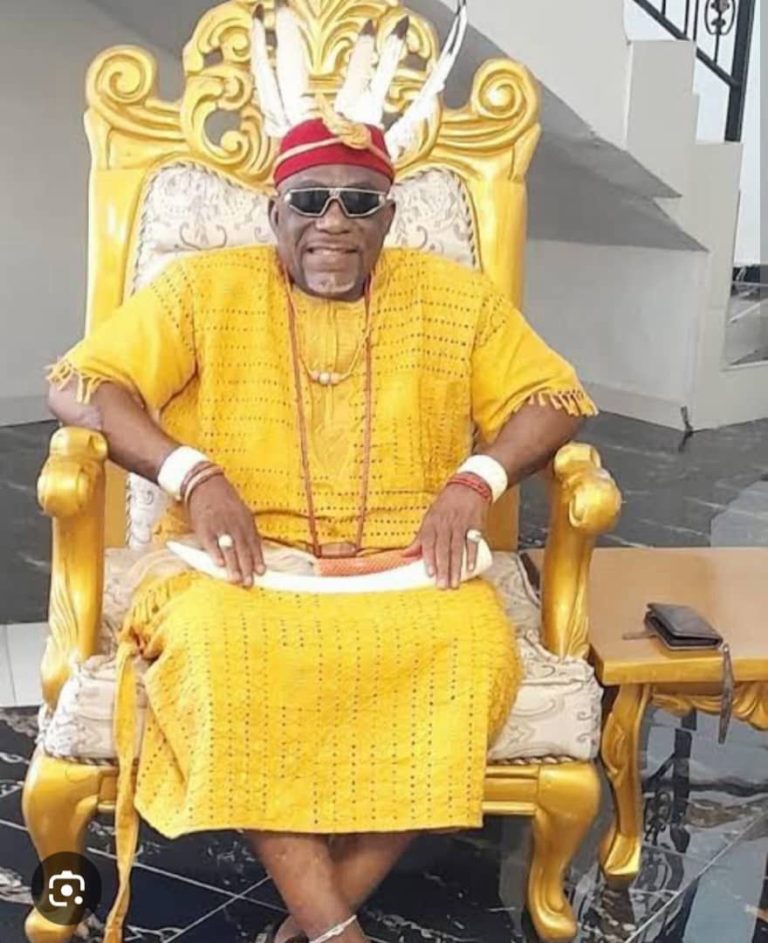
The most senior diokpa of Igbuzo Kingdom Onowu Paul Ijeh, has taken a decisive cultural stand against what it described as the growing abuse and desecration of the town’s most revered traditional symbol—the red cap. In a firm directive, the Diokpa of Igbuzo has placed a total ban on any indigene of Igbuzo wearing the red cap, except where expressly permitted by tradition.

According to the directive, the red cap remains exclusively reserved for the Obi title (ndi Eze)of Igbuzo, being the highest and most prestigious traditional title in Igbuzo kingdom. The indiscriminate use of the red cap by individuals without the requisite traditional authority, the Diokpa noted, has seriously eroded its cultural value and symbolic sanctity.

Under the new order, Ndi Ogbu title holders are also affected. While they retain the right to wear their representative caps, such caps must be worn strictly during approved traditional functions and ceremonies. The emerging trend of wearing such caps casually or on a daily basis has been expressly condemned and outlawed.

The Diokpa warned that anyone caught violating this directive will face a hefty fine, stressing that enforcement mechanisms have been activated to ensure total compliance. Community leaders and relevant traditional institutions have been mandated to monitor and report defaulters.

Cultural custodians in Igbuzo have welcomed the ban, describing it as a timely and necessary intervention to protect the town’s heritage.

Many argue that the uncontrolled use of the red cap by virtually anyone, regardless of title or status, had reduced a sacred emblem of authority to a mere fashion accessory.

“This is a welcome development,” a community elder said. “Igbuzo is a town known for deep culture and strong traditions. Allowing everyone to wear what is meant only for the Obi diminishes our identity and disrespects our ancestors.”

The ban further emphasizes that no title holder from Igbuzo is permitted to wear the red cap in public or private engagements, as the symbol remains sacrosanct and non-negotiable.
With this action, the Igbuzo traditional authority has sent a clear message: culture must be protected, traditions must be respected, and symbols of authority must retain their dignity. Residents now await strict enforcement of the directive, hopeful that it will restore the lost prestige and reverence of the Igbuzo red cap.

Pride and Prestige as Miss Ndinwa Naomi Awelekume Bags Degree at UNILAG

By: Ike Philip Abiagom

It was a moment of joy, pride, and fulfilment as Miss Ndinwa Naomi Awelekume was formally inducted into the league of graduates of the prestigious University of Lagos (UNILAG) during the institution’s convocation ceremony held yesterday.

The colourful academic ceremony, which drew graduands, parents, academics, and dignitaries from across the country, marked a significant milestone in Naomi’s educational journey—one defined by discipline, resilience, and determination.

Amid loud cheers and warm applause, she walked proudly to receive her degree, a symbol of years of hard work and academic commitment.

Adding emotional depth to the occasion was the presence of her proud parents, Chief and Mrs. Austin Ndinwa ( Okenmili Igbuzo), who travelled to Lagos to witness their daughter’s landmark achievement. Beaming with smiles, the couple joined other well-wishers in celebrating Naomi’s success, openly expressing gratitude to God and appreciation for the University of Lagos for shaping their daughter into a refined graduate.

Speaking with joy after the ceremony, family members and friends described Miss Awelekume as focused, humble, and goal-driven—qualities they say have consistently set her apart. Her academic success, they noted, is not only a personal victory but also a source of pride to the Ndinwa family and the wider Igbuzo community.

For Chief and Mrs. Austin Ndinwa, the convocation was more than a ceremonial event; it was the reward of years of parental sacrifice, guidance, and unwavering support. “Seeing our daughter graduate from a world-class institution like UNILAG is a dream fulfilled,” a family source remarked.

As Miss Ndinwa Naomi Awelekume steps into a new chapter of life, expectations are high that she will leverage her education to make meaningful contributions to society and uphold the values of excellence and integrity instilled in her by her family and alma mater.
Indeed, her graduation stands as a testament to the power of perseverance, parental support, and the enduring value of education—an achievement worthy of celebration and lasting recognition.

ACNPN Commends Oborevwori’s Infrastructure Push, Hails Flyover Projects

By: Oby Edward

The Association of Community Newspaper Publishers of Nigeria (ACNPN) has applauded Delta State Governor, Rt. Hon. Sheriff Oborevwori, for what it described as an unprecedented commitment to infrastructure development, particularly in the area of road expansion and flyover construction across the state.

Speaking at the flag-off ceremony of the Uromi Junction Flyover in Agbor, Ika South Local Government Area, the Delta State Chairman of ACNPN, Comrade Ike Philip Abiagom, said the governor’s development strides had redefined governance in the state, noting that the pace of project execution reflected uncommon dedication and discipline.

According to Abiagom, the Uromi Junction Flyover represents the fifth major flyover project initiated by the Oborevwori administration, following similar interventions at PTI Junction, DSC Roundabout, Enerhen Junction and Otovwodo Junction. He stated that the projects were deliberately designed to ease traffic bottlenecks, reduce road accidents and enhance urban mobility.

The ACNPN chairman observed that beyond flyovers, communities in Ika South and its environs have continued to benefit from other strategic infrastructure investments, including the construction and rehabilitation of key roads such as Mariere Road and Sunny Ogwu Road in Agbor.

He further disclosed that the area is currently witnessing the execution of a N15.4 billion drainage and road project covering 13.3 kilometres of concrete drains and five kilometres of road, aimed at tackling perennial flooding and erosion challenges.

Abiagom also revealed plans by the state government to commence the N12 billion, 15-kilometre Okpe–Abavo–Ekuku-Agbor Road project, describing it as a critical link that would enhance connectivity, open up rural communities and stimulate economic activities across Ika nation.

Commending the governor’s leadership style, ACNPN stated that Oborevwori’s administration has remained focused on people-oriented projects that promote safety, economic expansion and equitable development across Delta State, assuring that the governor’s vision for a modern and connected Delta remains firmly on course.

CP Aina Adesola: A Tested Strategist in the Battle for Delta’s Security

By: Ike Philip Abiagom

The newly appointed Commissioner of Police in Delta State, CP Aina Adesola, is not a theoretical police officer. He is not a motivational speaker in uniform, and certainly not a social media myth. He is a tested and grounded law enforcement professional—one of the few senior police officers who clearly understands that Nigeria is not governed by wishes or slogans, but by coalitions, structures, negotiation, stamina, and strategy.
Now serving as Commissioner of Police in Delta State, CP Aina Adesola brings to the task a depth of operational experience that distinguishes him in an era where security challenges are complex, adaptive, and often politically entangled. His career reflects a clear understanding that policing in Nigeria requires not just the force of law, but strategic realism, intelligence coordination, and the ability to resist manipulation.

Since his appointment, there has been a noticeable shift in the psychology of crime in Delta State. Criminal elements, according to security observers, appear unsettled—not merely by his presence, but by his structure, situational awareness, preparedness, and refusal to compromise professional standards. For criminals, uncertainty is fear, and CP Adesola represents uncertainty to those who thrive on weak systems.

However, beyond the physical and operational battlefields lies another critical front that is often underestimated: the media battlefield. In today’s security environment, perception, information flow, and public confidence are as decisive as patrols and arrests. With the full support of community newspaper publishers and responsible media practitioners, the Commissioner is positioned to win not only the war against criminals but also the battle for public trust.

A disciplined, aggressive, strategic, and relentless media engagement is therefore essential. This does not imply propaganda, but consistent, factual, and transparent communication that exposes criminal tactics, reassures citizens, and builds cooperation between the police and the communities they serve. Crime thrives in silence; security succeeds in informed partnership.
Delta State’s security challenges cannot be solved by improvisation or rhetoric. They demand structure, capacity, strategy, and political realism—pillars that define CP Aina Adesola’s approach to policing.

As Delta navigates a critical phase in its security architecture, many believe the state can only be rescued by leadership that understands both power and process. In CP Aina Adesola, Delta State appears to have found a Commissioner of Police equipped not just for today’s challenges, but for the long and demanding struggle to restore order, confidence, and lasting peace.

Ibusa Public Primary Schools Soccer Competition Kicks Off Tomorrow

By: Ike Philip Abiagom

The maiden edition of the Felix Nyemike Nkadi (FNN) Ibusa Public Primary Schools Soccer Competition will officially kick off tomorrow at 3:30 p.m. at the St. Augustine’s College Soccer Pitch, Ibusa.

Isolated and Forgotten: The Silent Suffering of Ebu Community in Delta State

By: Ike Philip Abiagom

Ebu, a historic and culturally rich community in Oshimili North Local Government Area of Delta State, has become a symbol of long-standing neglect and abandonment by successive administrations. Despite its vast agricultural potential, strategic location and law-abiding population, the community has remained cut off from basic infrastructure and essential social services for decades.

Investigations by Newsbreeze, through interviews with traditional Chiefs, youth, elders and residents, reveal deep frustration over what they describe as systematic exclusion from government development plans.

Residents insist that although they continue to vote, pay taxes and support constituted authorities, their community has been left to decay.
One of the most visible signs of neglect in Ebu is its deplorable road network. Apart from the dilapidated Auchi Road, which has remained abandoned for years, there are no tarred internal roads within the community. During the rainy season, movement becomes almost impossible as the roads turn into muddy traps, worsening flooding and erosion.

A traditional Chief in the community, Chief Tony Ogbuji , lamented the situation, describing the neglect as unbearable.
“There are no internal tarred roads in Ebu. Our streets have been abandoned for decades. Even a wheelbarrow cannot pass through these roads, let alone a car. There are no streetlights, no solar water systems and no drainage,” he said.
Chief Ogbuji added that despite the absence of basic amenities, residents of Ebu have consistently participated in elections and supported the government in power.

“Our people are patient, but that patience is wearing thin. If this neglect continues, we may be forced to boycott future elections because we feel completely abandoned by our government.

The poor state of infrastructure has also heightened insecurity in the community. Residents say most streets are plunged into total darkness at night due to the absence of streetlights, creating safe havens for criminal activities.

Kingsley Edem, a farmer and resident, described the condition of the community as “disgraceful.”
“We have been abandoned by every administration. What offence has Ebu committed to deserve decades of neglect? Is it because we have no political voice to speak for us?” he asked, calling for urgent government intervention to prevent further deterioration.

Education in Ebu is another major casualty of neglect. Children are forced to trek long distances erosion eaten road to attend dilapidated schools lacking teachers, learning materials and basic infrastructure.

Many youths abandon their education altogether due to hardship.
Healthcare services are also almost non-existent. The community lacks a functional primary healthcare centre or hospital that operates year-round. As a result, residents rely heavily on traditional medicine, not by choice but by necessity. According to locals, many lives have been lost to preventable illnesses due to the absence of accessible and adequate healthcare facilities.

Ebu is blessed with fertile land suitable for agriculture and aquaculture. Farmers in the community supply food to neighbouring communities and urban centres. However, poor road access, lack of modern farming equipment, storage facilities and market linkages have severely limited productivity.

Residents believe that with proper government investment, Ebu could become a major agricultural hub and contribute significantly to the state’s economy.

Adding to the community’s woes is the lack of access to clean drinking water. Ebu has no modern boreholes, forcing residents to rely on streams and rivers for dring water. Locals lament that in this modern era, they are still exposed to waterborne diseases such as typhoid and cholera due to contaminated water sources.

What pains the people of Ebu most, according to residents, is the failure of government to uphold its responsibility to them. Despite the community’s strategic location as a potential gateway to northern parts of the country, Ebu has remained excluded from key development initiatives.
“The issue is not just underdevelopment; it is injustice,” an aggrieved resident told Newsbreeze.

“Development is not a favour; it is our right. We are not asking for miracles. We are asking to be treated as citizens of Delta State, not forgotten statistics.”

As the rainy season approaches and fears of flooding and erosion intensify, the people of Ebu are once again appealing to the Delta State Government to urgently intervene and not to abandone Ebu as like other past administrations. For a community rich in history, culture and potential, residents insist that continued neglect is no longer acceptable.

Ebu’s story serves as a stark reminder that meaningful development cannot be achieved while entire communities remain isolated and forgotten.

CLOSE
CLOSE