

By : Ike Philip Abiagom
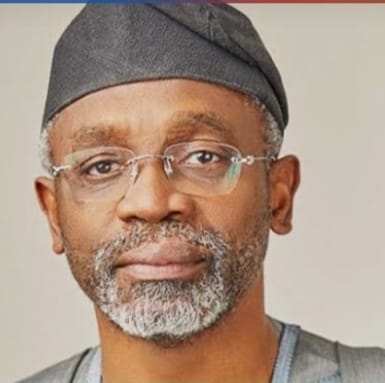
 In every generation, a few public servants distinguish themselves not merely by the positions they hold, but by the discipline, preparation, and vision that enable them to shoulder greater responsibilities when history calls. Among such figures in contemporary Nigeria stands , a statesman whose journey to the centre of national leadership has been defined by years of dedication to law, democratic governance, and public service.
Today, as Chief of Staff to President , Gbajabiamila occupies one of the most strategic offices in the country. Although the position largely operates behind the scenes, its influence on governance is immense. The Chief of Staff serves as the bridge between presidential vision and administrative execution, coordinating government activities, facilitating policy implementation, and ensuring that the machinery of government runs effectively.
Yet, the story of Gbajabiamila’s rise cannot be fully understood by examining only his current role. Rather, it is a story of steady preparation, professional excellence, and a commitment to public service that spans decades.
Before politics, Gbajabiamila built a solid foundation in the legal profession. His years of legal practice exposed him to the rigours of advocacy, negotiation, strategic thinking, and the meticulous interpretation of the law. These experiences sharpened his analytical abilities and cultivated the discipline that would later become hallmarks of his political career.
Law, after all, is not merely about statutes and courtroom arguments; it is about understanding people, resolving conflicts, and building consensus. These skills would later prove invaluable in the legislative arena, where persuasion, diplomacy, and constitutional fidelity remain essential tools of effective leadership.
Upon returning to Nigeria after acquiring international legal experience, Gbajabiamila arrived at a critical period in the nation’s democratic evolution. The restoration of civilian rule in 1999 opened a new chapter in Nigeria’s history and created opportunities for a new generation of leaders determined to strengthen democratic institutions and deepen representative governance.
Like many professionals of his generation, he could have remained comfortably within private practice.
Instead, he chose public service, convinced that national development required the active participation of capable individuals willing to contribute to the democratic process.
For him, the legislature represented a powerful institution through which meaningful change could be pursued.
That decision would alter the course of his life and eventually shape his place in Nigeria’s political history.
In 2003, Gbajabiamila was elected to represent Surulere I Federal Constituency of Lagos State in the House of Representatives. His election came at a crucial time when the National Assembly was still consolidating its role within Nigeria’s young democratic order.
The legislature was emerging from decades of military rule and was gradually asserting its constitutional responsibilities. Lawmakers were tasked with strengthening oversight functions, improving legislative processes, and defining a productive relationship between the executive and legislative branches of government. For young parliamentarians entering the House, the challenge was immense.
Gbajabiamila quickly distinguished himself as one of the Assembly’s most diligent and intellectually engaging members. His mastery of legislative procedure, attention to detail, and commitment to parliamentary excellence earned him respect among colleagues. Whether participating in committee assignments or contributing to debates on the floor of the House, he developed a reputation as a thoughtful legislator driven by substance rather than spectacle.
His legal training provided a strong foundation for legislative work, enabling him to engage constructively with proposed laws and national policy issues. More importantly, his measured approach to politics helped him cultivate relationships across party lines, a quality that would later become central to his leadership style.
Beyond Abuja, he remained deeply connected to the people who entrusted him with representation. In Surulere, his responsibilities extended beyond lawmaking. Constituency engagement, educational support programmes, youth empowerment initiatives, and advocacy for community development became important aspects of his service.
This ability to balance national legislative duties with grassroots engagement distinguished him from many of his contemporaries and reinforced his reputation as a representative who understood both policy and people.
As Nigeria’s democracy matured, so too did Gbajabiamila’s influence within the House of Representatives. His capacity to analyse complex policy issues, negotiate competing interests, and build consensus increasingly positioned him for higher responsibilities.
Observers began to see in him not merely a constituency representative, but a parliamentarian committed to strengthening the institutional integrity of the National Assembly itself. His contributions reflected a broader vision of democratic governance rooted in accountability, cooperation, and effective leadership.
Those who worked closely with him frequently cited his calm disposition, disciplined work ethic, and preference for consultation over confrontation. In an environment often characterised by competing interests and political tensions, these qualities enabled him to navigate challenges with patience and pragmatism.
His rise through the ranks of the House was therefore no accident. It was the product of years of preparation, consistency, and a willingness to embrace the demanding responsibilities that effective legislative leadership requires.
As his influence continued to grow, Gbajabiamila would eventually assume more prominent leadership roles, helping to shape parliamentary debates, legislative priorities, and national policy discussions. Those experiences would ultimately propel him to the pinnacle of legislative leadership as Speaker of the House of Representatives, preparing him for even greater responsibilities in service to the nation.