By: Ike Philip Abiagom
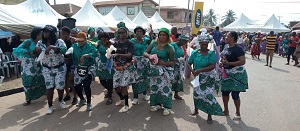
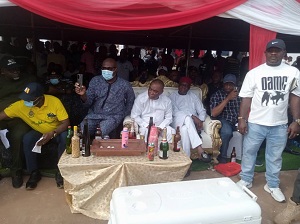
[dropcap]T[/dropcap]he people of Ogbeowelle Quarter in Ibusa of Oshimili North Local Government Area, Delta State, have celebrated the annual “IWU” festival with the people describing their Owelle,High Chief Sab Adigwe who was spectacular in his white regalia as God-sent. The 2021 IWU Festival was graced by illustrious sons and daughters of Igbuzor, Most Distinguished Senator Peter Nwaoboshi, the member representing Delta North Senatorial District in the Senate Arm of the National Assembly and Chairman, Senate Committee on Niger Delta Affairs,former Chief of Naval Staff, retired admira Dele Ezeoba, Ibusa ICDU National President,High Chief Austin Izagbo, Mr Michael Onochie Ajukwu,Broadcast icon, Dr Henry Nzekwu,Odogwu of Ibusa ,High Chief Charles Okonkwo,Mrs Philo Okonkwo, Rev.fr. Hillary Nwadei and other dignitaries.
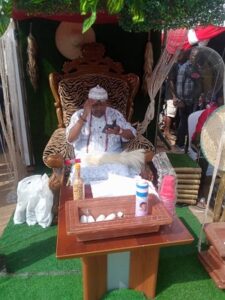
Senator Peter Nwaoboshi who was a special guest at the IWU festival has congratulated the Ogbeowelle Quarter and the Owelle of Igbuzo,High Chief Sab Adigwe,on the celebration of the annual IWU Festival. He said: “Owelle of Igbuzo,High Chief Sab Adigwe is a Traditionalist with a difference. He is a God-sent chief whose coming has brought so many gain in investment, growth and development, not forgetting the unlimited peace, unity and love that currently exist among his people and within the Ibusa community.
“This year’s edition of Iwu Festival is awesome, fantastic and amazing to all and sundry. We hope to sustain this tempo.“We are using this medium to call on Government, Ministry of Culture and Tourism, Council of Arts and Culture and other government and culture-loving corporate entities to come and understudy Igbuzo traditions and culture as a way of developing a masterpiece for a viable Tourism Industry. “We are at best with our traditions and culture which need documentation, promotion and marketing from the government for the good of all.
Nwaoboshi said: “Ibusa is reputed for her traditions and culture which are carefully kept and nurtured for centuries. It is a festival usually marked with joy known in our local parlance as “IWU” where people make merry and are free to say anything they like, even to the King. “The IWU Festival is satirical in nature. There is no holds back in exposing what is hitherto known and kept as a secret before an Iwu Festival; it is where every wrongdoing is brought to light. It’s a Festival among several others in the annual festive calendar of Ibusa.
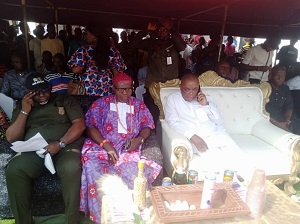
This year IWU festival was proudly sponsored by MTN and HERO beer. In Igbuzo two quarters are known to celebrate IWU festival on annual basis. Ogbeowele and Umuodafe.The people of Ogbeowele Igbuzo celebrated their annual IWU Festival in December (around the Christmas period) drawing the attention of numerous people from far and near to the town. The festival is aimed at cleansing and purifying the town to thank the Almighty God for abundant harvest experienced by farmers all through the year. During this festival, traditional songs are also composed to ridicule defaulters of the norms traditions of the society no matter their social standing in the town. Ohene (chief Priest) and Eze-Iwus are expected to perform some rituals of the cleansing of the town to properly take place.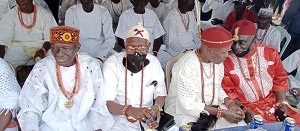
IWU Festival is one of the finest festivals celebrated by the Anioma people, Iwu is a communal festival with carefully planned programme and high revelry. It lasts for some days and its celebration mostly involves adult and youths who engage in it. In Ibusa, the festival is celebrated by Ogbeowele and Umuodafe Quarters of the town. Ibusa tradition traces the origin of the festival to certain Ibusa warriors who went to Ani-Nmor (Land of the spirits) and returned with the idea of the festival. This according to the mythology explains the dance step of the main characters during the festival. However, popular opinions claim that the festival was imported to Ibusa by Diokpa Oyana of Adigwe family from Umuga Clan of Umuwor in Ogbeowele. It was from Ogbeowele that Umuodafe borrowed the festival and consequently began to celebrate it. The Ogwa (shrine) where IWU was first celebrated in the town can still be seen standing at the entrance of Adigwe family compound. While Ogbeowele celebrates the festival in November, Umuodafe celebrates it in December. Celebration of the festival comes in stages and can be described mainly as an outdoor festival.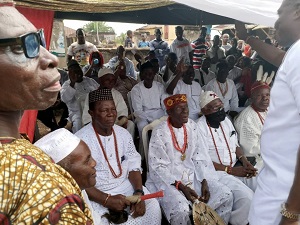
The period of preparation for the celebration of IWU in Ibusa is known as “Isibe-Iwu” or “Isibe-Ife”. This is known as the period of silence. It is a period that cries, quarrels, fighting, breaking of firewood and all sorts of noise are forbidden within the vicinity of IWU. The fine for breaking this law may be kolanut, drinks or goat. This period lasts for four days and also forbids performance of Okanga, the running dance and marriages within the Ogbe. Mourners conducting Okanga dance are usually advised to follow alternative routes to avoid disquieting the period. During this period funeral ceremonies are also conducted which means that the dead may be quietly interred without any form of ceremony. This period may be described as “traditional lent”.
The next stage is “Ihoda-IWU” or “Ihoda-Ife. This marks the stage at which Ohene (Chief Priest) of the ceremony declares an end to the 4-day period of silence. It usually takes place in the morning of the fourth day which in turn ushers feral euphoria among inhabitants. These inhabitants then take to the streets in celebration of a new season of rewarding farmers.
It is on this occasion that the people move from house to house congratulating themselves. They may also congregate in groups to other villages to greet their illustrious daughters (Umuada) married in these villages, greeting them “Na ahor, na ahor ka anyi ga eji na gba Iwu, anyi ama gba na ahor yali ahor” literarily meaning that “We shall celebrate IWU Festival from year to year. We shall never celebrate IWU in a year and leave celebrating it in another year”.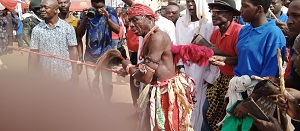
Iwu comes with unique songs and dance-steps which are rarely sung on normal days and celebrants appear in groups singing and dancing to tunes composed by them. Major musical instruments are “Agogo” (small gong), Ekwe and Akpele (native flute). Not only does Iwu go with these traditional musical instruments, it also has a tune inimitable to it. Principal characters of the festival are Ohene (Chief Priest), Eze-IWU that are three in number and Enem. Ohene appears in small plain white fabric called Akwa-Ocha covering his waist with a white feather strapped to his head while the Eze-Iwus and Enem appear in red attire. Ohene’s body is robbed wit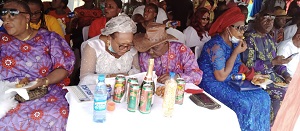 h white native chalk called “Nzu.”