

By: Ike Philip Abiagom – Newsbreeze
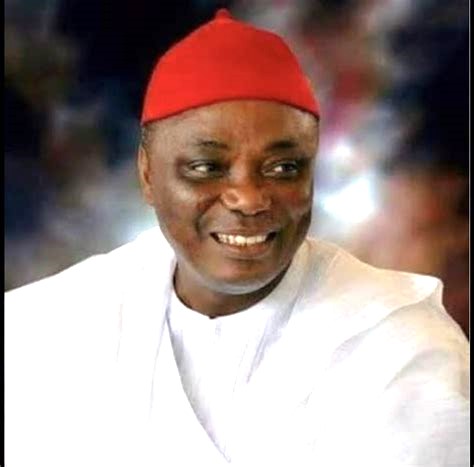
The passing of Distinguished Senator Peter Onyelukachukwu Nwaoboshi has left Oshimili North and Oshimili South grappling with a profound and unsettling leadership vacuum. Beyond the personal loss of a respected statesman, Oshimili has lost a fearless political anchor—one whose presence once provided direction, confidence and protection against external domination.
For years, Senator Nwaoboshi stood as more than an elected representative. He was a courageous and unyielding voice, a leader who confronted political intimidation head-on and resisted undue pressure, regardless of whose interests were threatened. His influence extended beyond Oshimili, earning him respect across political divides. With his exit from the stage, the zone appears politically exposed, uncertain of its footing and weakened in bargaining power.
In the void created by his death, a worrying trend has emerged. Political forces from other zones are increasingly positioning themselves to dictate outcomes in Oshimili, seeking to impose candidates and shape decisions with little regard for the wishes of the people. What once was a zone known for assertive engagement has gradually drifted into silence and accommodation.
Even more troubling is the political culture now taking root. Principle is giving way to compromise, and conviction is being traded for convenience. Oshimili politics, once driven by collective interest and long-term vision, is increasingly shaped by transactional calculations where loyalty is negotiable and silence can be bought. The result is a weakened political consciousness and the erosion of a shared sense of purpose.
Historically, from 1999 to 2023, the Aniocha axis dominated representation in the House of Representatives. Oshimili’s breakthrough in 2023—largely buoyed by the momentum of the Obidient movement—was therefore a significant milestone. While expectations from that representation may not have been fully realised, it would be inaccurate and unfair to suggest that Oshimili lacks capable men and women with the competence, experience and vision to represent the constituency effectively.
The deeper concern lies in the reluctance of key stakeholders within Oshimili to assert their rightful place in the political equation. Since the Senator’s passing, voices that should speak boldly in defence of equity, zoning and fairness have grown faint, particularly in the face of financial inducements. Long-term political interests are being sacrificed on the altar of immediate personal gain.
Across Asaba, Ibusa, Akwukwu-Igbo, Okpanam, Oko, Ebu, Illah, Ukala and Ugbolu, there is no shortage of population, talent or potential. What is scarce is courageous leadership—leaders willing to rise above self-interest and defend the political integrity and future of Oshimili.
Perhaps most concerning is the increasing involvement of Oshimili youths in campaigns designed to restore Aniocha’s dominance in the House of Representatives. Disillusioned and neglected by their own leaders, many young people have become instruments in political strategies that ultimately undermine their collective future.
With Senator Nwaoboshi no longer present to rally, resist and inspire, a critical question hangs in the air: who will step forward to insist, firmly and confidently, that Oshimili still deserves its turn at the national table? Who will challenge entrenched interests and speak boldly in defence of justice, balance and fairness?
This is a defining and difficult moment for Oshimili politics. As the zone stands at a crossroads, one cannot help but wonder how different the present reality might be if the political iroko had not fallen.