Home Blog Page 175

Court orders arrest of ex-Customs boss Dikko

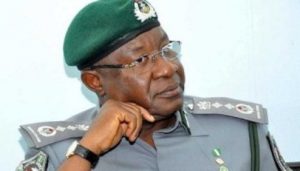
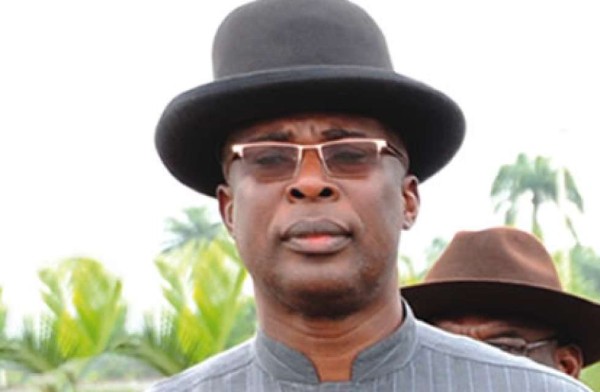
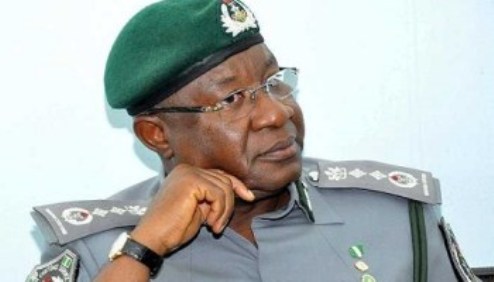
[dropcap]A[/dropcap] Federal High Court in Abuja on Monday issued a bench warrant for the arrest of former Comptroller General of the Nigeria Customs Service (NCS), Abdullahi Dikko.

Justice Ijeoma Ojukwu issued the warrant over Mr Dikko’s sustained failure to attend court to answer to a charge of fraud brought against him and two others by the Independent Corrupt Practices and Other Related Offences Commission (ICPC).

Dikko’s lawyer, Solomon Akuma, on the last adjourned date, promised to ensure his client’s presence in court.

Mr Akuma, however, presented a medical report on Monday, claiming Dikko was critically ill and hospitalised in London.

Justice Ojukwu noted that Dikko’s address, as shown on the medical report – 6, Amhed Musa Crescent Jabi, Abuja – did not support his lawyer’s claim that he was admitted in a London hospital.

The judge said that if Dikko was actually hospitalised in London, the prosecution should suspend effecting the arrest warrant, but if found to be otherwise, the prosecution should arrest Dikko and produce him in court on March 16, 2020, the next adjourned date for arraignment.

ICPC alleges in the charge marked FHC/ABJ/CR/21/2019 that Dikko and others induced the Managing Director of Cambial Limited, Yemi Obadeyi, to pay N1.1 billion (N1,100, 952,380.96) into the account of Capital Law Office as a refundable ‘completion security deposit’ for the purchase of 120 units of duplexes as residential accommodation for officers of the Nigeria Customs Service.

Others named in the charge as defendants are a former Assistant Comptroller-General of Customs in charge of Finance, Administration and Technical Services, Garba Makarfi; and Umar Hussaini, a lawyer and owner of Capital Law firm.

ICPC alleges that Hussaini distributed the money into various other bank accounts and was rewarded with the sum of $3 million.

AGAIN FIRE RAZES ANOTHER POPULAR MARKET IN LAGOS

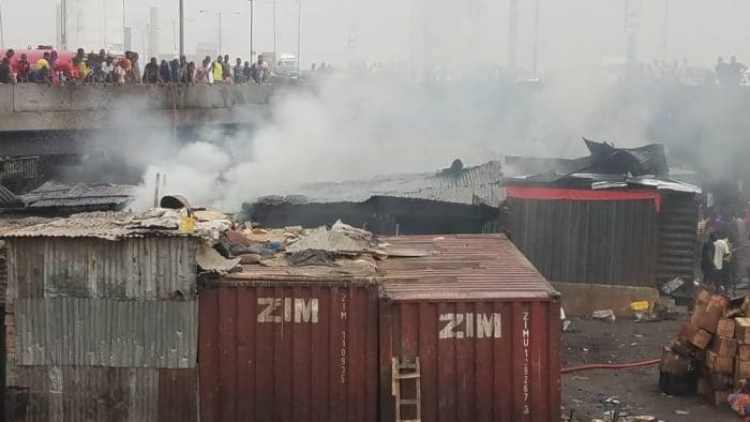
[dropcap]A [/dropcap]massive fire swept through the popular Apongbon Market on Lagos Island, Lagos, Southwest Nigeria on Sunday, leaving tales of tears as goods worth several millions of naira were destroyed.

The inferno began around 10:45 am, as thick smokes and balls of fire ascended the heavens, with traders watching helplessly as the fire engulfed their wares.

Emergency responders battled the fire for hours before it could be contained, but much damage had already been done.

Dr. Femi Oke-Osanyintolu, spokesman, Lagos State Emergency Management Agency, LASEMA, said upon arrival of the LASEMA Response Team, it was revealed that the fire emanated from one of the containerized stores at the market.

“The cause of the flames couldn’t be ascertained before it escalated towards other shops,” he said.

Fire razes Apongbon

He added that “Efforts have been concluded to combat the inferno. The fire has been contained and Lagosians are urged to remain calm.

”Fire fighting operations concluded. Recovery and post-fire assessment ongoing.”

Amaechi lays foundation for Transport and Logistics Institute in Abia

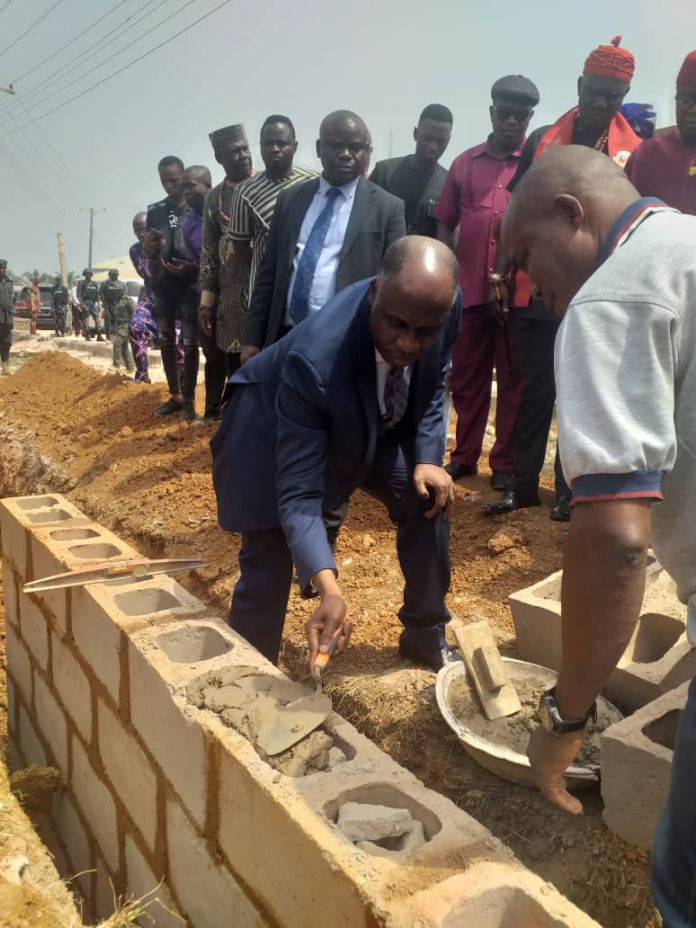
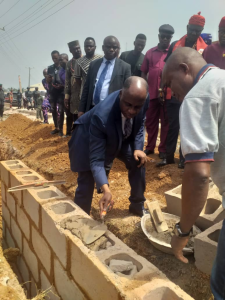
[dropcap] R[/dropcap]t Hon. Chibuike Rotimi Amaechi, the Minister of Transportation on Saturday, laid the foundation stone for the Institute of Transport and Logistics at the Gregory University, Uturu (GUU) in Abia State.
The Institute upon completion will offer specialised transportation courses and is expected to provide specialised laboratories for Maritime and Oceanography, Aviation/Aeronautic, Designing and Construction Suites, Aerospace Engineering, Central Machining tools centre, Railway Engineering and simulation rooms.

Amaechi said, as Minister of Transportation, he is willing to partner and encourage the University in its initiative to educate Nigerians in the Transportation and Logistics field, taking advantage of the Federal Government’s development strides in Transportation particularly the rail and maritime sectors.
“We’ll see how we’ll partner with the university in the Ministry of Transportation, especially when we start the construction of the Bonny-Port Harcourt-Maiduguri rail line.

“We are very particular about localising Railway technology, that’s why we are training our people in China and even made them to build a Transportation university and a wagon Assembly plant here in Nigeria,” Amaechi said.

While making the commencement speech at the University’s 8th matriculation ceremony, Amaechi narrated his political story, from his days as a student union leader, to Speakership, Governorship and now Minister. He encouraged the students to be diligent, have the fear of God and be courageous to ensure that they succeed.
Chancellor and founder of GUU, Prof. Gregory Iyke Ibe, said he was inspired by Amaechi’s developmental strides in the transportation ministry and the school is enthusiastic to tap into that sector and aid the growth and training of Nigerians to become professionals in Transportation engineering and technology.
He said, “What we are doing here is to input technology, change methodology and then we are succeeding and one of the things that we must succeed in line with your agenda in the ministry is to have this institute here, so that we can now train everybody… This university has a printing press, a paint factory, a sew factory, everything is produced here, we do fibre glasses here. Everything we do here, we do it because technology is done by human beings and I don’t see any reason why our Nigerian boys and girls who are well gifted cannot be trained in what we are doing.

“Any skill we get into, we perfect it, and in transport, to support the ministry, we are now creating something that you’ve come here to lay the foundation,” Ibe said.

As courtesy, the Minister paid a visit to the Government of Abia State, where Governor Okezie Ikpeazu, represented by his deputy, Rt Hon. Ude Oko Chukwu, sought the Ministry of Transportation’s assistance in ensuring that the planned inland dry ports for the state is achieved.

He pledged the state government’s willingness to support the Federal Government in any project it’s doing in the state. “If the Federal Government is doing anything in Abia, , please let us be in the know, so we’ll be involved in the security of those facilities, because they would be beneficial to the state and its people.”

Amaechi was also conferred with the title of ‘Dike di Oha Mma of Uturu’ by His Royal Highness, Eze Cyril Ibe, the Traditional Ruler and Chairman, Uturu Council of Chiefs, during a courtesy visit to his palace.

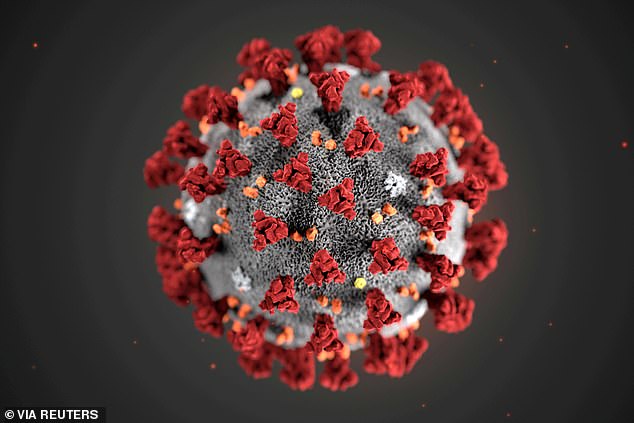
WHO names new coronavirus ‘Covid-19’, China confirms 1,016 deaths

[dropcap]W[/dropcap]orld Health Organisation (WHO) has named the new coronavirus ‘Covid-19’.
WHO announced the new name in its tweeter handle at @WHO that “we now have a name for 2019nCov disease.
“The new name is COVID-19.
“The CO stands for corona, the VI for virus and the D for disease.”
The UN health agency wanted a name that do not refer to a geographical location, animals, an individual or a group of people.
WHO is leading a two-day global research and innovation forum to mobilise international action in response to coronavirus outbreak in Geneva.
China’s National Health Commission said there were 2,478 confirmed new cases in the mainland and 108 additional deaths, most of them in Hubei province.
As of Monday night, the government said a total of 42,638 cases have been confirmed and 1,016 people have died in the country.
The outbreak’s epicentre is in the city of Wuhan in Hubei province, affecting 28 countries and territories around the world.

Revelations from Farida Waziri’s new book

[dropcap]F[/dropcap]ormer Chairman of the Economic and Financial Crimes Commission (EFCC), Farida Waziri, presented her new book to the public in Abuja on Tuesday. I was privileged to have reviewed the book at the occasion.
Being reviewer meant I had read the 224 pages book from cover to cover, and it was a delight to plumb the depths of the very revealing work. The title is Farida Waziri: One Step Ahead. Life As a Spy, Detective and Anti-Graft Czar.

Mind you, by ‘revelations,’ I do not mean who stole what, or how Farida got and threw them into jail. The book is short on naming names, and I pointed it out in the review. But in terms of general information, there’s a lot to chew.
Let’s go.

The young Farida was an Assistant Superintendent of Police (ASP) when Lt Col Buka Sukar Dimka carried out the bloody military coup of February 13, 1976. The head of state, Gen Murtala Ramat Mohammed, and many others were killed. Hassana , the wife of Dimka, and Farida were friends. This put the police officer in an awkward position, as the Special Branch of the police, where she worked then, was involved in the investigation of the abortive coup.

“Hassana Burundua was my friend. She was an ex-Police Officer, a former colleague,” the author writes.”I reeled in disbelief, trying to make sense of what I heard, as the voice of Dimka informed listeners that the country once again was caught in the vortex of a military coup.”

Farida met a good number of the officers indicted for the coup, as they were kept at the detention facility of the Special Branch. By a quirk of fate, she was also at the Bar Beach on the day they were executed.
When she saw the gruesome sight of mangled flesh, “I took to my heels. ..It was a terrible sight. I ran home, straight to my bedroom. Months after, I couldn’t bear the sight of raw meat, let alone tasting it. The picture of the execution was fresh in my memory.”

Dimka, the arrowhead of the coup was not part of those initially executed. He had vanished into the thin air when the coup was quashed, and wasn’t arrested till three weeks later.

Farida writes:
“Lt Col Dimka remained an enigma of sorts. The inconsistencies in his character gave rise to speculations about his state of mind and his real motivation for the bloody coup. His wife Hassana gave me a first-hand account of the grisly business of February 13.

“This was what she told me. She woke up in the morning to see some soldiers trooping into the garden behind their house in an unusual way. They claimed they came there to wait for Oga-the boss. She asked what was going on, and one of the officers replied: ‘You don’t know? Go listen to the radio.’

“She was shocked to hear the unmistakable voice of her husband broadcasting a coup. Knowing the consequences, Hassana broke into tears. Dimka came in later and asked for water to drink. She asked him what happened, but Dimka was mute. She asked for her four children. He told her they were on holiday with Maria, who was later found to be his girlfriend. Thereafter, he hurriedly picked a few things and ran out of the house, just in the nick of time.

“From the window, Hassana saw the movement of soldiers and armored tanks surrounding their house. Then, she heard a voice on the megaphone, cautioning, ‘don’t shoot until I say so.’ She cowered Inside the room when the megaphone blasted: ‘If you are inside, come out with your hands on your head.’ She stepped out and was handcuffed and taken away.”

That was the first coup experience. Another was to come in 1995, under the Sani Abacha regime, and it involved bigwigs like former head of state, Gen Olusegun Obasanjo, his deputy, Major General Shehu Musa Yar’Adua, Col Lawan Gwadabe, Col Bello Fadile, and many others.

Farida was Commissioner of Police B Operations, and she was appointed into the legal team that was to work with the Special Investigation Panel (SIP). These are her comments about the major dramatis personae:

Colonel Frank Omenka was the Chief interrogator. “He enjoyed the misery he inflicted on suspects. I hold the conviction that he was a full-blown psychopath. He had a record player in his office. After a vigorous interrogation session during which he was in a good mood, he’d go to his office and dance to loud Makossa music. If you happened to come into his office at that time, he would invite you to dance with him. I always declined.”

Of Col Gwadabe, she recalls: “He was a fine and outstanding Officer, a brave man who showed no fear despite his ordeal at the hands of his interrogators. For some unfounded reasons, his interrogators had the conviction that he was involved in the coup plot, and they were determined to break him and extract a confession out of him by any means. Though held in the premises, he was he was frequently taken out to undisclosed location for torture. On one occasion, he was taken out early in the morning. They brought him back the following morning a complete wreck, unable to walk. Upon orders from above, he was sent to undergo physiotherapy before next interrogation could begin. On another occasion, they administered the so-called ‘truth pills’ on him and the drug triggered a cardiac arrest that left Gwadabe unconscious and threw his interrogators into a panic.”

Of Major General Yar’Adua, she recalls: “He was brought in looking unsettled. I studied him through the one-way glass window. He sat quietly in his room, nervous and chain-smoking, wracked intermittently by fits of cough. When I had the opportunity, I entered the room and politely said to him, ‘Sir, why are you doing this to yourself? It seems smoking is not good for your health.’ He gave me a wry look. ‘If you were in my shoes, what would you do?’ he asked. ‘If I were in your shoes, I would be praying,’ I responded.

Obasanjo, on his part, she says was unruffled.”Calm and composed, he exuded an air of quiet dignity and confidence. I found his reaction intriguing. He endured the interrogation with the same character with which he entered the premises.”

The submission of the author about the 1995 coup is: there was no coup. It was phantom, a cock and bull story.

Farida Waziri eventually became Chairman of the EFCC. It was a turbulent ride. While President Yar’Adua who appointed her backed her all the way, the same could not be said of his successor, who eventually removed her. The drama that led to the sack, while she was investigating sleaze in the oil industry, is chronicled in the book.

A good read, no doubt. The book effectively tells the life story of Farida Waziri, along with her exploits as an undercover cop, detective, wife, mother, and anti-graft czar.

.Adesina is Special Adviser to President Buhari on Media and Publicity


At last, Slyva speaks on Bayelsa APC loss, apologises to Buhari

[dropcap]C[/dropcap]hief Timipre Sylva, the Minister of State for Petroleum has, for the first time, reacted to last Thursday’s judgment of the Supreme which led to the sack of David Lyon as the Governor-elect of Bayelsa State about 24 hours to his inauguration.

In the shocking verdict, the apex court had asked the Independent National Electoral Commission, INEC. to swear in the candidate with the second highest number of votes at the November 16, 2019 election as the next governor of Bayelsa.

This followed the court’s confirmation that the certificate presented by his running mate, Degi Eremieoyo was forged.

The judgment led to the swearing in of Douye Diri of Peoples Democratic Party, PDP as successor to Governor Seriake Dickson whose tenure of office ended last Friday.

While the National Chairman of APC, Comrade Adams Oshiomhole, has been speaking on the unexpected turn of event in his party’s fortune in Bayelsa, Slyva, who was believed to be the godfather of the David Lyon and his deputy whose academic qualifications led to the nullification of the party’s victory has kept mute, probably out of shock since the judgment was delivered.

But in in a statement he signed on Sunday, Slyvia assured that APC will recover the mandate given to the party by the people of Bayelsa State.

He also apologised to President Muhammadu Buhari for disruption in his schedule following the Supreme Court judgment that aborted the inauguration of Chief David Lyon as the Governor of Bayelsa State.

Sylva, who is the state leader of the APC, called on the people of the state to remain calm, eschew violence and allow the legal team of the APC to explore all options available to the party.

He said: “I want to use this moment to call on all the people of our dear state, Bayelsa, to kindly shun all acts of violence and lawlessness.

“Also of great importance to me is to extend my profound apology to our President, His Excellency Muhammadu Buhari, GCFR, over the avoidable disruption to his busy schedule which was caused by the events of the moment.

“I am aware that Mr. President and his lovely wife Her Excellency Aisha Buhari had concluded arrangements to travel to Bayelsa to witness the inauguration of the APC Governorship candidate as Governor of Bayelsa State. I therefore extend my apology to Mr. President and members of his entourage.

“To the good people of Bayelsa state, I would like to emphasize the need for restraint at all times. No doubt the events of the last few days are as provocative as they are regrettable.

“But as tempting as it might be for anyone to take the law into their hands, such temptation must be resisted in the greater interest of our state and the political stability of the country at large.

“The leadership of our great party the All Progresives Congress (APC) has directed its team of legal experts to study the situation critically and proffer legal options available to the party accordingly.

“We should therefore all remain faithful to, and have confidence in, the wisdom and ability of the party leadership to provide direction at this very sensitive time.

“Once again I call on all people of Bayelsa state irrespective of whatever differences there may be to eschew violence and respect the security measures put in place by appropriate authorities.

“Let me conclude by assuring Mr. President and our party hierarchy that despite this temporary setback, APC in Bayelsa remains strong and its members resolute in our support for the ideals of a greater and prosperous Nigeria as envisioned by our President, His Excellency Muhammadu Buhari.

“The mandate will be restored and that dream of a better, greater Bayelsa State will be actualised”.

Can regional security outfits solve insecurity challenges in Nigeria?

[dropcap]T[/dropcap]here is no doubt that the worsening security situation in the country has necessitated the establishment and adoption of regional security outfits to secure the lives and property of Nigerians. Perhaps, this initiative should be taken a step further by restructuring the country and returning Nigeria to a true federal structure, which has been the yearning of many Nigerians

THE governors of the southwestern region and the Inspector General of Police, IG, Mohammed Adamu, adopted Operation Amotekun at their meeting on Thursday, February 13, 2020.  They also ratified the community policing model proposed by the federal government, saying that the initiative would be complementing Operation Amotekun and the conventional police operations in all local communities.

Speaking at the end of South-West security meeting on community policing in Lagos, Governor Rotimi Akeredolu of Ondo State and chairman, South West Governors Forum, said it was time to deploy community policing because of the peculiarity of every state as being practiced in some advanced countries.

“The governors of South-West and the IGP have held a very fruitful discussion and it is clear now to all of us that community policing, which the Nigeria Police is anchoring, is one that will benefit all of us. We have chosen that we will embrace community policing in its entirety,” he said.

To substantiate what Akeredolu’s claim, Adamu said: “This is the second meeting we have held with the governors of the South-West region concerning the creation of Operation Amotekun.

The just-concluded meeting was to discuss and fine-tune Amotekun. Our conclusion is what the chairman of South-West Governors’ Forum has explained. “The police would be part of the recruitment, training and deployment of personnel to be assigned for Amotekun operations. The initiative would complement the community policing model.”

Apart from the southwest, northern groups have also unveiled a regional security outfit, Operation Shege Ka Fasa in Kaduna to tackle kidnapping and banditry in the zone. The Coalition of Northern Group, CNG, said they had written to the Northern States Governors Forum to support the group. Abdul-Azeez Suleiman, spokesman of the group, said if the

northern governors and leaders from the region fail to give the necessary support, the CNG would obtain the required legal backing for the outfit from the relevant federal authorities.

“The outfit is designed to be the vanguard of the entire north, encompassing every ethnic group and religion and would be patriotic in its operations in addition to performing general complimentary tasks for enhancing security in the region. We wish to draw attention that it is absolutely impossible to expect that communities would continue to fold their arms while criminals invade their abodes, kill, abduct and displace them,” he said.

Likewise, the South-East governors are also contemplating establishing a security outfit for the region. But the governors and Ohanaeze Ndigbo are presently at loggerhead on whether to adopt the federal government’s community policing or formulate regional security outfit. While the governors chose to go along with community policing, Ohanaeze Ndigbo insisted on the formation of a regional security outfit to be known as Ogbunigwe.

Governor David Umahi of Ebonyi State and chairman, Southeast Governors’ Forum, said they were satisfied with the strategies for the implementation of the community policing programme in the zone. “We reached a satisfactory and acceptable decision and agreement. The IGP’s presentation was not different from our neighbourhood watch, our vigilante operation and forests guard, the herdsmen and farmers peace community among others. When we saw that this is totally in tandem with what we are doing, we decided as your governors to embrace the initiative of community policing,” he said at the end of

South-East Security Summit in Enugu.

But Nnia Nwodo, president general, Ohanaeze Ndigbo, called on the federal government to allow the South-East to establish their own security to take care of their challenges and peculiarities. “Mr. IGP, our farms have been devastated and the herders that devastated our farms carry AK-47 rifles. You cannot be talking about community policing when the people you want to supervise, you do not understand their language.

“Your legal architecture doesn’t take into consideration that our governors, by the constitution, are the chief security officers of their various states and this gives them the responsibility to protect the lives and property of their citizens. So when you begin to talk about recruitment, with the commander and control, and you do not share with the governors and representatives at the local areas this command and control and recruitment, this exercise is dead on arrival,” he said.

With Ohanaeze Ndigbo mobilizing supporters to protest against the decision of the governors to jettison the idea of regional security outfit, it is also likely that the South-South will soon unveil its own version of a regional security outfit. But the question many Nigerians are asking is will regional or community policing solve security challenges facing the country?

Only time will tell if these arrangements will bring the desired peace in Nigeria. But in the last 10 years, there has been steady rise in criminal activities across the country. From Boko Haram to banditry, kidnappers, Fulani herdsmen, cultism, ritual killings and armed robbery, the list is endless.

There is a common consensus among Nigerians that the current security situation in the country is deplorable. The level of insecurity and anxiety are worse than what obtained during the era of President Goodluck Jonathan. President Muhammadu Buhari’s led government has shown apparent like of capacity or rather unwillingness to tackle the security challenges facing the nation despite the billions of tax payers’ funds that are appropriated annually.

From all fronts, Nigerians live in perpetual fear of attack. Human life is worth nothing in Nigeria. The land is polluted with blood of the innocent. Boko Haram appeared to be more rejuvenated. There have been claims and counterclaims of the defeat of Boko Haram, which this administration had promised to vanquish within six months of coming to power, but it appears that the insurgency group is stronger than they were five years earlier.

The situation has necessitated the strident calls by notable Nigerians for the decentralisation of policing. Following the escalation of crimes in the country in recent times, many Nigerians have made case for the establishment of state or community policing across the country. Most Nigerians believe that the centralised policing system has not been able to check escalating insecurity. They believe also that a regional and community approach to securing the country is what Nigeria needs at this point in time.

It is believed in many quarters that the formation of regional security outfits is necessary and Expedient, considering the daunting security challenges facing the country at present. This school of thought claimed that regional security outfits would among other things entail curtailing the menace of herdsmen and armed banditry that have turned Nigeria into a terrorist nation.

To make the matter worse, the Nigeria Police Force, with about 371,800 personnel, have not been able to weather the storm. All plans to increase the numerical strength of the force to 650,000 have not been successful. But the IGP believes that community policing will close the manpower gap in the force and engender security of lives and properties.

The federal government through Adamu has ordered for the commencement of the nationwide recruitment of 40,000 Community Policing Officers, CPOs, from the 774 local government areas. Not less than 50 CPOs will be recruited from each local government area. Those to be recruited must be between the ages of 21 and 50.

According to some security experts, for community policing to work, the regional security outfits recently unveiled in the country and others yet to take off should be part of it. For instance, in different parts of Nigeria, local vigilante groups are assisting the police in crime control. These groups, including Hisbah, and the newly floated Amotekun, should be fully integrated into the scheme.

Olaide Oyewole, an analyst, urged the federal government to support the governors in their bid to secure the states and regions. “There is no crime in trying to protect one’s territory from internal and external dangers. Over the years, every region has been a victim of attacks by different terrorist groups. “Setting up security outfits in the different regions of the country show that the regional leaders and governors are sensitive to the security situation in the country,” he said.

On his part, Jude Oseh, youth advocate, said: “In as much as different regions are tired of relying on the federal government for protection, the decision to start creating regional security outfits needs to be defined. “We cannot keep defying the rules and expect stability. Policing is not the exclusive responsibility of the FG by virtue of section 153 subsection 216 of our constitution.”

Irate Husband Storms Church, Beats Deaconess Wife To Death

[dropcap]A[/dropcap] husband one John Onyeme has reportedly beaten his wife to death following a running battle between the couple in Ladi-Lak, Bariga area of Lagos State. It was gathered that the deceased, Esther Onyeme, was a deaconess and proprietress of a nursery and primary school in the community.

Neighbours said John always accused his wife of adultery and for starving him of sex which often triggered their disagreements. It was gathered that the couple and their three children lived together on Ayorinde Street, Ladi-Lak, until about five months ago when Esther packed out in the heat of a fight and relocated to a church.

John reportedly went to the church on Friday, January 31, 2020, and beat her to a pulp. She was said to have been admitted to a private hospital in the community where she died three days after.

A resident of Ayorinde Street, Tope Adeyemo, told ThePunch that the woman had on several occasions reported John at the Pedro Police Station covering the neighbourhood.

Adeyemo said,“He had been beating the woman for a long time and she reported him many times at the Pedro Police Station. The woman ran a private school in the community. She was responsible and industrious but the man thought she was fornicating around.

“She left him five months ago when his trouble became too much. They have three children together. The eldest among them is 16 years old. They are now in their village in the East. It is disheartening.”

A neighbour, who spoke on condition of anonymity, stated that he had repeatedly warned John to desist from beating his wife to no avail.

“He normally beat her at night. He would chase her around the passage with a knife. I begged him to stop beating her but he said I should not interfere in their matters gain. I told him he would kill her one day. That was sometime last year. No one here would say good thing about John.

“He even accused a chemist of sleeping with his wife. He does not take care of the children yet he didn’t allow the woman to have rest of mind. It was a painful exit because the woman was hard working. She was the one taking care of the family,” he said.

Another neighbour, who wanted to be identified as Bola, said Esther established the school located on Oyeyemi Street, Ladi-Lak, about five years ago, adding that it was unfortunate her life was cut short.

She said,“It is tragic. She should be in her mid-40s. Most times, the husband beat her for denying him sex. Which woman would allow an irresponsible man to be having sex with her? She left home about five months ago when she could no longer bear his trouble.

“Some family members begged her to come back because of the children and she did. The same day she returned home, the man beat her. That was when she packed out of the house. She was diligent. She founded the school about five years ago. She was even planning to establish another school.”

Academic activities were on when City Round visited the school on Wednesday.

The headteacher of the school, who declined to give her name, described Esther as a loving woman, adding that they struggled to run the school.

“With God on our side, we are trying our best to keep the school going. She was a kind woman. She took care of the pupils and teachers and carried everybody along. She was in school on Friday,” she added.

The Police Public Relations Officer in the state, DSP Bala Elkana, said the case had been transferred to the State Criminal Investigation and Intelligence Department, Yaba, for further investigation.

He said,

“One Apostle Friday Ugorji reported at the police station that around 9am on July 31, one Esther Onyeme, a deaconess in his church, informed him that her estranged husband, one John Onyeme, beat her to the point of death. The pastor rushed her to hospital for treatment.

“Around 10.30am on February 3, she gave up the ghost. The corpse has been deposited at the Mainland General Hospital Mortuary for autopsy. The suspect is in police custody.”

Thenationonline

Stephen Keshi Stadium will host 2021 AFCON qualifying match

[dropcap] S[/dropcap]tephen Keshi Stadium, Asaba will host next month’s 2021 Africa Cup of Nations qualifying match between Nigeria’s Super Eagles and the Leone Stars of Sierra Leone, the Nigeria Football Federation has announced.

“We have finally settled for the Stephen Keshi Sta­dium, Asaba for the qualifying match against Sierra Leone. The match will be played on Friday, 27th March 2020,” NFF General Secretary, Dr. Mohammed Sanusi, said at the weekend.

The venue, named after former Nigeria captain and coach Stephen Okechukwu Keshi (of blessed memory), has hosted several international matches involving the Super Eagles and the Nigeria U23 squad, since it was opened two years ago.

Uganda was the first opposition entertained at the venue by the Super Eagles -in a friendly match – days after Nigeria sealed a 2019 Africa Cup of Nations ticket in South Africa in November 2018. The match ended scoreless.

The Eagles have since lashed Seychelles 3-1 (2019 AFCON qualifier) and pipped seven –time African champions Egypt 1-0 (a friendly) at the same venue, as well as enacting a scoreless draw with Zimbabwe in a pre- 2019 AFCON friendly in June last year.

The U23 boys turned back Libya and Sudan in 2019 U23 AFCON qualifying matches at the same venue.

With the Nigeria Football Federation having picked March 27 for the first match, the Sierra Leone Football Association is now most likely to opt for Tuesday, 31st March (the final day in the FIFAwindow) for the return leg scheduled for the Siaka Stevens Stadium in Freetown.

Victory in next month’s Matchday 3 fixture against the Leone Stars will take the Super Eagles closer to the 2021 Africa Cup of Nations finals, as they currently perch at the top of their pool with the maximum six points from their first two matches and a goals difference of plus three. A 2-1 win over Benin Republic in Uyo on 13th November was followed by a 4-2 whiplash of Lesotho in Maseru four days later.

ECOWAS Sets Up Committee To Investigate Nigerian Border Closure

[dropcap]A[/dropcap] committee, headed by President Roch Marc Christian Kabore of Burkina Faso, to study and make a full report on Nigeria’s land border closure with her neighbours has been approved.

The Authority of ECOWAS Heads of State and Government agreed on the decision to set up the committee on Sunday night in Addis Ababa, Ethiopia, at an extraordinary session of ECOWAS leaders convened on the margins of the 33rd AU Summit to discuss the issue and other pressing regional matters.

Malam Garba Shehu, the Senior Special Assistant to the President on Media and Publicity, confirmed in a statement in Abuja on Monday confirmed that Nigeria’s Foreign Minister, Geoffrey Onyeama, told journalists after the three-hour closed-door session that the meeting was attended by President Buhari and chaired by the ECOWAS Chairman, President Mahamadou Issoufou of Niger Republic.

Onyeama said: ‘‘The President of Burkina Faso is charged with undertaking a full study of the situation, make a report and then we take it from there.’’

On when the report will be presented to ECOWAS Heads of State and Government, the Nigerian Minister replied: ‘‘As soon as possible, there are no timelines. But he is supposed to start very quickly, study the situation from all the affected countries and present his report.’’

The presidential aide further disclosed that the meeting also discussed West Africa′s new single currency, the Eco, and the situation in Guinea Bissau after the presidential election.

On the Eco currency, the Foreign Minister said: ‘‘Nothing has changed in respect of Nigeria’s position’’.

He added that Nigeria’s position was that the convergence criteria had not been met by majority of the countries, therefore there has to be an extension of time on the take-off of the single currency.

On Guinea Bissau, the Minister said ECOWAS leaders recognized that there was an appeal of the presidential election result and “they are waiting for the Supreme Court decision on the matter”.