

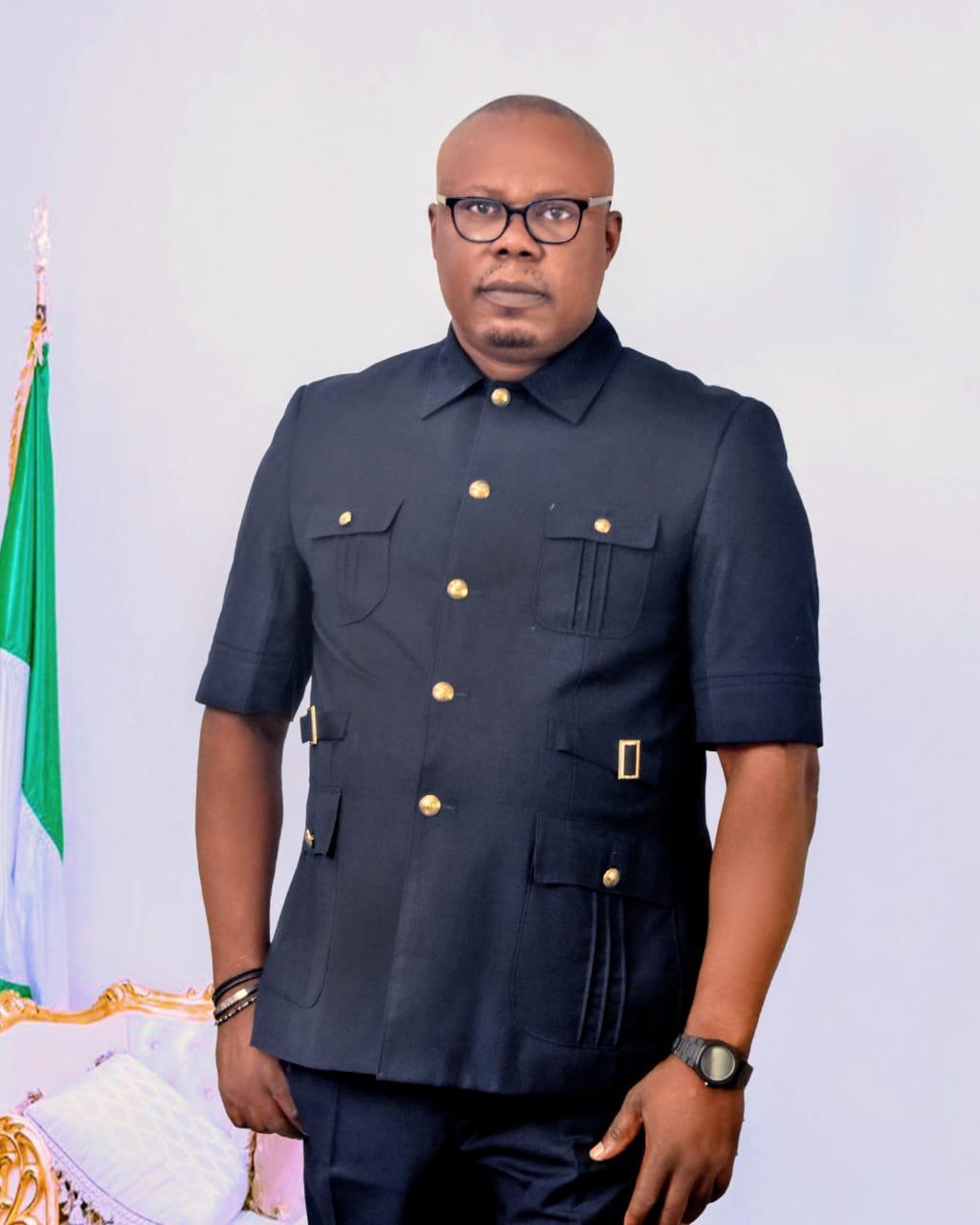
“Our problem is not lack of resources, but lack of a development-driven leadership. Deltans deserve infrastructure, jobs and prosperity that reflect the wealth of their state.”
By : Eshor Media Team
Warri— Engr. Isaac O. Eshor, governorship candidate of the African Action Congress (AAC) in Delta State for the 2027 general election, has declared that the state can experience a significant turnaround in infrastructure, economic development and public service delivery within one year if elected governor.
Eshor, a maritime engineer, entrepreneur and community development advocate from Ebu in Oshimili North Local Government Area, said Delta State’s development challenges were not caused by a shortage of resources but by what he described as the failure of successive administrations to translate the state’s enormous revenue into tangible benefits for the people.
In this interview with Community Publishers and Journalists in Warri yesterday, Eshor speaks on the performance of the present administration, the persistent infrastructure deficit across Delta State, the need for accountability in the management of public funds, and his plans to reposition the state through infrastructure development, job creation, investment in the blue economy and grassroots development.
He also explains how his proposed first-year development programme would address some of the most pressing challenges facing Deltans.
Except:
Question: You are contesting for the governorship of Delta State under the African Action Congress. What inspired your decision to run for governor in 2027?
Eshor: My decision to contest for governor is driven by my concern for the future of Delta State and the welfare of our people.
Delta State is one of the most naturally endowed states in Nigeria. We have oil and gas, an extensive coastline, rivers, fertile agricultural land, a vibrant population, and enormous opportunities in maritime transportation, commerce, tourism and industrial development.
Unfortunately, when you travel across the state, you see communities struggling with basic infrastructure. Roads are deteriorating, young people are searching for jobs, rural communities are neglected, and many families are finding it difficult to meet their basic needs.
I believe Delta deserves better.
I am not contesting simply to occupy the Government House. I am contesting because I believe we can build a state where public resources are invested in projects that improve the lives of ordinary citizens.
My vision is to create a Delta State where development is not concentrated in a few urban centres but reaches every local government area and every community.
Question: You have repeatedly criticised the present administration for what you describe as underdevelopment. What exactly do you think the government has failed to do?
Eshor: The present administration has a responsibility to demonstrate that the enormous resources available to Delta State are being translated into sustainable development.
My concern is that the level of infrastructure and economic opportunities across many communities does not adequately reflect the financial resources available to the state.
We have communities where roads have remained in deplorable condition for decades. There are areas where residents struggle to access healthcare, potable water and reliable electricity.
Many young people are unemployed, while small businesses are burdened by the poor state of infrastructure.
I am not saying that nothing has been done. But the fundamental question is whether the level of development we are witnessing matches the resources available to Delta State.
My answer is no.
A government should be judged by the quality of life of its citizens, the condition of its infrastructure, the opportunities available to its young people, and the level of economic activity it creates.
Deltans deserve a government that places measurable development above political publicity.
Question: Delta State receives substantial federal allocations and generates revenue internally. Why, in your opinion, does the state still have such a significant infrastructure deficit?
Eshor: This is one of the most important questions facing Delta State today.
The issue is not simply how much money the state receives. The more important question is how effectively that money is managed and invested.
We must examine our budget priorities, project execution, procurement processes, cost of infrastructure, and the level of accountability in public expenditure.
When this present government of Governor Sheriff Oborevwori has receives substantial revenue of over five Trillion naira( N5 Trillion) from Federal allocations but many communities continue to struggle with basic infrastructure, the people have every right to ask questions.
We need a system where every major public project has a clearly defined purpose, an approved cost, a delivery timeline and a mechanism for monitoring its execution.
We must also move away from the practice of measuring development by the number of projects announced. What matters is the number of projects completed, their quality, and their impact on the lives of the people.
Delta State needs a government that treats public money as the people’s money.
Question: Some people argue that the present administration has embarked on major infrastructure projects, including roads and flyovers. Is it fair to describe Delta as underdeveloped?
Eshor: We must be honest with ourselves. The existence of some major projects does not automatically mean that the entire state has achieved the level of development it deserves.
Infrastructure development must be assessed across the state, not only in selected urban centres.
What is happening in Asaba must be compared with what is happening in Ebu, Ashama, Ugbolu, Orhoakpor, Ododegho and other communities.
A government can construct impressive roads in a few locations while other communities remain disconnected from economic opportunities.
My position is that development must be inclusive.
I am not opposed to flyovers or major urban infrastructure. They can be useful where they address genuine transportation challenges. But we must also invest in rural roads, agricultural access routes, healthcare, schools, water supply and electricity.
The question is not whether a government has constructed a flyover. The question is whether the people can point to improvements in their daily lives.
Question: You come from Ebu in Oshimili North, a community you have described as suffering from decades of infrastructure neglect. How does your experience there influence your development agenda?
Eshor: Ebu is a very important part of my story, but my vision goes beyond my community.
For many years, Ebu and neighbouring communities have faced serious challenges with road infrastructure and access to essential services.
The condition of the Ebu–Ezi–Ukala road is a major concern because it affects movement, commerce, agriculture and the general livelihood of the people.
When a community cannot enjoy reliable road access, its economic potential is restricted. Farmers find it difficult to transport their produce, traders face higher transportation costs, and residents struggle to access services in neighbouring towns.
I believe that no community should be left behind simply because it is rural or has a relatively small population.
My experience has strengthened my conviction that Delta State needs a development plan that prioritises communities according to their needs and economic potential.
If elected, I will ensure that rural infrastructure receives the attention it deserves.
Question: You have promised to turn around Delta State within one year of assuming office. Many politicians make promises that are never fulfilled. How realistic is this commitment?
Eshor: I understand why people are sceptical. Deltans have heard many promises over the years.
But my promise is based on the belief that a government can achieve significant progress within its first year if it has a clear plan, competent personnel, financial discipline and the political will to act.
Let me clarify something: I am not saying that every road in Delta State will be reconstructed or every infrastructure deficit eliminated within 12 months.
What I am saying is that within one year, Deltans should see a visible and measurable transformation in the direction of governance.
We can begin by identifying critical infrastructure projects, addressing the most urgent road failures, improving access to healthcare, strengthening education, creating opportunities for young people and establishing a transparent system for managing public resources.
My first year will be a year of action.
We will prioritise projects that directly affect the daily lives of citizens and ensure that government expenditure produces measurable results.
The people should not have to wait until the end of four years before they begin to experience the benefits of governance.
Question: Can you outline what Deltans should expect during your first 12 months in office if elected?
Eshor: Our first-year programme will be built around five major priorities.
First, infrastructure development. We will conduct a comprehensive assessment of roads and other critical infrastructure, identify the most urgent needs, and begin targeted interventions.
Particular attention will be given to roads that connect rural communities to markets, schools, hospitals and economic centres.
Second, healthcare delivery. We will improve the functionality of primary healthcare facilities, address critical staffing and equipment gaps, and strengthen access to essential medical services.
Third, youth employment and economic empowerment. We will create opportunities through skills acquisition, vocational training, entrepreneurship support and partnerships with private-sector investors.
Fourth, agriculture and the blue economy.
Delta State has enormous potential in agriculture, fishing, maritime transportation, logistics and related industries. We will develop policies that attract investment and create sustainable employment.
Fifth, accountability and efficient governance. We will strengthen public financial management, improve project monitoring and ensure that citizens have access to information about government activities.
These are not isolated promises. They are components of a coordinated development strategy.
Question: How do you intend to finance these ambitious programmes without placing additional financial burdens on Deltans?
Eshor: Delta State has several sources of revenue, including federal allocations, internally generated revenue, and opportunities for investment and public-private partnerships.
Our first responsibility will be to examine how existing resources are being utilised.
We must reduce waste, eliminate unnecessary expenditure, improve procurement practices and ensure that public projects are executed at reasonable costs.
We will also strengthen internally generated revenue without imposing excessive taxes on ordinary citizens and small businesses.
The focus should be on expanding economic activities, improving compliance and making it easier for businesses to operate.
In addition, we will explore partnerships with credible private investors, development institutions and other stakeholders.
The objective is to create a government that does not merely spend money but uses available resources to generate further economic opportunities.
Question: Delta State is blessed with enormous maritime and blue economy opportunities. How will your administration take advantage of this sector?
Eshor: The blue economy is one of the greatest opportunities available to Delta State.
As a maritime engineer, I understand the economic potential of our waterways, ports, fishing communities, maritime transportation and logistics sector.
We have the opportunity to create jobs through inland water transportation, shipbuilding and repair, marine services, fisheries, aquaculture and port-related activities.
But these opportunities cannot be fully realised without the right infrastructure and investment environment.
My administration will work to attract credible investors, improve relevant infrastructure, strengthen vocational and technical training, and support local entrepreneurs in the maritime sector.
We must move beyond depending primarily on oil and gas revenues.
Delta State should become a major centre for maritime commerce and investment in the Niger Delta.
Question: Unemployment and poverty remain major concerns among young people in Delta State. What practical measures will you introduce to address these problems?
Eshor: We must change the way we approach youth development.
Young people do not need political promises alone. They need opportunities to acquire skills, establish businesses and participate meaningfully in the economy.
Our administration will promote technical and vocational education, entrepreneurship development, access to business support and partnerships with industries.
We will also ensure that government-funded projects create opportunities for qualified local workers and businesses.
For example, road construction, agriculture, maritime services, technology and manufacturing can all provide employment if properly organised.
We will establish a system where young people are trained for actual economic opportunities rather than simply receiving certificates without employment prospects.
Our goal is to build a productive population, not a population that depends permanently on government handouts.
Question: What will be your administration’s approach to rural development, particularly in communities that have suffered years of neglect?
Eshor: Rural development will be a major priority.
A significant part of Delta State’s economic potential is located in rural communities.
These communities produce agricultural goods, support local commerce and contribute to the state’s cultural and economic identity.
Yet many of them lack the infrastructure required to maximise their potential.
We will develop a rural infrastructure programme that addresses roads, water supply, healthcare, electricity and educational facilities.
We will also work with local governments and community leaders to identify priority projects.
Every local government area should have a clear development plan, and communities should be able to monitor the implementation of projects that affect them.
Development must not be determined by political connections.
It must be determined by the needs of the people and the economic value of the projects.
Question: How will you ensure that your administration is different from previous governments in terms of accountability and transparency?
Eshor: Accountability must be built into the system of governance.
We will introduce stronger project monitoring and public reporting mechanisms. Every major project should have a clear budget, scope, contractor, timeline and measurable delivery target.
We will also promote transparency in procurement and public expenditure.
The people of Delta State should be able to ask questions about government projects and receive credible answers.
I believe that public officials must understand that they are accountable to the people.
If elected, I will encourage a culture where government officials are assessed based on their performance and the results they deliver.
We must move away from a system where public office is seen as an opportunity for personal enrichment.
Public office should be a platform for service.
Question: You have also promised to provide 24-hour electricity for Deltans through the installation of turbines. How do you intend to achieve this ambitious target, considering the persistent power supply challenges in the country?
Eshor: Reliable electricity is one of the most important foundations of economic development. Without stable power supply, businesses cannot grow, industries cannot operate efficiently, and young people cannot fully explore their talents and opportunities.
Delta State is blessed with enormous resources, and I believe we have the capacity to develop a sustainable electricity system that will significantly improve the lives of our people.
My promise to Deltans is that, if elected governor in 2027, my administration will pursue a comprehensive power development programme aimed at delivering 24-hour electricity to communities across the state through the deployment of turbines and other appropriate power generation technologies.
We will explore the installation of gas-powered turbines, where technically and economically viable, to generate electricity for designated power distribution networks.
We will also consider other energy sources, including solar power and hybrid systems, particularly in rural communities where extending conventional electricity infrastructure may be difficult.
However, achieving reliable electricity requires more than simply installing turbines. We must develop the necessary transmission and distribution infrastructure, establish effective maintenance systems, ensure adequate fuel supply, and work with relevant electricity regulators and private-sector partners.
Our administration will therefore pursue a structured approach that combines power generation, distribution, investment and community participation.
We will identify areas with the greatest electricity needs, assess existing infrastructure, and develop a phased implementation plan. Industrial clusters, commercial centres, healthcare facilities, educational institutions and residential communities will all be considered in the programme.
The objective is to ensure that electricity becomes a catalyst for economic growth rather than a persistent obstacle to development.
Imagine a Delta State where small businesses can operate throughout the day, hospitals have uninterrupted power, students can study without disruption, and industries can expand their operations without depending heavily on expensive generators.
That is the Delta State we want to build.
I want to emphasise that our commitment to 24-hour electricity is not merely a political promise. It is a development objective that will require careful planning, investment, technical expertise and accountability.
If elected, we will begin the necessary groundwork from the first year of our administration and make the progress of the programme transparent to the people.
My vision is for Delta State to become a model for reliable electricity supply in Nigeria, where power generation supports businesses, creates jobs, attracts investment and improves the quality of life of every Deltan.
Question: The AAC is challenging an incumbent administration with an established political structure. Why should Deltans believe your party can win the 2027 governorship election?
Eshor: Democracy is about the people, not merely the strength of political structures.
An incumbent government may have advantages, but the people have the ultimate power to determine who governs them.
Our responsibility as a political party is to present a credible alternative, communicate our policies and demonstrate that we understand the challenges facing Deltans.
We are building our campaign around development, accountability, economic opportunity and the need for a new direction.
I believe that when Deltans compare the resources available to the state with the condition of their communities, they will ask important questions about the future.
The AAC is offering a different approach to governance.
We are asking the people to look beyond political slogans and examine the substance of our programme.
Question: What is your message to Deltans who are disappointed with the present state of infrastructure and are looking for a credible alternative in 2027?
Eshor: My message to Deltans is that we must not lose hope in our state.
Delta State has the resources, the people and the economic opportunities to become one of the most developed states in Nigeria.
What we need is leadership that understands the value of public resources and is committed to using them for the benefit of the people.
I am asking Deltans to join us in building a state where roads connect communities, hospitals provide quality healthcare, schools prepare our children for the future, and young people have opportunities to succeed.
I want a Delta State where the wealth of the state is reflected in the quality of life of its citizens.
If elected in 2027, I will dedicate my administration to delivering measurable progress from the first day in office.
The time has come for Delta State to move from promises to performance, from potential to prosperity, and from underdevelopment to sustainable growth.